
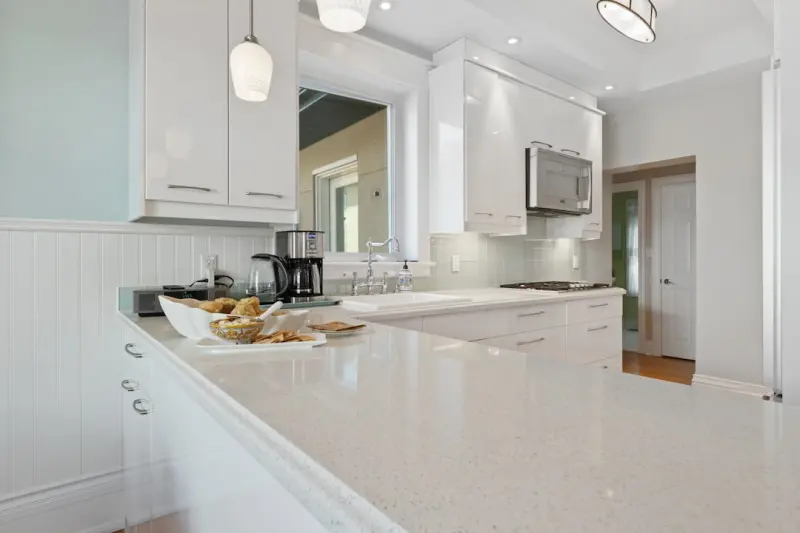
Countertop Intelligence: Turning Work Surfaces into Strategic Assets
When most people think about office upgrades, they picture ergonomic chairs, acoustic panels, or the latest collaboration software. The countertop—often dismissed as a mere aesthetic afterthought—has quietly become a fertile ground for innovation. In my experience navigating the intersection of design, technology, and business performance, I’ve seen countertops evolve from static slab to dynamic, data‑rich platforms that can drive productivity, reinforce brand identity, and even generate measurable ROI.
Below, I unpack three converging trends that are reshaping countertops into strategic assets: embedded intelligence, sustainable material ecosystems, and modular ergonomics for agile workstyles. Each section offers concrete tactics you can adopt today, along with a glimpse of where the next wave of countertop evolution might land.
1. Embedded Intelligence: From Passive Surface to Active Data Hub
Imagine a countertop that knows when a meeting is about to start, adjusts its lighting temperature, and surfaces relevant documents without a single tap. This is no longer a sci‑fi scenario; it’s the emerging reality of countertop intelligence. By integrating sensors, Bluetooth Low Energy (BLE) beacons, and edge‑computing modules directly into the slab, you create a surface that both collects and reacts to real‑time workplace cues.
- Occupancy and Utilization Metrics: Pressure sensors embedded beneath the laminate can distinguish between a lone laptop user and a collaborative huddle. Aggregated data feeds into facility‑management dashboards, highlighting under‑used zones and informing space‑allocation decisions.
- Environmental Monitoring: Temperature, humidity, and even volatile organic compound (VOC) sensors can be tucked into the countertop’s underside. The data not only safeguards equipment (think preventing overheating of high‑performance workstations) but also contributes to employee wellness initiatives.
- Touch‑less Interaction: Proximity sensors paired with voice‑activated assistants let users summon digital whiteboards, launch video calls, or pull up product specs by simply hovering a hand over the surface.
Embedding intelligence in countertops aligns with the broader shift toward adaptive flooring that fuels agile workspaces, but it takes the concept a step further by turning the very surface where ideas are drafted into an active participant in the workflow.
Implementation tip: Start small. Retrofit a single conference table with a BLE beacon and a temperature sensor. Use the data to demonstrate immediate benefits—such as reduced energy consumption during off‑hours—before scaling to a full‑floor rollout.
2. Sustainable Material Ecosystems: The Rise of Circular Countertops
Environmental stewardship is no longer a peripheral concern; it’s a core business metric. Countertops have traditionally relied on quarry‑sourced granite or high‑energy quartz composites. However, the market is witnessing a surge in circular material ecosystems that repurpose waste streams into premium work surfaces.
- Recycled Glass and Ceramic: Post‑consumer glass cullet, when combined with resin binders, yields a countertop that’s both strikingly aesthetic and 80% post‑industrial waste.
- Bio‑Based Composites: Hemp fibers, agricultural residues, and bio‑resins are being engineered into slabs that rival the durability of traditional stone while boasting a substantially lower carbon footprint.
- Upcycled Wood‑Polymer: Discarded timber offcuts, blended with recycled HDPE, create a warm, tactile surface that resists moisture—a perfect fit for collaborative zones.
Choosing sustainable countertops does more than reduce landfill contributions; it becomes a tangible brand statement. Visitors and employees alike can see, touch, and discuss the story behind the surface, reinforcing a culture of responsibility.
Pairing these eco‑friendly materials with intelligent sensors creates a feedback loop: the surface not only tells a story of sustainability but also provides data on its own performance—temperature stability, wear patterns, and cleaning cycles—allowing facilities teams to fine‑tune maintenance schedules and extend product lifespan.
Actionable insight: Conduct a life‑cycle assessment (LCA) for your current countertop inventory. Identify the top three environmental impact categories (e.g., embodied carbon, water usage) and set measurable reduction targets for the next upgrade cycle.
3. Modular Ergonomics: Countertops That Adapt to Workstyle Fluidity
Today's workforce refuses to be pigeonholed into “desk‑bound” or “standing‑only” categories. The modern professional oscillates between focused writing, collaborative brainstorming, and rapid prototyping—all within a single day. Countertops can accommodate this fluidity through modular ergonomics.
Key design strategies include:
- Adjustable Height Modules: Motorized legs that raise or lower sections of the countertop, transforming a seated work area into a standing station at the push of a button.
- Interchangeable Surface Panels: Magnetically attached overlays—such as whiteboard film, acoustic damping pads, or conductive charging zones—can be swapped in minutes to match the task at hand.
- Integrated Cable Management: Concealed channels that expand or contract based on the number of devices connected, reducing clutter and improving safety.
These modular solutions echo the principles highlighted in Designing Spaces That Listen, where environments respond to human activity. By enabling the countertop to shift its form and function, you empower employees to tailor their workspace without requiring costly renovations.
Case study snippet: A mid‑size design consultancy replaced its static reception counter with a modular system. Over six months, they observed a 15% reduction in employee-reported back pain and a 10% boost in client satisfaction scores—attributable to the ability to quickly reconfigure the space for presentations versus informal drop‑ins.
4. Branding Through Surface Storytelling
Beyond function, countertops serve as a canvas for brand narrative. Whether you emboss a subtle logo, incorporate brand colors through pigment‑infused quartz, or embed custom artwork under a clear resin, the surface becomes a low‑touch, high‑impact branding tool.
Consider these tactics:
- Embedded Typography: Laser‑etched text or icons that appear only under angled lighting, creating a dynamic visual cue that changes throughout the day.
- Color‑Shift Materials: Thermochromic pigments that transition from a neutral hue to a brand‑specific shade as the surface warms from user interaction.
- Interactive Story Panels: QR‑code‑enabled sections that launch a micro‑site detailing the material’s origin, sustainability credentials, and design inspiration.
When employees and visitors encounter these subtle yet deliberate brand touchpoints, the experience reinforces corporate identity without the need for overt signage.
5. Future‑Proofing Countertops: A Checklist
To ensure your countertop investments remain relevant as technology and workstyles evolve, run through this quick checklist:
- Scalability of Sensors: Choose open‑protocol hardware (e.g., MQTT, Zigbee) that can be expanded without replacing the entire slab.
- Material Compatibility: Verify that any surface finishes (e.g., matte, high‑gloss) won’t interfere with sensor accuracy or wireless signal strength.
- Maintenance Plan: Integrate cleaning schedules with sensor data to predict wear and prevent costly downtime.
- Vendor Transparency: Demand full disclosure of material sourcing, carbon footprint, and end‑of‑life recyclability.
- Employee Involvement: Conduct pilot tests with cross‑functional teams to gather feedback before full deployment.
By treating countertops as a living component of the workplace ecosystem, you unlock a trifecta of benefits: operational insight, environmental stewardship, and differentiated branding.
Conclusion: The Countertop as a Competitive Lever
The humble countertop is poised to become a silent yet powerful lever in the modern enterprise’s strategy toolkit. From data‑driven occupancy insights to eco‑conscious material narratives, the opportunities are as varied as the industries that rely on them. The key is to move beyond viewing countertops as static décor and to recognize them as interactive, sustainable, and adaptable platforms that can reinforce your organization’s core objectives.
If you’re ready to experiment, start with a single pilot—perhaps a conference table equipped with temperature and occupancy sensors, paired with a reclaimed‑glass surface. Track the outcomes, iterate, and let the data guide you toward a fully integrated countertop ecosystem. The future of work isn’t just happening on the floor or the wall; it’s happening right where ideas are first sketched—on the countertop.

Lifan Chen is a freelancer based in Toronto specializing in marketing. With expertise in crafting effective marketing strategies and campaigns, Lifan helps businesses grow their brand presence and reach target audiences. As a Toronto-based freelancer, Lifan combines local market insights with creative marketing skills to deliver tailored solutions for clients.
Related Posts
Countertop Trends that Blend Style, Smart Tech, and Sustainability
Explore how recycled quartz, concrete, and smart-integrated countertops are reshaping kitchens with ... Read More
When Countertops Become Smart: Designing the Interactive Work Surface of Tomorrow
Countertops are evolving from passive slabs to interactive platforms that integrate sensors, wireles... Read More
The Countertop Revolution: Hybrid Surfaces, Smart Tech, and Sustainable Style
Explore the rise of hybrid countertops, their performance benefits, eco‑friendly credentials, and ... Read More
Top Posts

Beyond the Boards: Turning Your Deck into a Living Extension of Home
Learn innovative strategies to turn a simple deck into a flexible, tech‑savvy, and sustainable extension of your home, perfect for any season....Read More

Embracing Sustainable Home Improvements: A Handyman's Perspective
Learn how to make your home improvements more sustainable with expert tips from a seasoned handyman. From eco-friendly materials to DIY approaches, discover the...Read More
Predictive Maintenance for HVAC: Harnessing AI to Keep Buildings Comfortable
Predictive maintenance uses sensors and AI to forecast HVAC failures before they happen, delivering energy savings, longer equipment life, and improved occupant...Read More
Modular Kitchen Islands: The Secret to a Flexible, Future‑Ready Home
A modular kitchen island transforms a static workspace into a versatile hub that can adapt to remote work, entertaining, and evolving tech, offering scalability...Read More
0 Comments
Post Comment
You will need to Login or Register to comment on this post!