
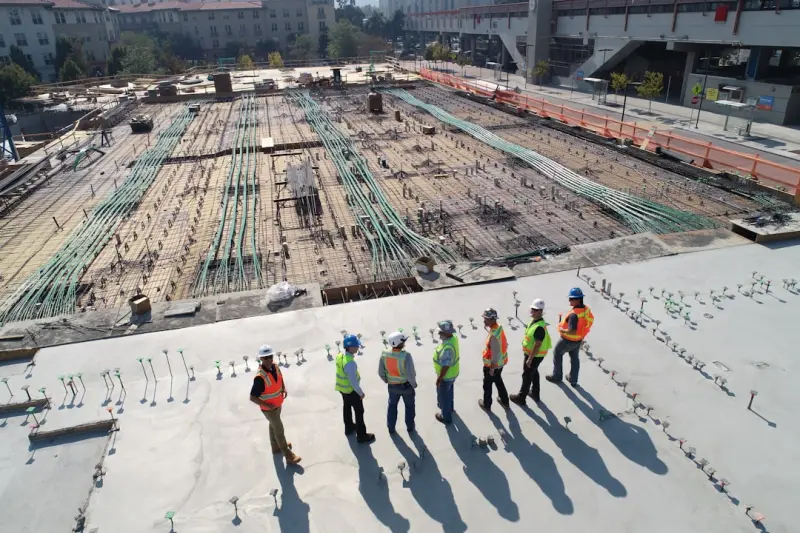
Why General Contractors Need Digital Twins—And How to Build One Without Losing Their Minds
When I first heard the term “digital twin” tossed around at a construction tech expo, I pictured a literal twin—two of me, one on the site in a hard hat, the other glued to a screen. The reality is less sci‑fi and more practical: a living, data‑rich replica of a physical project that updates in real time. For general contractors, this isn’t a gimmick; it’s a strategic lever that can shrink schedules, tame budgets, and transform risk into opportunity.
The Misconception That Holds Contractors Back
Most contractors view technology through the lens of “cool toys.” Drones for site surveys, tablets for punch‑lists, or the occasional VR walkthrough. Those tools are valuable, but they sit at the periphery of the core workflow. The digital twin, by contrast, sits at the very heart of the build—feeding design intent, construction progress, and operational performance into a single, coherent model.
Why does the industry resist? Three common myths:
- It’s only for mega‑projects. Smaller mid‑rise or campus‑style builds can reap the same proportional benefits.
- The technology is too complex. Modern platforms are modular; you can start with a 3‑D model and layer data as you get comfortable.
- It’s a massive cost sink. The upfront spend is offset quickly by reductions in rework, material waste, and schedule overruns.
What Exactly Is a Digital Twin?
A digital twin is a dynamic, virtual representation of a physical asset—updated continuously with sensor feeds, BIM data, and field inputs. Think of it as a spreadsheet on steroids, where every column is a live data stream: temperature, humidity, equipment location, labor hours, and even safety incidents. The twin learns from that data, allowing you to simulate “what‑if” scenarios before a single brick is laid.
Building the Twin: A Step‑by‑Step Playbook
Below is the pragmatic path I follow on every new contract, regardless of size.
1. Anchor the Twin in a Robust BIM Model
The backbone of any digital twin is a high‑quality Building Information Model (BIM). It should contain not only geometry but also metadata—material specifications, installation sequences, and cost codes. If you don’t have a BIM, start with a “lite” model: basic structural elements, major MEP zones, and a clear naming convention. The goal is a model that field crews can reference without feeling overwhelmed.
2. Deploy the Right Sensors
Outfitting a site with IoT sensors is cheaper than you think. A handful of Bluetooth Low Energy (BLE) beacons on critical equipment can track location. Temperature and humidity nodes guard concrete cure times. Even a simple laser scanner positioned on the scaffold can capture daily “as‑built” geometry to compare against the model.
3. Choose an Integration Platform
There are two schools of thought: a monolithic SaaS solution that does everything, or a best‑of‑breed stack where each tool does one thing well. I favor the latter because it lets you plug in existing tools (like your scheduling software or procurement system) via APIs. The platform should provide a dashboard where you can layer data streams on top of the BIM model.
4. Establish Real‑Time Data Pipelines
Data is only as good as its timeliness. Use edge gateways to batch sensor readings and push them to the cloud every five minutes. For manual inputs—say a crew supervisor updates the status of a wall—use a mobile app that writes directly to the twin. Automation is key; the less you have to type, the more reliable the twin becomes.
5. Define the Analytics You Need
What questions do you want the twin to answer? Common ones include:
- “Will the concrete pour finish before the scheduled form removal?”
- “Which trades are bottlenecking the critical path today?”
- “What is the cumulative CO₂ footprint of the materials used so far?”
Start with three to five KPI dashboards, then expand as confidence grows.
6. Run “What‑If” Simulations Before Decisions
Because the twin mirrors reality, you can test scenarios without risk. Need to know the impact of swapping a steel beam for a composite alternative? Plug the new weight, run the structural analysis, and watch the schedule adjust automatically. The twin tells you in minutes what would have taken weeks of coordination meetings.
Real‑World Payoff: From Theory to Bottom‑Line
Here are the categories where my teams have consistently seen measurable gains.
Reduced Rework
When field crews spot a clash between ductwork and structural steel, they log it in the mobile app. The twin instantly flags the clash in the 3‑D view, alerts the design team, and suggests a corrective path. In one recent project, this workflow cut rework by 18% and saved roughly $250,000.
Optimized Material Logistics
By feeding delivery timestamps and on‑site inventory counts into the twin, we can predict stock‑outs before they happen. The system automatically re‑orders the next pallet of precast panels when the on‑hand quantity hits a threshold, keeping the critical path moving.
Safety Enhancements
Heat sensors on scaffolding zones and proximity beacons on heavy equipment feed into a safety dashboard. When a worker approaches a hazardous zone, a visual and audible alert is triggered on their tablet. Early adopters have reported a 12% drop in near‑miss incidents.
Financial Transparency
Every labor hour, equipment hour, and material unit is logged against the twin’s cost codes. The finance team can pull a real‑time Earned Value Management (EVM) report at any moment, eliminating the “guess‑work” that often fuels disputes with owners.
Integrating the Twin With Existing Processes
One of the biggest challenges is aligning the digital twin with established workflows. Here’s how we bridge that gap.
Kickoff Workshops
Before the first shovel hits the ground, bring together project managers, subcontractors, and the tech team for a two‑day workshop. Walk through the BIM, demonstrate the sensor network, and outline the data entry responsibilities. This upfront investment pays dividends in adoption.
Subcontractor Buy‑In
Subcontractors often view new tech as a burden. Offer them a clear benefit: a shared dashboard that shows their performance relative to peers, helping them win future work. Provide a simple mobile interface that requires no training beyond a quick demo.
Change‑Control Integration
Every change order should be logged in the twin. When a design change is approved, the model updates automatically, and the impact on schedule and cost is recalculated. This creates a single source of truth for owners, architects, and the construction team.
Learning from Other Industries
While we’re still early adopters in construction, other sectors have been leveraging twins for decades. Manufacturing plants use them to predict equipment failure; utilities model grid dynamics; even the aviation industry simulates entire aircraft lifecycles.
Take a page from the Reimagining Commercial Renovations movement. Those firms treat existing buildings as assets that can be retrofitted with the same data‑driven rigor they apply to new builds. The same principle works for a construction site: treat the evolving jobsite as an asset you can monitor, optimize, and improve continuously.
Beyond the Site: Post‑Construction Twins
The digital twin doesn’t die when the punch list is signed. Transfer the model to the facility manager, overlay it with IoT data from building automation systems, and you have a powerful operations platform. This continuity opens new revenue streams for contractors—think “as‑a‑service” model where you provide ongoing analytics for the life of the building.
Challenges Worth Mentioning (And How to Overcome Them)
Every technology comes with friction points. Here are the ones we’ve encountered and the mitigations we employ.
- Data Overload. Too many sensors can drown the team. Start small, focus on high‑impact data streams, and scale gradually.
- Interoperability. Not all software plays nicely. Choose platforms that support open standards like IFC and OGC SensorThings.
- Cybersecurity. A connected site can be a target. Implement network segmentation, strong authentication, and regular penetration testing.
- Cultural Resistance. Change is uncomfortable. Celebrate quick wins publicly and embed the twin into daily huddles.
Future Glimpses: What’s Next for Contractors?
When you combine a digital twin with emerging tech—AI‑driven predictive analytics, augmented reality (AR) overlays for on‑site inspections, and blockchain‑based contract execution—the possibilities become almost limitless.
Imagine walking a site with AR glasses that highlight the exact location where a sensor reports an anomaly, or an AI engine that predicts the optimal crew composition for tomorrow’s tasks based on weather forecasts and labor availability. The digital twin will be the foundation on which these layers stack.
Takeaway Checklist
If you’re ready to start your own twin journey, use this quick checklist:
- Validate that you have a solid BIM model (or commit to creating one).
- Select a pilot area—preferably a high‑impact zone like the structural core.
- Deploy a minimal sensor suite (temperature, humidity, asset location).
- Choose an integration platform that supports API connections.
- Define three to five KPI dashboards and set baseline targets.
- Run a live “what‑if” scenario before the next major milestone.
- Document lessons learned and iterate.
In short, a digital twin is not a futuristic novelty; it’s a pragmatic, data‑centric approach that aligns the physical and virtual worlds of construction. When you let that alignment drive decision‑making, you unlock efficiencies that translate directly to profit, safety, and client satisfaction.
Wrapping Up
General contracting has always been about turning plans on paper into built reality. The digital twin adds a new dimension—real‑time, data‑rich insight—so that you’re not just reacting to the site, but anticipating its needs before they surface. Adopt the twin early, start small, and let the results speak for themselves. The construction industry is on the cusp of a data revolution; be the contractor who leads it, not the one who watches from the sidelines.

William Roy is a freelance writer originally from Montreal who moved to Ottawa with his wife of 50 years to be closer to their grandkids. Alongside his writing, William has a passion for fishing.
Related Posts
Sustainable General Contracting: Building Value with Purpose
Explore the evolving world of general contracting, where sustainable materials, design‑build colla... Read More
Reimagining the General Contractor’s Playbook: Collaboration, Tech, and Risk Mastery
General contractors are moving beyond traditional blueprints, leveraging integrated project delivery... Read More

Why Phased Construction Is the Secret Weapon for Smart Home Renovations
Phased construction transforms large remodels into manageable steps, offering budget flexibility, re... Read More
Top Posts
Designing a Nighttime Garden Oasis: Light, Scent, and Serenity
Explore how to transform your outdoor space into a night‑time oasis using reflective foliage, gentle lighting, scented walks, and eco‑friendly techniques....Read More
Why Carpet Cleaning Is the Unsung Hero of a Healthy Home
A deep dive into the health, environmental, and financial benefits of proper carpet cleaning, featuring cutting‑edge techniques, sustainable practices, and fu...Read More

Collaboration Platforms: The New Blueprint for General Contractors
General contractors can revolutionize project outcomes by adopting real‑time collaboration platforms that synchronize BIM, track issues, and integrate modular...Read More

The Ultimate Renovation Checklist for Multi‑Generational Homes
A detailed, 15‑step checklist guides homeowners through planning, budgeting, accessibility, sustainable materials, contractor selection, permits, and long‑t...Read More
0 Comments
Post Comment
You will need to Login or Register to comment on this post!