
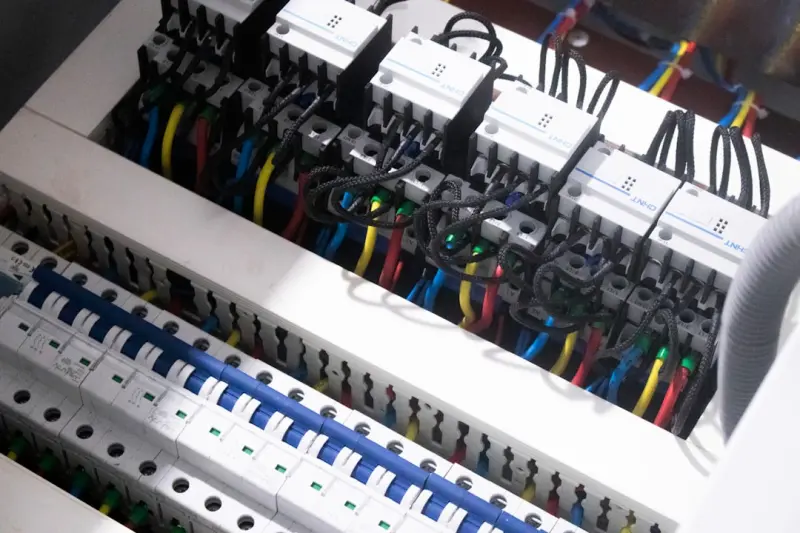
Commercial and industrial facilities are standing at a crossroads where the old, static approach to electrical distribution can no longer keep pace with the rapid fluctuations in demand, renewable integration, and the growing need for operational agility. The answer isn’t simply more wiring or bigger breakers; it’s a shift toward a distributed, data‑rich control layer that can sense, decide, and act on electrical loads as they happen.
The hidden cost of “set‑and‑forget” panels
Traditional electrical panels were designed for a world where power consumption patterns were predictable and mostly linear. In practice, this assumption creates three hidden costs:
- Energy waste: Over‑sized transformers and circuit breakers run at low load factors, squandering energy that could be redirected elsewhere.
- Equipment strain: Sudden spikes or drops in load can stress motors, drives, and lighting, shortening their lifespan.
- Lost opportunity: When renewable sources such as rooftop PV or on‑site storage generate excess power, the grid‑centric system often discards it because there’s no real‑time mechanism to redirect it to appropriate loads.
These inefficiencies manifest as higher utility bills, more frequent maintenance trips, and a smaller return on investment for sustainability projects.
Enter the responsive edge controller
A responsive edge controller (REC) is a compact, intelligent device that sits between the main distribution board and downstream loads. It continuously monitors voltage, current, power factor, and harmonic distortion, then uses locally stored algorithms to make split‑second decisions about load allocation. Think of it as the “brain” of the panel, while the panel itself remains the “nervous system.”
Key capabilities include:
- Instantaneous load shedding based on pre‑defined priorities, ensuring critical processes stay online during a supply dip.
- Dynamic load shifting that moves non‑essential tasks—like HVAC pre‑cooling or battery charging—to periods of excess generation.
- Self‑diagnosis that flags abnormal consumption patterns before a breaker trips, enabling maintenance teams to intervene proactively.
The result is a system that not only protects equipment but also extracts every possible watt from the existing infrastructure.
Why decentralization matters
Centralized control rooms have long been the hallmark of large facilities, but they suffer from latency and single‑point‑of‑failure risks. By distributing decision‑making to the edge, facilities gain:
- Scalability: Adding a new REC is as simple as installing a modular unit at a new sub‑panel.
- Resilience: If one controller fails, the others continue operating independently, preventing cascade outages.
- Granular insight: Each REC reports its own metrics, building a layered data set that can be aggregated for enterprise‑wide analytics.
This architecture mirrors trends seen in other domains—such as the rise of edge computing for data processing—where the emphasis is on keeping critical functions close to the source.
Data as the new power currency
Every decision a REC makes is backed by data. The more granular the data, the smarter the controller can be. Modern units embed high‑resolution measurement chips that capture waveforms at kilohertz frequencies, allowing them to detect issues like:
- Neutral‑to‑ground voltage imbalances.
- Early signs of motor winding overheating.
- Harmonic distortions caused by variable‑frequency drives.
These insights feed into a facility‑wide analytics platform, where building managers can visualize trends, set performance targets, and even benchmark against industry standards. The platform can also feed predictive models that forecast load spikes weeks in advance, enabling procurement teams to schedule demand‑response events with confidence.
Integrating renewable assets without a headache
One of the most compelling advantages of RECs is their ability to treat on‑site renewables as first‑class citizens. When a solar array produces more than the current demand, the controller can:
- Redirect excess energy to battery storage, charging during peak sunlight hours.
- Allocate power to “flexible loads” such as water‑heater pre‑heating, evaporative cooling, or non‑critical manufacturing steps.
- Export surplus to the grid, capturing feed‑in tariffs automatically.
This seamless coordination eliminates the manual scheduling and complex wiring historically required to integrate renewable sources.
Case study: A manufacturing plant reduces peak demand by 15%
A midsize metal‑fabrication facility deployed a network of RECs across its production floor. By prioritizing essential CNC machines and shedding non‑critical lighting during demand peaks, the plant achieved a 15% reduction in peak demand charges within six months. Moreover, the system captured 250 kWh of otherwise wasted solar output each month, translating to an annual savings of over $30,000.
What’s more, the self‑diagnostic alerts cut unscheduled downtime by 20%, because maintenance crews could address issues before a breaker tripped. The facility’s leadership now credits the REC deployment as the catalyst for a broader digital transformation effort.
Implementation roadmap
Transitioning to a responsive edge‑controlled electrical system involves three phases:
- Assessment: Conduct a detailed audit of existing panels, load profiles, and renewable assets. This step often reveals hidden inefficiencies that can be addressed early.
- Pilot: Install RECs on a single sub‑panel serving a non‑critical area. Use the pilot to fine‑tune control algorithms and establish communication protocols with the analytics platform.
- Scale‑out: Roll out the solution across the entire facility, integrating with existing building management systems (BMS) and enterprise resource planning (ERP) tools for holistic oversight.
Throughout each phase, it’s crucial to involve cross‑functional teams—electrical engineers, IT specialists, and operations managers—to ensure that the technology aligns with both technical requirements and business objectives.
Choosing the right partner
The market for edge controllers is still emerging, and not all solutions are created equal. When evaluating vendors, consider:
- Open architecture: A solution that supports standard communication protocols (e.g., Modbus, OPC UA) will integrate more smoothly with existing systems.
- Security posture: Since RECs connect to corporate networks, they must offer robust encryption, authentication, and regular firmware updates.
- Scalable analytics: Look for platforms that can ingest high‑frequency data and provide both real‑time dashboards and long‑term trend analysis.
Partnering with a provider that offers end‑to‑end services—from hardware installation to data analytics—can accelerate the ROI timeline and reduce the learning curve for internal teams.
Future‑proofing your electrical infrastructure
As the energy landscape continues to evolve, facilities will face new challenges: electrification of fleets, higher adoption of hydrogen production, and stricter carbon‑reporting mandates. A responsive edge controller framework equips sites with the flexibility to adapt without massive overhauls.
Beyond operational benefits, the data collected by RECs becomes a strategic asset. By analyzing consumption patterns, organizations can:
- Identify opportunities for demand‑response participation, earning incentives from utility providers.
- Benchmark performance against peer facilities, driving continuous improvement.
- Support sustainability reporting with granular, verifiable metrics.
In short, the electrical system transforms from a passive utility to an active participant in the business’s value chain.
Connecting the dots with broader building intelligence
While the focus here is on electrical distribution, the principles of edge‑based control and data‑driven decision‑making echo across other building systems. For example, building performance audits that continuously monitor HVAC and lighting can feed into the same analytics platform, creating a unified view of energy use.
Similarly, the often‑overlooked role of ancillary infrastructure—such as facility efficiency insights—demonstrates how even simple mechanisms can impact overall energy balance when managed intelligently.
By weaving together these strands, facilities can build a holistic, resilient, and adaptable operational model that not only cuts costs but also positions them as leaders in the low‑carbon economy.
Takeaway
Electrical distribution is no longer a static backbone; it’s a dynamic, data‑rich ecosystem that can unlock hidden value when equipped with responsive edge controllers. The shift demands an investment in hardware, software, and expertise, but the payoff—reduced energy waste, extended equipment life, and greater operational flexibility—makes it a compelling strategic move for forward‑thinking organizations.
Ready to rethink your power strategy? Start with a pilot, partner with a trusted vendor, and let the data guide you toward a more efficient, resilient future.

Lifan Chen is a freelancer based in Toronto specializing in marketing. With expertise in crafting effective marketing strategies and campaigns, Lifan helps businesses grow their brand presence and reach target audiences. As a Toronto-based freelancer, Lifan combines local market insights with creative marketing skills to deliver tailored solutions for clients.
Related Posts
Powering the Future Home: Adaptive Electrical Panels and On‑Demand Energy Management
Adaptive electrical panels transform traditional breaker boxes into intelligent energy managers, ena... Read More

Electrify Your Home: Sustainable Upgrades That Cut Bills and Carbon
Explore the latest sustainable electrical upgrades—from smart lighting to renewable integration—... Read More

The Electrician’s Playbook: Trending Sustainable Power Solutions for Modern Homes
Tom Ferguson reveals how electricians are leading the green revolution with smart panels, renewable ... Read More
Top Posts

Designing a Year‑Round Backyard Oasis: Sheds and Gazebos That Work With Nature
Tom Ferguson shows how to turn a simple shed or gazebo into a weather‑proof backyard hub, using sustainable materials, passive solar tricks, and smart shading...Read More

The Sensory Branding Power of Carpet Cleaning: How Scent and Shine Influence Workplace Culture
A clean, subtly scented carpet does more than look good—it reinforces brand values, improves morale, and becomes a strategic touchpoint in any workplace....Read More

The Future of Design Build: Sustainable Outdoor Spaces Take Center Stage
Sustainable outdoor spaces are no longer just a nicety, but a necessity in modern design build. Learn how to incorporate eco-friendly materials, energy-efficien...Read More

Breathing New Life into Historic Windows: A Restoration Guide
Discover a step‑by‑step approach to restoring historic windows, combining authentic craftsmanship with modern efficiency and discreet smart‑home integrati...Read More
0 Comments
Post Comment
You will need to Login or Register to comment on this post!