
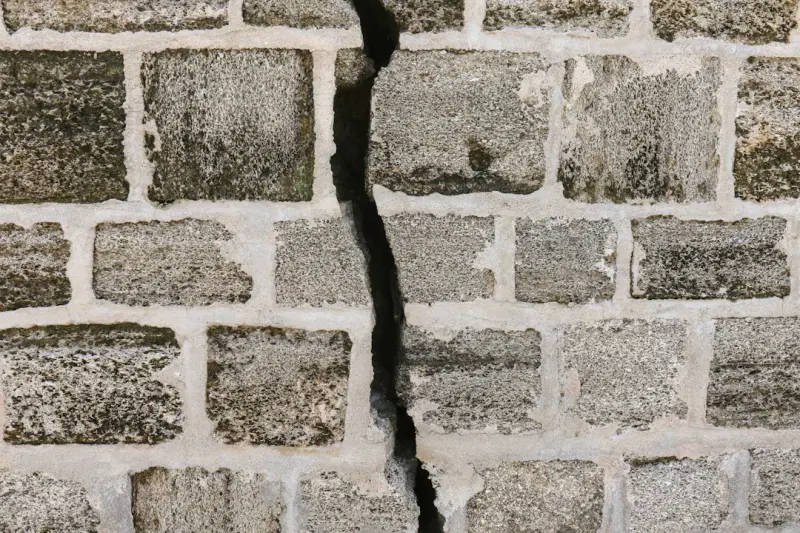
Why Self‑Healing Concrete Is the Quiet Revolution Every Facility Manager Should Watch
When I first stepped onto a construction site in Shanghai, the scent of fresh cement was more than a smell—it was a promise of permanence. Decades later, walking through a sleek office tower in Berlin, I noticed the same promise was cracking, literally and figuratively. The concrete that once seemed immutable now showed tiny fissures, each one a silent alarm that the building was speaking in a language I didn’t yet understand.
That moment sparked my obsession with a material that can talk back—self‑healing concrete. It’s not just a novelty; it’s a strategic asset that can transform how we think about durability, maintenance budgets, and even the data ecosystems that power modern facilities.
The Science Behind the Self‑Repair
At its core, self‑healing concrete embeds a “living” component into the mix. The most common approaches use:
- Micro‑capsules filled with epoxy or polymer agents that burst when a crack forms, sealing the fissure.
- Bacterial spores that, when exposed to water and oxygen, precipitate calcium carbonate—essentially “growing” new cement.
- Smart polymers that swell on contact with moisture, filling gaps from the inside out.
Each method mimics a biological response: sense damage, mobilize resources, and restore integrity. The result? A concrete slab that can autonomously close cracks up to a few millimeters wide, often within days.
From Lab to Real‑World Projects
Self‑healing concrete has moved beyond academic journals. In the Netherlands, a highway section embedded with micro‑capsules has logged over 300,000 vehicle passes with no observable deterioration. In the United States, a parking garage in Denver employed bacterial concrete; after a harsh winter, the structure showed a 40% reduction in water infiltration compared to adjacent conventional slabs.
These case studies illustrate a shift from “proof of concept” to operational advantage. For facility owners, that means fewer emergency repairs, longer service life, and a smoother occupancy experience for tenants.
Data Meets Material: Turning Healing Events into Predictive Insights
What excites me most is the intersection of self‑healing concrete with the data‑centric world of facility management. Imagine embedding tiny moisture sensors inside the concrete matrix. When a crack forms and the healing agents activate, the sensor logs a spike in humidity and a shift in acoustic signature. That data streams to a cloud platform, where AI algorithms flag the event, assign a confidence level, and even predict when the next healing cycle might be needed.
This approach mirrors the predictive maintenance frameworks already reshaping electrical systems, but now the “asset” is the very structure that holds the building together. The result is a shift from reactive patch‑ups to proactive stewardship.
Cost Implications: The Real ROI
Critics often point to the higher upfront cost—typically 5–10% more than traditional mixes. However, the total cost of ownership tells a different story:
- Reduced Repair Frequency: Studies show a 30–50% drop in scheduled concrete repairs over a 20‑year horizon.
- Extended Service Life: Buildings can see an added 10–15 years before major structural refurbishment.
- Lower Downtime: Since cracks heal automatically, occupants experience fewer disruptions, preserving productivity.
When you factor in labor, equipment rental, and the indirect cost of tenant inconvenience, the payback period often falls within 7–9 years—well within the typical depreciation schedule for commercial real estate assets.
Environmental Benefits: More Than Just Longevity
Self‑healing concrete also aligns with sustainability goals. By extending the lifespan of structures, we reduce the demand for new cement production—a process responsible for roughly 8% of global CO₂ emissions. Moreover, bacterial healing agents often use carbon‑negative aggregates that lock away carbon during the curing process, turning the slab into a modest carbon sink.
When combined, these effects create a compound benefit: fewer demolition cycles, less raw material extraction, and a smaller carbon footprint over the building’s lifecycle.
Design Flexibility: Aesthetic and Functional Opportunities
Self‑healing concrete isn’t just about structural integrity; it opens doors for architects to push the envelope. Because the material can tolerate micro‑cracks without compromising performance, designers can experiment with thinner slabs, daring cantilevers, and complex geometries that would be risky with conventional concrete.
In a recent office renovation in Tokyo, architects leveraged this resilience to create a sculptural concrete façade with intentional “veins” that act as deliberate stress‑relief lines. The self‑healing capability ensures those veins don’t become permanent scars, maintaining the visual integrity for years.
Integrating Self‑Healing Concrete into Existing Projects
For owners and contractors wondering how to adopt this technology, here’s a practical roadmap:
- Phase 1 – Feasibility Study: Assess the project’s exposure to cracking risks (e.g., thermal cycling, heavy traffic) and run a cost‑benefit model.
- Phase 2 – Supplier Selection: Partner with manufacturers that have proven field performance. Verify that their micro‑capsule or bacterial technology complies with local building codes.
- Phase 3 – Pilot Installation — Implement a small, monitored section (e.g., a single floor slab) to gather performance data.
- Phase 4 – Full‑Scale Rollout — Scale up, integrating sensor networks for real‑time monitoring.
- Phase 5 – Data‑Driven Maintenance — Leverage the sensor data to fine‑tune maintenance schedules and inform future design decisions.
Challenges and Mitigation Strategies
While the technology is promising, there are practical hurdles:
- Regulatory Acceptance: Some jurisdictions still classify self‑healing concrete as “novel”. Mitigation: Provide third‑party testing reports and reference case studies from reputable projects.
- Supply Chain Complexity: Specialized admixtures may have longer lead times. Mitigation: Early procurement and establishing a backup supplier.
- Long‑Term Performance Data: The industry is still building a robust dataset for 30‑year performance. Mitigation: Use accelerated aging tests and partner with research institutions.
Addressing these concerns proactively ensures that the adoption curve remains smooth and that stakeholders retain confidence throughout the project lifecycle.
Self‑Healing Concrete and the Broader Digital Ecosystem
When I think about the future of built environments, I see a convergence of three pillars:
- Smart Materials (like self‑healing concrete) that respond autonomously.
- Embedded IoT Sensors that capture granular data.
- AI‑Driven Analytics that translate raw data into actionable insights.
This triad mirrors the evolution we witnessed with digital twins in construction, but now the twin lives inside the walls, not just above them.
Imagine a facility manager receiving a push notification: “Section B12 experienced a micro‑crack at 03:14 AM. Healing cycle initiated. No action required.” That’s the kind of seamless experience that turns a traditionally “passive” building material into an active participant in asset management.
Conclusion: From Cracks to Competitive Advantage
Self‑healing concrete is more than a material upgrade; it’s a paradigm shift. It offers tangible financial savings, aligns with ESG commitments, and creates a data‑rich substrate for the next generation of intelligent facilities. As we continue to demand faster construction timelines and higher performance standards, embracing self‑healing concrete could be the differentiator that sets forward‑thinking organizations apart.
If you’re a facility director, a developer, or a design professional, I encourage you to explore pilot projects, engage with suppliers, and start thinking of concrete not as a static slab but as a living component of your building’s ecosystem.

Lifan Chen is a freelancer based in Toronto specializing in marketing. With expertise in crafting effective marketing strategies and campaigns, Lifan helps businesses grow their brand presence and reach target audiences. As a Toronto-based freelancer, Lifan combines local market insights with creative marketing skills to deliver tailored solutions for clients.
Related Posts
Concrete as a Design Powerhouse: From Slabs to Sustainable Statements
Discover the hidden potential of concrete—from eco‑friendly mixes and stunning finishes to DIY p... Read More
Carbon‑Negative Concrete: How the Industry Is Rewriting Its Green Playbook
Concrete is undergoing a climate makeover. By swapping traditional cement for low‑carbon binders, ... Read More
The Ultimate Guide to Concrete: Benefits, Applications, and Best Practices
Concrete is a composite material made from cement, water, and aggregate. It is durable, resistant to... Read More
Top Posts
Why Modern Gutters Are the Unsung Heroes of Sustainable Home Design
Explore the hidden power of gutters in sustainable living. Learn about eco‑friendly materials, rainwater harvesting, maintenance tricks, and how gutters prote...Read More

Why Refinishing Your Bathtub Is the Green Renovation Hack You’ve Been Missing
Refinishing an old bathtub isn’t just a cost‑saving facelift; it dramatically reduces carbon emissions, improves indoor air quality, and extends the fixture...Read More
Turning Gutters into Design Statements: Style Meets Function
Explore innovative gutter designs, materials, colors, and seasonal styling tips that turn a functional necessity into a striking architectural accent....Read More

Why Permeable Paving Is the Future of Home Driveways
Explore how permeable paving turns ordinary driveways into sustainable assets, cutting runoff, lowering temperatures, and enhancing curb appeal with smart, ecoâ...Read More
0 Comments
Post Comment
You will need to Login or Register to comment on this post!