
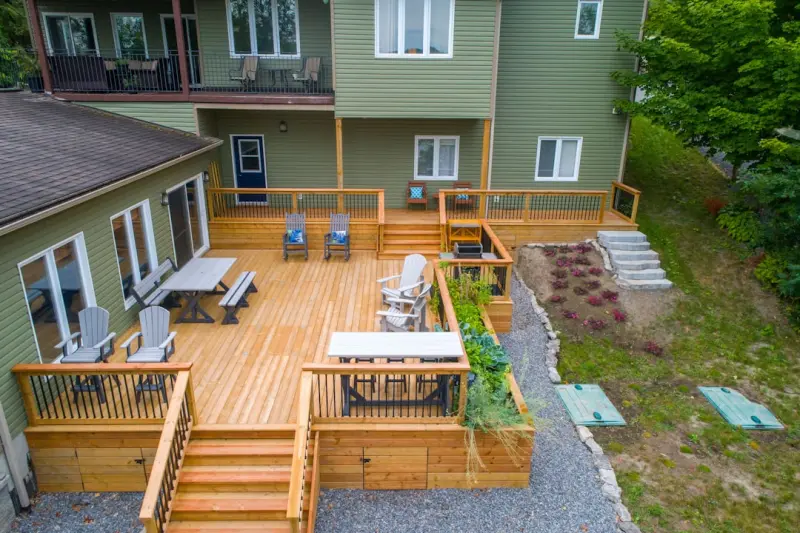
Decks Reimagined: From Static Platforms to Intelligent Experience Zones
When I first stepped onto a freshly built corporate deck for a client’s headquarters, I expected the usual blend of concrete, wood, and a view of the city skyline. Instead, I found a subtle network of sensors tucked beneath the railings, a low‑profile display that changed its content based on the time of day, and a handful of employees lounging while glancing at real‑time usage stats on their phones. It struck me that decks—long considered the humble “outdoor extension” of a building—are poised for a transformation that mirrors the digital overhaul we’ve seen inside walls, floors, and ceilings.
In the world of B2B facilities, the conversation often gravitates toward “smart walls” or “intelligent floors.” Yet, decks sit at a unique crossroads: they are outdoor yet adjacent to the interior, they are high‑traffic yet often overlooked, and they serve both functional and experiential purposes. This article explores how forward‑thinking organizations can elevate decks from simple patios to data‑rich, revenue‑generating assets that reinforce brand narrative, enhance employee wellbeing, and deliver measurable ROI.
The Strategic Value of Decks
Before diving into the technology, let’s establish why decks deserve a seat at the strategic table. Consider these three perspectives:
- Employee Engagement. A well‑designed deck offers a change of scenery, a place for informal brainstorming, and a venue for wellness activities. Companies that prioritize “break‑out” spaces see higher employee satisfaction scores.
- Customer Experience. For hospitality, retail, or coworking operators, decks act as the first tactile impression of a brand’s culture. A sleek, tech‑enabled deck can differentiate a hotel lobby from its competition.
- Asset Optimization. Like any other real‑estate component, decks have a cost, a lifespan, and a utilization rate. Turning that utilization data into actionable insight can inform space planning, maintenance schedules, and even revenue models.
When we treat decks as strategic assets rather than afterthoughts, the door opens—pun intended—to a host of innovative possibilities.
Embedding Intelligence: Sensors, Connectivity, and Data
At the core of the deck’s evolution is the integration of low‑profile sensors that capture environmental and usage data without compromising aesthetics. Here are the most impactful sensor categories:
- Footfall Counters. Infrared or radar sensors count how many people step onto the deck, providing real‑time occupancy metrics. This data can be fed into space‑allocation models to determine when additional seating or shade structures are needed.
- Environmental Sensors. Temperature, humidity, wind speed, and UV index readings help facilities managers adjust shading devices, misting systems, or heating elements to maintain comfort while minimizing energy waste.
- Structural Health Monitors. Strain gauges and moisture sensors embedded in the decking material detect early signs of wear, rot, or water intrusion—allowing proactive maintenance before costly repairs.
- Proximity Beacons. Bluetooth Low Energy (BLE) beacons interact with employee smartphones or visitor badges, delivering context‑aware content such as meeting room availability, nearby amenities, or safety alerts.
All these data points funnel into a central analytics platform, where they are visualized through dashboards, alerts, and predictive models. The result? Facilities teams can shift from reactive repairs to predictive stewardship, while business leaders gain a new KPI—Deck Utilization Index (DUI)—to benchmark across locations.
From Data to Action: Use Cases that Matter
Let’s explore concrete scenarios where an intelligent deck delivers tangible value:
1. Dynamic Occupancy Management
Imagine a tech campus where the main deck hosts daily lunch gatherings, informal stand‑up meetings, and occasional product demos. By monitoring footfall in real time, the building management system can automatically adjust the number of portable shade canopies, activate misting stations, or even redirect foot traffic to secondary decks to avoid crowding. The KPI? A 15% reduction in employee “time‑out‑of‑office” complaints related to uncomfortable outdoor spaces.
2. Revenue Generation for Hospitality
Luxury hotels are already monetizing rooftop bars and pools. An intelligent deck takes this a step further: sensors track peak usage times, allowing the revenue team to schedule “sunset happy hours” when foot traffic spikes. Integrated payment terminals embedded in the railings let guests order drinks without leaving the deck, turning a passive lounging area into a micro‑commerce hub. Early pilots report a 12% lift in ancillary revenue per guest.
3. Sustainability and Energy Savings
Environmental sensors inform an automated shading system that only deploys when UV intensity exceeds a threshold, reducing solar gain and the need for supplemental cooling inside adjacent rooms. Pair this with a Solar Energy as a Strategic Infrastructure Layer for Modern Enterprises installation on the deck’s roof, and you have a self‑regulating micro‑climate that cuts HVAC load by up to 8%.
4. Safety and Compliance
In industrial settings, decks often double as loading zones. Structural health monitors can trigger alerts the moment a load exceeds safe limits, while proximity beacons warn workers of hazardous zones. The resulting reduction in workplace incidents translates directly into lower insurance premiums.
Designing for Seamless Integration
Technology should enhance, not dominate, the deck’s visual language. Here are design principles to keep the deck inviting:
- Concealed Wiring. Use trenching techniques and waterproof conduit that hide cabling beneath the deck boards. The deck’s surface remains clean, and maintenance crews can access the wiring via discreet access panels.
- Modular Sensor Pods. Deploy sensors in weather‑proof pods that snap onto existing railing posts. This modularity ensures easy upgrades or replacements without demolition.
- Material Compatibility. Opt for decking composites that incorporate conductive fibers, allowing sensor networks to be woven directly into the material—similar to how Turning Floor Tiles into Data‑Driven Assets for Smarter Facilities leverages smart tiles.
- Human‑Centric Interface. Information displays should use high‑contrast fonts, adaptive brightness, and contextual content. For example, during a rainstorm, the deck’s screen could show indoor alternative spaces rather than a generic “welcome” message.
Data Governance and Privacy
Deploying sensors inevitably raises concerns about data privacy, especially when proximity beacons interact with personal devices. Follow these best practices:
- Provide clear signage indicating data collection zones and purpose.
- Offer opt‑out mechanisms via mobile apps or badge settings.
- Store sensor data in encrypted, role‑based access databases.
- Conduct regular audits to ensure compliance with regional privacy regulations such as GDPR or CCPA.
Implementation Roadmap: From Pilot to Full Rollout
Transitioning from a traditional deck to an intelligent one requires a phased approach:
- Assessment. Conduct a site audit to evaluate existing deck materials, structural health, and potential power sources.
- Pilot Design. Choose a high‑traffic zone to install a limited sensor suite—footfall counters, environmental sensors, and a single proximity beacon.
- Data Integration. Connect the pilot sensors to your facility management platform, creating baseline dashboards.
- Iterative Testing. Over a 4‑week period, refine alert thresholds, UI designs, and maintenance workflows.
- Scale. Roll out additional sensor pods, integrate with existing building automation systems, and expand analytics to include predictive maintenance models.
- Continuous Improvement. Use the Deck Utilization Index to benchmark performance, and iterate on design elements (e.g., adding shade structures or seating) based on data insights.
The Human Element: Why Technology Isn’t Enough
Even the most sophisticated deck will falter if it doesn’t align with the people who use it. Conduct regular user surveys, host focus groups, and involve cross‑functional teams—HR, branding, sustainability—early in the design process. The goal is a deck that feels organic despite its digital underpinnings.
Future Horizons: Decks as Community Nodes
Looking ahead, decks could become the backbone of hyper‑local ecosystems. Imagine a network of intelligent decks across a corporate campus, each feeding into a central “Outdoor Experience Engine.” This engine could recommend optimal meeting spots, coordinate shared resources like portable power stations, and even surface community‑generated content—think employee‑curated playlists displayed on deck screens.
In the same way that Data‑Driven Wallpaper turned static interiors into interactive data canvases, decks are poised to become the outdoor counterpart: a living, breathing interface between people, environment, and business objectives.
Conclusion: The Deck as a Strategic Differentiator
Decks have long been the “nice‑to‑have” amenity in corporate and hospitality spaces. By embedding sensors, leveraging data analytics, and aligning design with human needs, they evolve into a strategic differentiator that drives engagement, revenue, and operational excellence. The journey begins with a single sensor, but the destination is a connected, resilient, and vibrant outdoor experience that reflects the very ethos of modern enterprises.

Paul Gray is a dynamic blogger based in Brampton, where he shares his life with his amazing wife, Sarah. Known for his engaging writing style and relatable insights, Paul has carved out a niche in the blogging world that resonates with readers from all walks of life. When he's not crafting captivating posts, you can find him savoring a cold beer or indulging in the latest blockbuster movie. With a friendly demeanor and a passion for storytelling, Paul brings a unique perspective to his work, making him not just a blogger, but a voice for those who appreciate the simple joys of life.
Related Posts

Beyond the Boards: Turning Your Deck into a Living Extension of Home
Learn innovative strategies to turn a simple deck into a flexible, tech‑savvy, and sustainable ext... Read More

Revitalizing Outdoor Living: The Smart, Sustainable Deck Transformation
Discover the secrets to creating a smart, sustainable deck that acts as an outdoor living room—fea... Read More

Turning Outdoor Decks into Power‑Generating Hubs
Discover how to convert a standard deck into a sustainable energy source with solar panels, kinetic ... Read More
Top Posts

The Importance of General Contracting in Home Restoration
General contracting plays a vital role in home restoration, encompassing a wide range of services that help homeowners achieve their renovation goals. Learn mor...Read More

Transform Your Closet into a Dynamic Storage System
Learn how to turn a cramped closet into a flexible, tech‑enhanced storage hub with modular systems, vertical strategies, and sustainable materials....Read More

Beyond the Sheet: Modern Strategies for Long‑Lasting Waterproofing
Explore innovative waterproofing methods that combine breathable membranes, green sealants, and sensor tech to protect homes while minimizing environmental impa...Read More

Smart Carpet Cleaning: Harnessing Technology and Sustainability for Healthier Homes
Explore a fresh approach to carpet cleaning that blends natural solutions, smart sensors, and sustainable fibers for a cleaner, healthier home environment....Read More
0 Comments
Post Comment
You will need to Login or Register to comment on this post!