
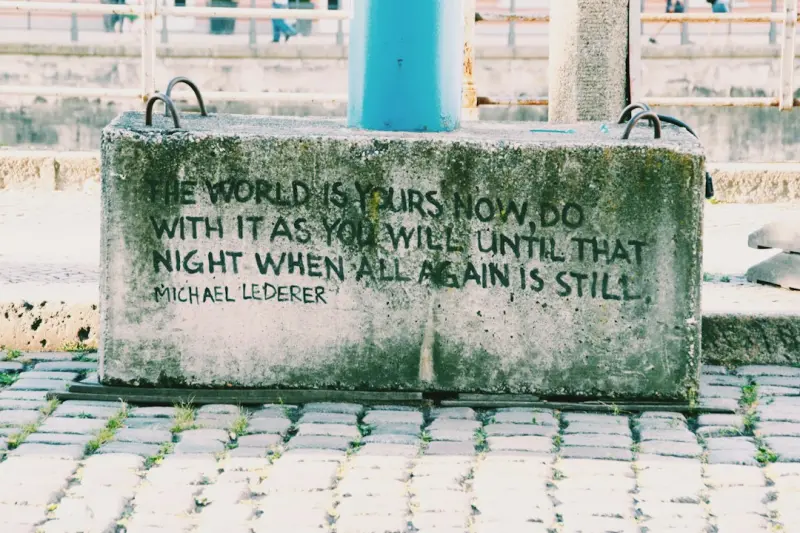
Why Concrete Deserves a Second Look
When most people think of concrete, they picture gray slabs, dusty construction sites, and the inevitable cracks that appear after a few seasons. I’ve spent years walking through warehouses, office lobbies, and urban plazas, watching the material that holds our built environment together age and evolve. What’s fascinating is that concrete is no longer a static, one‑dimensional commodity. It’s becoming a living platform for sustainability, performance, and even artistry.
From Quarry to Circular Economy
Traditional concrete production is responsible for roughly 8% of global CO₂ emissions. That number is staggering, but it also presents a massive opportunity. The emerging circular‑economy approach asks a simple question: what can we keep inside the concrete loop instead of sending it to a landfill?
- Recycled Aggregates: Crushed demolition waste can replace up to 30% of virgin aggregate without sacrificing strength. The key is proper grading and surface treatment to ensure good bond with the cement paste.
- Industrial By‑products: Fly ash, slag, and silica fume are not just waste; they act as supplementary cementitious materials (SCMs) that improve durability and reduce the cement factor.
- Plastic Fibers: When sourced from post‑consumer PET, these fibers increase tensile capacity and crack resistance, turning a polluting plastic stream into a performance enhancer.
By integrating these ingredients, we can cut the carbon intensity of a concrete mix by as much as 40% while delivering a product that’s tougher, more flexible, and often cheaper in the long run.
Self‑Healing Concrete: The Biological Edge
Imagine a slab that patches its own cracks, much like skin heals a wound. That’s no longer science fiction. Researchers have been embedding dormant bacterial spores—typically Bacillus species—into the concrete matrix. When water infiltrates a crack, the spores awaken, consume the calcium lactate we add as a nutrient, and precipitate calcium carbonate, sealing the fissure.
From a facilities‑management perspective, this technology reduces the need for costly post‑construction inspections and repairs. It also dovetails nicely with the preventive maintenance guide that many of our readers rely on to keep budgets in check.
While the concept is still maturing, early field trials show a reduction in water permeability by up to 70% after self‑healing activation, translating to longer service life and less frequent resurfacing.
Alkali‑Activated Materials (AAMs): The Carbon‑Negative Contender
One of the most promising pathways to a carbon‑negative concrete is the use of alkali‑activated materials, often called “geopolymers.” Instead of Portland cement, AAMs employ a blend of industrial slags and alkaline activators (like sodium silicate). The chemical reaction locks CO₂ into a stable mineral form, effectively sequestering carbon.
Performance-wise, AAMs excel in resistance to sulfate attack, fire, and chemical corrosion—making them ideal for harsh industrial environments. Their lower heat of hydration also reduces thermal cracking in massive pours, a common headache in large‑scale foundations.
Adopting AAMs isn’t just about sustainability; it’s a strategic move toward future‑proofing projects against tightening carbon regulations and rising cement costs.
3D‑Printed Concrete: From Monolithic Slabs to Modular Artistry
When we talk about concrete, we often imagine massive, monolithic pours. 3D printing shatters that notion. By extruding a specially engineered mix through a nozzle, we can create intricate geometries, internal voids, and even functional channels for utilities—all without the need for formwork.
Benefits include:
- Material Efficiency: Precise deposition means less waste and lighter structures.
- Speed: Complex components that would take weeks to cast can be printed in days.
- Design Freedom: Architects can explore organic, lattice‑like structures that were previously impractical.
One practical application is the creation of modular office pods that can be assembled on‑site with minimal disruption. Pair this with the smart sunroom blueprint, and you have a rapid, climate‑responsive workspace that can be reconfigured as needs evolve.
Thermal Mass and Passive Climate Control
Concrete’s high thermal mass is often viewed as a drawback—slow to heat up, slow to cool down. But in the right climate, that “drawback” becomes a powerful tool for passive heating and cooling. By strategically placing concrete floors and walls, buildings can store solar heat during the day and release it at night, flattening temperature swings and reducing HVAC load.
Designers can amplify this effect by:
- Incorporating exposed concrete flooring in sun‑lit zones.
- Using light‑colored concrete finishes to reflect rather than absorb heat in hot climates.
- Integrating phase‑change materials (PCMs) within the concrete matrix to store latent heat.
The result is a more comfortable indoor environment, lower energy bills, and a smaller carbon footprint.
Concrete as a Canvas: Color, Texture, and Branding
Beyond performance, concrete is an aesthetic medium. Pigments, stains, and surface treatments allow architects to create bold statements—from sleek, matte finishes to vibrant, colored floors that double as brand identifiers. The key is using integral color—adding pigment to the mix—rather than surface-applied stains, ensuring durability and uniformity.
When paired with custom formwork, concrete can mimic natural stone, wood grain, or even abstract patterns, turning an otherwise utilitarian surface into a design focal point. This approach aligns with the growing demand for “industrial chic” interiors where the material’s honesty is celebrated rather than concealed.
Smart Concrete: Sensors Embedded at the Source
What if the concrete could talk back? Embedding fiber‑optic sensors or wireless IoT nodes directly into the mix allows real‑time monitoring of temperature, moisture, strain, and even chemical exposure. Facility managers can receive alerts before a crack propagates, enabling targeted interventions that save time and money.
This technology dovetails nicely with the broader trend of data‑driven building management, echoing the insights from our data‑driven playbook. By turning the slab into a living data source, we move from reactive maintenance to predictive stewardship.
Case Study: A Warehouse Revamp Using Waste‑Derived Concrete
One of our recent client projects—an 80,000‑sq‑ft distribution center—sought to reduce its carbon footprint while staying on budget. The solution was a hybrid mix that incorporated 25% recycled concrete aggregate, 15% fly ash, and a modest dose of reclaimed PET fibers. The results were striking:
- Carbon Reduction: Estimated 35% drop in CO₂ emissions versus a conventional mix.
- Durability Gains: No measurable cracking after two winters, and surface wear remained below 0.1 mm after heavy forklift traffic.
- Cost Savings: Material costs were 8% lower, and the reduced need for crack sealing saved an additional $12 k annually.
The client also added a network of embedded temperature sensors, providing a live dashboard that highlighted hot spots and informed HVAC adjustments, cutting energy use by another 5%.
Implementing Sustainable Concrete: A Practical Checklist
- Assess Local Material Availability: Identify nearby sources of recycled aggregate, fly ash, or slag to minimize transportation emissions.
- Define Performance Priorities: Decide whether strength, durability, thermal mass, or aesthetic is the primary goal, and select mix adjustments accordingly.
- Engage a Specialist Supplier: Work with a concrete producer experienced in SCMs and custom mixes; they can run trial batches and provide test results.
- Integrate Sensor Strategy Early: Plan for embedded sensors during the pour to avoid retrofits and ensure data continuity.
- Validate Through Testing: Conduct compressive strength, permeability, and freeze‑thaw tests on sample cubes before full‑scale deployment.
- Document and Share Results: Capture performance data and carbon metrics; this transparency supports future green certifications and client trust.
Looking Ahead: The Concrete Renaissance
The next decade will see concrete transition from a “necessary evil” to a strategic asset. By embracing waste streams, biological self‑healing, carbon‑negative chemistries, and digital intelligence, we can rewrite the narrative around this ubiquitous material. The challenge isn’t technological—most of these tools exist today—but cultural. We must shift from “build it and hope it lasts” to “design it to adapt, heal, and improve.”
As we stand at the intersection of sustainability and innovation, concrete offers a unique platform to demonstrate that large‑scale construction can be both responsible and revolutionary. The secret life of concrete is just beginning to be discovered—are you ready to be part of the story?

William Roy is a freelance writer originally from Montreal who moved to Ottawa with his wife of 50 years to be closer to their grandkids. Alongside his writing, William has a passion for fishing.
Related Posts
Concrete’s Second Act: Green, Resilient, and Ready for Tomorrow
Concrete is undergoing a quiet revolution—low‑carbon cements, recycled aggregates, 3D printing, ... Read More
Concrete Gets Smart: Turning Slabs into Business Sensors
Smart concrete turns ordinary slabs into intelligent platforms, providing real‑time data for predi... Read More
Concrete as the Silent Hero of Sustainable Smart Homes
Explore the hidden eco‑benefits of modern concrete, its role in smart home integration, and why th... Read More
Top Posts

Reimagining Sheds and Gazebos as Creative Outdoor Outposts
Explore how to convert ordinary sheds and gazebos into multi‑purpose outdoor outposts for work, wellness, and community, with step‑by‑step guidance on lay...Read More

Harvesting Sunlight at Scale: A Playbook for Energy‑Forward Enterprises
Solar is no longer a niche add‑on; it’s a strategic platform that can reduce costs, boost resilience, and enhance brand equity. This playbook shows executiv...Read More
Predictive Foundation Repair: How AI Is Changing the Way We Fix Foundations
Learn why treating foundations as data‑driven assets can cut repair costs, reduce downtime, and boost sustainability, with a practical roadmap for implementat...Read More

Backyard Structures: Turning Sheds & Gazebos Into Profitable Mini‑Enterprises
Explore a fresh business model that repurposes garden sheds and gazebos into pop‑up shops, craft workshops, or micro‑fulfillment hubs, complete with design ...Read More
0 Comments
Post Comment
You will need to Login or Register to comment on this post!