
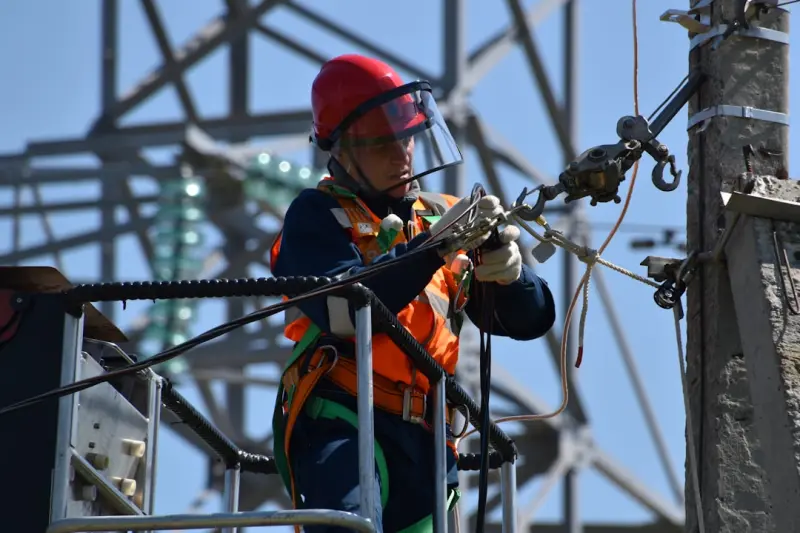
When I first stepped onto a commercial roof to check a building’s thermal envelope, I felt the same frustration that many facility managers share: a comprehensive audit takes a day, the report lands in a mailbox, and the next insight is buried under a stack of paperwork. The industry has been stuck in a “one‑time audit” mindset for decades, and while the data we collect has become richer, the way we deliver value has barely evolved.
The Gap Between Insight and Action
Energy inspections are powerful—when done right, they reveal hidden losses, pinpoint under‑performing equipment, and lay out a roadmap for cost savings. Yet the majority of inspections end at the “report” stage. Managers receive a PDF full of charts, but the day‑to‑day operational teams lack a clear, actionable path. The result? Recommendations sit idle, budgets shift, and the building continues to waste energy.
What if we could close that gap? What if the inspection didn’t end with a document, but rather with an ongoing, collaborative partnership that keeps the building’s energy performance in constant alignment with business goals? That’s the premise behind Energy Inspection as a Service (EIaaS)—a subscription‑based model that transforms a static audit into a living, breathing process.
Why a Service Model Makes Sense Now
Three market forces are converging to make EIaaS not just viable, but inevitable:
- Regulatory pressure. Governments worldwide are tightening energy‑efficiency standards, and compliance penalties are rising. A one‑off inspection can’t guarantee ongoing adherence.
- Technology maturity. IoT sensors, cloud analytics, and AI‑driven forecasting have become affordable enough for mid‑size facilities to embed them without massive capex.
- Financial incentives. Energy‑as‑a‑service (EaaS) financing models have taught the market that paying for outcomes rather than upfront hardware can unlock hidden capital.
EIaaS builds on these trends, delivering a continuous loop of data collection, analysis, and recommendation—while the client pays a predictable monthly fee that aligns with the value received.
Core Pillars of an EIaaS Offering
Designing a subscription‑based inspection service isn’t a simple repackaging of existing audit tools. It requires a re‑architecture around three pillars:
1. Real‑Time Monitoring Infrastructure
At the heart of EIaaS is a network of low‑cost, high‑precision sensors that feed live data into a centralized platform. Unlike the “sensor‑enabled waterproofing” approach that focuses on a single building envelope issue, EIaaS’s sensor suite covers:
- Thermal imaging cameras for surface heat loss detection.
- Power meters on major loads (HVAC, lighting, refrigeration).
- Ambient condition monitors for humidity and airflow.
- Occupancy sensors that correlate usage patterns with energy consumption.
These devices are installed once, calibrated, and then left to operate autonomously, sending data to the cloud where AI models turn raw numbers into meaningful insights.
2. Predictive Analytics Engine
The analytics engine does the heavy lifting. It ingests real‑time streams and cross‑references them with historical benchmarks, weather forecasts, and building‑specific performance models. The result is a set of predictive alerts that tell you not just what is happening, but what will happen if you don’t intervene.
Think of it as the “continuous energy inspection” you read about in Continuous Energy Inspection: Live Building Insights, but with a subscription twist: the platform continuously refines its algorithms based on the building’s own behavior, improving accuracy over time.
3. Actionable Service Layer
Data alone is meaningless without a clear path to remediation. EIaaS teams pair every insight with a prescriptive recommendation, complete with cost‑benefit analysis, implementation timeline, and, crucially, a financing option that can be bundled into the monthly subscription.
This service layer also includes:
- On‑site technician visits scheduled only when the analytics flag a high‑impact issue.
- Remote optimization actions (e.g., adjusting setpoints, rebalancing loads) that can be executed via the platform without dispatch.
- Quarterly performance reviews that tie back to the client’s ESG goals and ROI targets.
From Audit to Partnership: A Walk‑Through Example
Imagine a mid‑size manufacturing plant that signs up for EIaaS. Here’s how the experience unfolds over a twelve‑month cycle:
- Onboarding. Technicians install a suite of sensors across the plant’s roof, walls, and equipment. The platform learns the baseline consumption patterns over the first two weeks.
- Initial Insight. The analytics engine detects that the main compressor runs at 15% higher load during peak hours, a deviation that translates to $12,000 in excess annual electricity costs.
- Prescriptive Action. The service team recommends a variable‑frequency drive (VFD) retrofit, providing a cost estimate, expected payback, and a financing plan that fits within the subscription fee.
- Implementation. The plant’s maintenance crew, guided by a remote expert, installs the VFD. The platform instantly validates the improvement, showing a 13% reduction in compressor energy use.
- Ongoing Optimization. Six months later, occupancy sensors reveal that a section of the plant is under‑utilized during night shifts, prompting a recommendation to dim lighting and adjust HVAC setpoints, saving an additional $4,500 annually.
- Quarterly Review. The client receives a concise performance dashboard linking every saved kilowatt‑hour back to the subscription cost, demonstrating a net positive ROI.
This scenario illustrates how EIaaS turns a single, static inspection into a series of iterative, high‑impact interventions—all under a predictable cost structure.
Addressing Common Concerns
Transitioning to a subscription model raises legitimate questions. Below are the top concerns we hear, and how EIaaS addresses them:
“We’ve already spent money on a traditional audit.”
Traditional audits are still valuable as a baseline. EIaaS can ingest that data, augment it with live monitoring, and turn a one‑off report into an evolving knowledge base. Think of it as upgrading from a paper map to a GPS‑guided journey.
“Our budget is fixed; a subscription feels risky.”
The subscription fee is deliberately sized to be less than the projected annual savings from the first set of interventions. Moreover, many EIaaS providers offer a performance guarantee: if the savings don’t materialize, the client receives a credit toward future services.
“Our building is old; sensor installation might be invasive.”
Modern EIaaS sensors are wireless, battery‑operated, and designed for retrofits. Installation often takes minutes per device, with no need to cut walls or disrupt operations.
“Will we become dependent on the service provider?”
Transparency is baked into the model. All data resides in a client‑owned cloud workspace, and the platform’s API allows integration with existing Building Management Systems (BMS). The client retains full control while benefiting from expert analysis.
Integrating EIaaS with Broader Sustainability Initiatives
Energy inspection doesn’t exist in a vacuum. When combined with other sustainability levers—like renewable energy procurement, waste reduction, and green building certifications—EIaaS becomes a catalyst for holistic ESG performance.
For example, the insights generated by EIaaS can feed directly into an organization’s carbon accounting workflow, ensuring that Scope 2 emissions are accurately captured and reported. Likewise, the platform can flag opportunities for on‑site solar retrofits, aligning with a broader clean‑energy strategy.
Lessons from the Frontline: What Works, What Doesn’t
Having piloted EIaaS with a diverse set of clients—from data centers to retail chains—I’ve distilled a few hard‑won lessons:
- Start small, scale fast. Deploy a pilot on a single building or a high‑impact subsystem. Use the quick wins to prove value before expanding.
- Human‑in‑the‑loop matters. While AI can spot anomalies, a seasoned energy engineer interprets context, especially for legacy equipment where data may be noisy.
- Communicate in business terms. Facility managers love kW‑hour numbers; executives care about ROI and ESG metrics. Tailor reports to each audience.
- Maintain data hygiene. Sensors drift, firmware updates are needed, and network latency can affect real‑time alerts. Regular maintenance of the sensor layer is essential.
These insights echo the broader shift discussed in The Home Inspection Revolution: From Reactive Walk‑Throughs to Predictive Audits, but EIaaS pushes the envelope further by embedding the predictive loop into a continuous service relationship.
The Future Landscape: From Service to Platform Ecosystem
Looking ahead, EIaaS will likely evolve into a multi‑tenant platform where third‑party solution providers—such as HVAC manufacturers, lighting designers, and renewable energy developers—can plug their services directly into the inspection workflow. This ecosystem approach could transform the energy‑inspection market into a marketplace of solutions, each competing on performance and price, all while the building owner enjoys a single, unified dashboard.
In that future, the line between “inspection” and “optimization” blurs. The building becomes a self‑optimizing entity, constantly learning from its own data and adjusting its systems in near real‑time. The subscription model will shift from “inspection as a service” to “building performance as a service,” but the core premise remains the same: delivering measurable, ongoing value rather than a one‑time report.
Getting Started: A Practical Checklist
If your organization is ready to explore EIaaS, use this quick checklist to evaluate readiness:
- Data readiness. Do you have basic utility data (electricity, gas) available in digital form?
- Stakeholder alignment. Have you secured buy‑in from finance, facilities, and sustainability teams?
- Technology baseline. Are you comfortable with cloud platforms and API integrations?
- Budget model. Can you allocate a predictable monthly spend for energy performance improvements?
- Goal definition. What specific outcomes (cost reduction, carbon savings, regulatory compliance) are you targeting?
Answering “yes” to most of these questions indicates a strong fit for an EIaaS partnership. The next step is to engage a qualified provider, run a pilot, and let the data do the talking.
Conclusion: Turning Audits into Alliances
Energy inspection has long been a point‑in‑time activity, delivering snapshots that quickly become outdated. By reimagining the inspection as a subscription service—complete with real‑time monitoring, predictive analytics, and a dedicated action layer—we can transform static audits into dynamic alliances that continuously drive performance, savings, and sustainability.
For facilities looking to stay ahead of regulations, control operating costs, and meet ambitious ESG goals, the shift to Energy Inspection as a Service isn’t just a nice‑to‑have—it’s a strategic imperative. The question isn’t whether the industry will evolve; it’s how quickly you’ll make the move.

Craig Brett is a freelancer with a passion for the outdoors. His love for nature inspires his work, bringing authentic and engaging perspectives to projects related to outdoor activities, adventure, and environmental topics.
Related Posts

Unlocking Hidden Savings: A Modern Homeowner’s Guide to Energy Inspection
Learn how modern energy inspection blends smart data, DIY tools, and AI predictions to uncover hidde... Read More
The Hidden Power of Energy Inspections: Cutting Costs and Carbon
Energy inspections reveal hidden inefficiencies, guide smart upgrades, and pave the way for greener,... Read More

Why Energy Inspections Are Crucial For A Sustainable Future
Energy inspections play a vital role in reducing our carbon footprint and promoting sustainability. ... Read More
Top Posts

The Sunroom Renaissance: Harnessing Light, Heat, and Flexibility for Modern Living
A modern sunroom does more than add square footage; it captures free solar energy, balances temperature year‑round, and offers a flexible space for work, well...Read More

Countertop Conversations: How Surface Choices Shape Kitchen Life
Countertops are more than just a place to set a mug; they affect health, sustainability, and daily workflow. Discover how material choices, eco‑friendly optio...Read More
Mold Removal Mastery: Detect, Eradicate, and Prevent Hidden Growth
Learn how to detect unseen mold, execute a thorough removal, and use smart tech to prevent future infestations—protecting health and home value....Read More
The Path to Energy Efficiency: A Comprehensive Guide to Energy Inspections
Learn how energy inspections can help you achieve energy efficiency and sustainability in your home. Identify areas of inefficiency and make targeted improvemen...Read More
0 Comments
Post Comment
You will need to Login or Register to comment on this post!