

Solar energy has moved from a niche experiment to a cornerstone of modern enterprise strategy. Yet, while rooftop panels glitter on office buildings and solar farms sprawl across deserts, many businesses still treat sunlight as an after‑thought rather than a strategic lever. In this piece, I’ll peel back the layers of solar adoption and show how forward‑thinking companies can turn photons into profit, resilience, and a genuine competitive edge.
The Real Business Case for Sun Power
At first glance, the arithmetic seems straightforward: generate electricity at a lower marginal cost than the grid, reduce utility bills, and claim a slice of ESG credibility. But the deeper story involves three interconnected pillars that most decision‑makers overlook:
- Cost Predictability – Fixed‑rate power purchase agreements (PPAs) lock in energy prices for 10‑20 years, insulating the balance sheet from volatile wholesale markets.
- Operational Resilience – Distributed solar combined with storage creates a micro‑grid that can keep critical loads humming during grid outages, a decisive advantage for data centers, manufacturing lines, and retail floors.
- Brand Amplification – Consumers and investors alike reward companies that demonstrably cut carbon emissions, especially when those reductions are verified through granular data.
When these pillars align, solar stops being a line‑item expense and becomes a strategic asset that drives both top‑line growth and bottom‑line stability.
From Roof‑Top to Business‑Top: Rethinking Solar Architecture
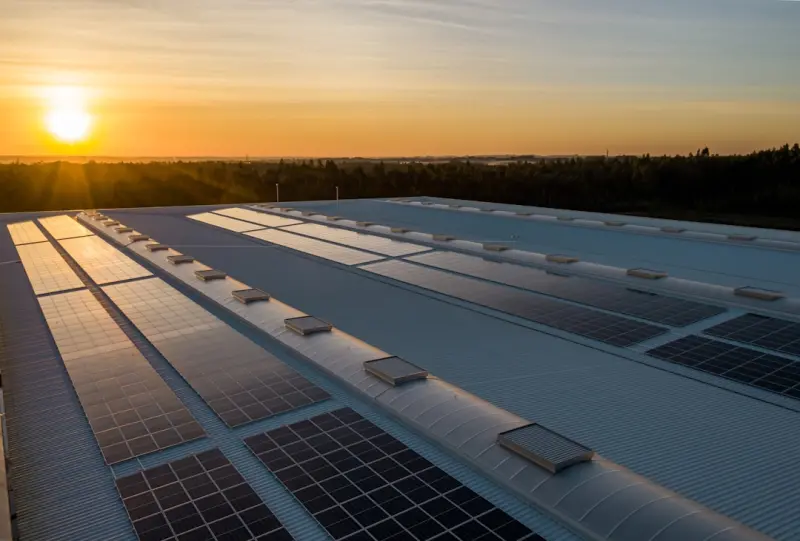
Most organizations still think of solar as a simple roof‑mounted array. That mindset limits the technology’s impact. The next wave of solar architecture treats sunlight as a utility‑grade resource, integrated into the very fabric of the building and its workflows.
Consider the circular construction blueprint. While that guide focuses on material reuse, the same principles apply to solar: panels should be modular, serviceable, and recyclable. Designing a solar façade that can be swapped out or upgraded without tearing down walls unlocks a future‑proof investment.
Similarly, solar can be woven into non‑traditional surfaces. Building‑integrated photovoltaics (BIPV) replace conventional cladding, turning every square foot of exterior skin into a power generator. The aesthetic payoff is substantial – sleek, glass‑like panels can become a visual statement of innovation, reinforcing brand perception.
Data‑Driven Solar Management: Turning Light Into Insight
Generating electricity is only half the battle. The other half is extracting maximum value from that generation. Advanced telemetry now allows facilities to monitor panel performance in real time, diagnose shading issues, and predict maintenance before a drop in output occurs.
One practical example is the integration of solar telemetry with an energy orchestration platform. By feeding solar output data into a centralized energy management system, facilities can automatically route excess generation to on‑site batteries, HVAC chillers, or even to the grid when tariffs are favorable. The result is a dynamic, self‑optimizing power flow that squeezes every watt of sunshine into productive use.
Analytics also feed ESG reporting. Granular data on kilowatt‑hours produced, CO₂ avoided, and cost savings can be packaged into transparent dashboards for stakeholders, turning a vague sustainability claim into a quantifiable narrative.
Innovative Business Models: Solar as a Service
Purchasing a solar array outright is still the dominant model, but it places upfront capital and risk on the organization. A growing trend – and one I’m particularly enthusiastic about – is Solar‑as‑a‑Service (SaaS). Under this arrangement, a third‑party provider installs, owns, and operates the system while the client pays a predictable monthly fee.
- Zero capital expenditure – the client avoids large upfront costs.
- Performance guarantees – contracts often include uptime clauses, shifting risk to the provider.
- Scalable upgrades – as panel efficiency improves, the provider can swap in newer modules without the client lifting a finger.
This model mirrors the evolution we’ve seen in other infrastructure categories, where “as‑a‑service” offerings have unlocked faster adoption and tighter alignment with business outcomes.
Coupling Solar with Storage: The Resilience Multiplier
Solar without storage is akin to a faucet that only runs when it rains. Batteries close the loop, allowing excess generation to be hoarded for later use. The strategic payoff is twofold:
- Peak‑Shaving – Discharging stored energy during high‑tariff periods reduces demand charges, which can constitute 30‑50% of a commercial electricity bill.
- Grid Independence – In regions prone to outages, a well‑sized storage system can keep mission‑critical operations alive, preserving revenue and reputation.
When evaluating storage, look beyond capacity alone. Power rating (the rate at which energy can be discharged) and round‑trip efficiency dictate how effectively the system can respond to real‑time grid signals. Pairing solar with an intelligent storage controller that can interpret price signals, weather forecasts, and demand forecasts is essential for unlocking maximum value.
Regulatory Landscape: Turning Compliance into Opportunity
Governments worldwide are tightening renewable energy mandates, offering tax credits, and introducing net‑metering rules that can make solar projects financially irresistible. However, the regulatory maze can be daunting. A pragmatic approach is to engage a specialist early in the design phase to map out incentives, interconnection requirements, and potential hurdles.
Don’t overlook regional nuances. In some jurisdictions, solar can be counted toward building code compliance, reducing the need for other energy‑efficiency upgrades. In others, utility‑scale solar can be bundled with demand‑response programs, delivering additional revenue streams.
Case Study: A Mid‑Size Manufacturer’s Solar Transformation
Imagine a 150,000‑square‑foot manufacturing facility that historically relied on a single‑phase grid connection. The plant’s energy profile is dominated by high‑intensity process loads during the day, with a modest night‑time baseline.
By deploying a 1.2‑MW rooftop array paired with a 2‑MWh lithium‑ion battery, the company achieved the following outcomes within the first 12 months:
- 30% reduction in annual electricity spend, primarily from peak‑shaving.
- Zero‑downtime during two regional grid outages, thanks to battery backup.
- Recognition from a major client for meeting stringent ESG procurement criteria, leading to a new contract worth $3 million.
- Enhanced ESG metrics: 5,800 tCO₂e avoided, easily reported in sustainability dashboards.
The key enablers were:
- Choosing a modular panel system that could be expanded as production scaled.
- Integrating the solar telemetry with the plant’s existing energy management system, allowing automatic load shifting.
- Negotiating a performance‑based PPA with a local solar‑as‑a‑service provider, eliminating upfront costs.
This example illustrates that solar isn’t just for tech campuses or office towers; it can be a transformational lever for heavy‑industry as well.
Future‑Facing Technologies: Solar Meets AI and IoT
Artificial intelligence is beginning to play a role in solar optimization. Predictive models can forecast cloud cover minutes ahead, adjusting inverter settings to maximize yield. Meanwhile, IoT sensors embedded in panels can detect soiling, micro‑cracks, or temperature anomalies, prompting targeted cleaning or maintenance.
When these technologies converge, the result is a self‑healing solar farm that constantly nudges itself toward optimal performance, reducing O&M spend and extending asset life.
Putting It All Together: A Playbook for Executives
To translate the concepts above into a concrete roadmap, follow this three‑step playbook:
- Audit & Vision – Conduct an energy audit to map current consumption patterns, identify peak periods, and evaluate roof space or alternative mounting options (e.g., parking structures, canopies). Set clear, quantifiable goals (e.g., 40% reduction in utility spend, 100% renewable sourcing).
- Design & Partner – Engage a solar specialist to design a system that aligns with your operational cadence and future growth. Consider modular BIPV, storage sizing, and a solar‑as‑a‑service model if capital constraints exist.
- Deploy & Optimize – Install the system, integrate telemetry into your energy management platform, and establish performance KPIs. Leverage AI‑driven analytics to continually refine dispatch strategies and maximize ESG reporting accuracy.
By treating solar as a strategic platform rather than a peripheral add‑on, organizations can unlock a cascade of benefits that ripple across cost structures, risk profiles, and brand equity.
Final Thoughts: Sunlight as a Competitive Differentiator
We stand at a crossroads where technology, policy, and market forces converge to make solar an undeniable business imperative. The companies that will thrive are those that embed solar into their core strategy, leveraging data, flexible financing, and next‑generation storage to turn every ray of light into measurable value. The sun doesn’t wait – and neither should you.

David MacKinnon is a dynamic freelance writer known for his captivating storytelling and keen insights into the world of technology. With a passion for exploring the intersection of innovation and everyday life, he crafts engaging narratives that not only inform but also inspire his readers.
Related Posts

How Solar Microgrids Empower Commercial Resilience
Solar microgrids combine photovoltaic generation, storage, and intelligent controls to turn power ou... Read More
Solar Energy’s Next Frontier: Turning Every Surface Into Power
Solar power is no longer limited to rooftop panels; innovative technologies like building‑integrat... Read More

Solar Energy as a Service: Turning Light into a Business Asset
A deep dive into Solar-as-a-Service, showing businesses how to monetize solar power through subscrip... Read More
Top Posts

Designing for Neurodiversity: Architectural Strategies That Support Different Minds
A fresh look at architecture that honors neurodiversity, offering practical design tactics to make spaces comfortable, adaptable, and inclusive for every mind....Read More

The Rise of Eco-Friendly Wallpapering: A Sustainable Approach to Home Decor
Eco-friendly wallpapering is a sustainable approach to home decor that offers numerous benefits, including reduced environmental impact and improved indoor air ...Read More

Embracing Sustainable Practices in Commercial Renovations
Sustainable commercial renovations are no longer a niche consideration; they've become a business imperative. Learn how businesses can prioritize sustainability...Read More

How Augmented Reality Is Revolutionizing Bricklaying on the Jobsite
Augmented reality is merging with masonry, giving masons real‑time visual guidance, reducing material waste, accelerating training, and creating data‑rich a...Read More
0 Comments
Post Comment
You will need to Login or Register to comment on this post!