
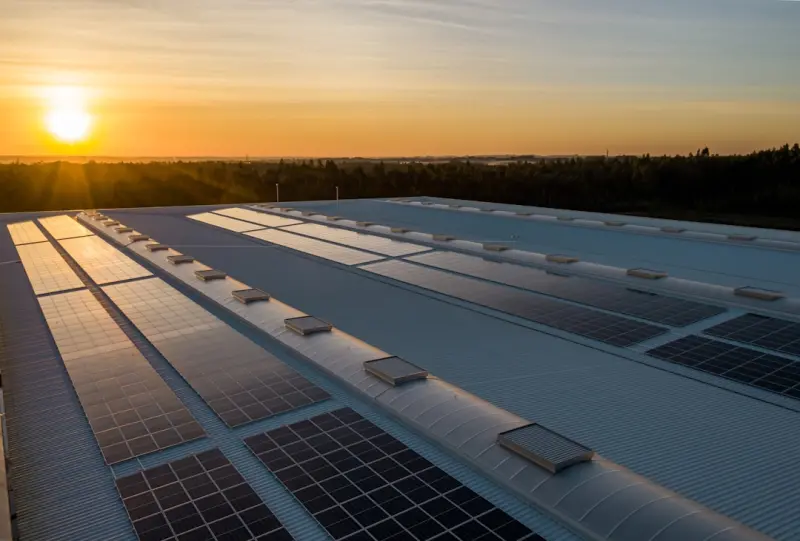
Why Solar Isn’t Just a Roof‑Top Add‑On Anymore
When I first started dabbling in renewable tech, the image of a gleaming array of panels perched on a suburban roof was my mental shortcut for “solar power.” Today, that picture feels quaint. The real excitement lies in how solar is slipping into the very fabric of our built environment—windows that generate electricity, walls that store energy, and even sidewalks that harvest sunlight as you walk. This shift is less about bolting a set of panels onto a structure and more about rethinking every surface as a potential power‑generator.
The Rise of Building‑Integrated Photovoltaics (BIPV)
Building‑Integrated Photovoltaics, or BIPV, is the term that captures the marriage of aesthetics and function. Imagine a glass façade that looks like any other commercial curtain wall, yet it’s quietly converting sunlight into usable kilowatts. The technology has matured to the point where efficiency rivals traditional panels, and manufacturers are offering modules that blend seamlessly with roofing shingles, metal cladding, and even interior skylights.
What makes BIPV compelling for developers and property owners is twofold: it eliminates the visual clutter of conventional arrays and it turns otherwise “dead” real estate into an active asset. In practice, a modern office tower can now count its skin as part of its energy portfolio, reducing reliance on the grid and improving its ESG credentials without sacrificing design intent.
Solar‑Powered Smart Home Nodes: The New Utility Edge
Smart homes have been dominated by connectivity, but power reliability has lagged behind. Enter solar‑powered hubs: compact, modular units that combine a small solar panel, a battery buffer, and a micro‑inverter to feed energy directly to IoT devices. From security cameras to voice assistants, these nodes can stay online during outages, ensuring that the “smart” part of the home remains truly functional when the grid goes dark.
Deploying such nodes is especially attractive for retrofits. Homeowners who can’t install a full‑scale array can still achieve a degree of energy independence by strategically placing these mini‑generators on awnings, pergolas, or even on the side of a garage door. The result is a layered resilience strategy—centralized solar for bulk loads, and distributed solar nodes for critical devices.
Coupling Solar with Energy Storage: From Backup to Grid Services
Battery technology has leapt forward, making the combination of solar and storage a mainstream proposition. The real game‑changer is the ability to shift from a passive backup solution to an active grid‑service platform. Homeowners can now enroll in demand‑response programs, allowing their battery‑backed solar system to feed power back to the utility during peak times, earning revenue while supporting grid stability.
This model is not limited to single‑family homes. Multi‑unit dwellings and small commercial buildings can aggregate their storage assets into a virtual power plant, collectively offering capacity to the grid operator. The economics are compelling: reduced energy bills, potential income streams, and a tangible contribution to the broader energy transition.
Solar as a Service (SaaS‑Solar): Removing the Up‑Front Barrier
One of the biggest hurdles for adoption remains capital expense. Solar as a Service (SaaS‑Solar) flips the script by allowing property owners to lease solar installations with minimal or no upfront cost. The provider retains ownership, handles maintenance, and the client pays a predictable monthly fee—often lower than the previous utility bill.
This arrangement accelerates adoption across sectors that traditionally shy away from large CAPEX projects, such as retail chains, schools, and medical facilities. Moreover, the service model includes performance guarantees, which means the provider is incentivized to keep the system operating at peak efficiency, aligning interests across the value chain.
Integrating Solar with Existing Building Systems
The integration challenge is not just about wiring panels to a breaker box; it’s about harmonizing solar with HVAC, lighting, and even water heating. Take the example of a modern office that already employs variable refrigerant flow (VRF) systems for climate control. By pairing a solar array with a heat pump that can draw directly from solar‑generated electricity, the building can slash its operational carbon footprint dramatically. While the article on Why Variable Refrigerant Flow Is the Game‑Changer for Modern HVAC explored the technology in isolation, the real potential unfolds when it’s powered by clean energy.
Similarly, solar‑ready rooftops can be designed to accommodate future upgrades, such as integrating smart roof materials that adjust their thermal properties in real time. This synergy between solar generation and intelligent envelope design maximizes energy savings while preserving indoor comfort.
Community Solar: Democratizing Access
Not every property has the roof real estate or sun exposure needed for a robust on‑site system. Community solar projects solve this by allowing multiple stakeholders to share a centrally located array. Participants receive credits on their utility bills proportional to their share of the generation.
For businesses, this model offers a way to claim renewable energy usage without altering their facilities. For residents in dense urban cores, it provides a pathway to green power that would otherwise be out of reach. The social equity implications are profound—energy costs can be a regressive burden, and community solar can help level the playing field.
Policy and Incentives: Navigating the Landscape
Governments worldwide are rolling out a patchwork of incentives—tax credits, rebates, and net‑metering policies—that can dramatically improve the financial viability of solar projects. However, the complexity can be daunting. One emerging trend is the bundling of solar incentives with energy efficiency upgrades, creating a holistic “green retrofit” package that addresses both generation and consumption.
Staying current on these programs is essential. Many utilities now offer tools that simulate the impact of various incentives on a project’s payback period, allowing owners to make data‑driven decisions. Leveraging these resources can shave years off the return horizon, making solar investments more attractive across the board.
Future Outlook: The Convergence of Solar and AI
Artificial intelligence is poised to optimize solar performance in ways we’re just beginning to explore. Predictive analytics can forecast panel degradation, adjust tilt angles in real time, and coordinate storage dispatch to minimize costs. In a sense, the solar system becomes a self‑learning entity, continuously refining its operation based on weather patterns, occupancy schedules, and market prices.
When combined with the broader data ecosystem—think smart meters, building management systems, and even weather stations—the potential for a truly autonomous, ultra‑efficient energy ecosystem emerges. This is the next evolution beyond simply installing panels; it’s about creating an intelligent, adaptive power plant that lives within the building itself.
Takeaway: Solar Is No Longer an Afterthought
From BIPV façades to modular solar hubs and community‑scale arrays, the solar landscape is expanding far beyond the traditional rooftop paradigm. By embedding generation into the very skin of our structures, pairing it with storage, and leveraging service‑based models, we’re unlocking a new era of energy resilience and sustainability.
Whether you’re a developer, a facility manager, or a homeowner, the opportunities to integrate solar into your next project are richer than ever. The key is to think holistically—view every surface, every system, and every stakeholder as part of a larger, solar‑powered ecosystem.

Paul Gray is a dynamic blogger based in Brampton, where he shares his life with his amazing wife, Sarah. Known for his engaging writing style and relatable insights, Paul has carved out a niche in the blogging world that resonates with readers from all walks of life. When he's not crafting captivating posts, you can find him savoring a cold beer or indulging in the latest blockbuster movie. With a friendly demeanor and a passion for storytelling, Paul brings a unique perspective to his work, making him not just a blogger, but a voice for those who appreciate the simple joys of life.
Related Posts
The Solar Energy Revolution: Harnessing the Power of the Sun
The solar energy revolution is gaining momentum worldwide. Learn about the benefits, challenges, and... Read More
Solar Energy Unleashed: A Homeowner’s Blueprint for Real Savings and Resilience
A practical guide that shows homeowners how to integrate solar panels, storage, and smart tech to sl... Read More
Solar Power for the Edge: Transforming Resilience and Performance
Solar energy is reshaping the edge of enterprise operations—from autonomous data‑center pods and... Read More
Top Posts

Breathing New Life into Your Home: A Comprehensive Guide to Home Restoration
Learn how to prioritize your home's needs, work with professionals, and stay on budget to achieve a beautiful, functional, and safe home that you'll love....Read More

Beyond the Board: Mastering Sustainable Drywall Techniques
Learn how to choose, install, and maintain sustainable drywall, integrating smart wiring and eco‑friendly finishes for healthier, long‑lasting interiors....Read More

Reinventing Comfort: How AI, VRF, and Smart Envelopes Are Redefining HVAC
A deep dive into the latest HVAC innovations—AI‑powered controls, Variable Refrigerant Flow, and renewable‑integrated smart envelopes—showing how they d...Read More
Quiet Revolution: Acoustic-Focused Garage Construction
Discover why acoustic performance matters in garage builds and explore materials, design tactics, and budget-friendly upgrades to create a quiet, functional spa...Read More
0 Comments
Post Comment
You will need to Login or Register to comment on this post!