
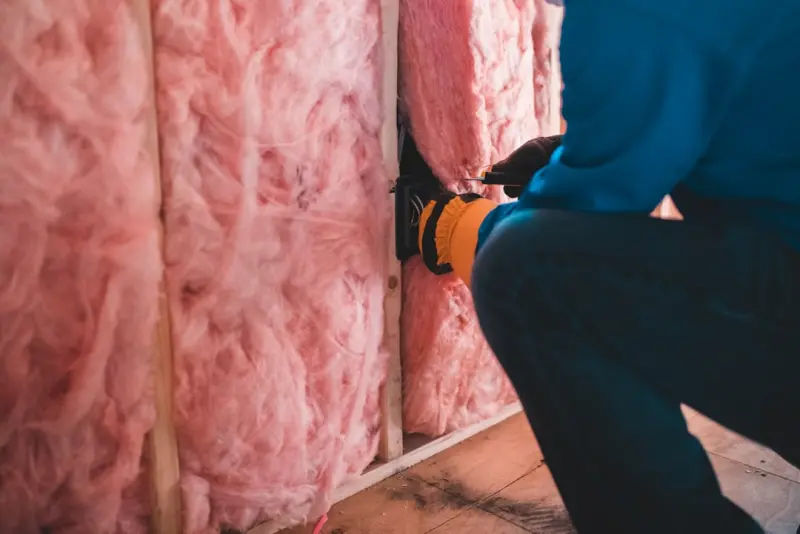
When I first walked through a newly‑finished loft, the first thing that caught my eye wasn’t the exposed beams or the sleek lighting—it was the subtle, almost invisible layer that kept the space comfortable year‑round. That layer, often taken for granted, is insulation. For most homeowners it remains a background player, a silent workhorse that simply “holds the temperature”. But in the era of data‑driven building performance and circular economies, insulation is stepping out of the shadows and onto the stage as a multifunctional, intelligent, and sustainable asset.
The Myth of “Just Thermal” Insulation
Traditional insulation is typically defined by its R‑value, a metric that tells us how well a material resists heat flow. While R‑value is undeniably important, it paints an incomplete picture. Insulation today can do more than block heat—it can store it, regulate humidity, dampen sound, and even communicate with building management systems. This broader definition expands the design brief from “keep the heat out” to “create a dynamic, healthy envelope that interacts with occupants and the environment.”
From Passive Blanket to Active Layer: Embedding Intelligence
Imagine a wall that not only insulates but also tells you when a draft is forming, when moisture is creeping in, or when the building envelope is losing efficiency. The answer lies in sensor‑enabled insulation. By weaving low‑power temperature, humidity, and strain sensors into the fibrous matrix of insulation, we turn a passive material into a data‑rich skin.
- Real‑time monitoring: Facility managers receive alerts the moment a thermal bridge forms, allowing immediate remediation before energy waste escalates.
- Predictive maintenance: Machine‑learning models analyze sensor streams to forecast insulation degradation, scheduling interventions just in time.
- Occupant comfort: Integrated sensors feed into smart HVAC controls, creating micro‑climate zones that adapt to individual preferences without over‑conditioning the entire space.
These capabilities echo the evolution we’ve seen in structural health monitoring, but with a focus on the building envelope. The result is a holistic view of building performance that bridges the gap between the hidden cavity and the visible interior.
Material Innovation: Beyond Fiberglass and Foam
While fiberglass and expanded polystyrene have dominated for decades, new material families are reshaping what insulation can be.
Phase‑Change Materials (PCMs)
PCMs absorb and release latent heat during phase transitions, effectively smoothing temperature swings. When incorporated into wall cavities, they can store excess daytime heat and release it at night, reducing peak HVAC loads. The key is selecting a PCM with a transition temperature that aligns with the building’s comfort range, ensuring that the material actually engages during typical occupancy cycles.
Aerogels
Often described as “solid smoke,” aerogels boast some of the highest R‑values per inch of any insulating material. Their nanoporous structure traps air molecules, limiting conduction while remaining lightweight. Though historically expensive, advances in manufacturing have driven costs down, making aerogel blankets a viable option for high‑performance retrofits where space is at a premium.
Bio‑Based Insulation
Materials like sheep’s wool, hemp, and recycled denim not only provide respectable thermal performance but also excel at moisture regulation. Their hygroscopic nature allows them to absorb and release water vapor, mitigating condensation risks—a common culprit behind mold in older homes. Moreover, these renewable fibers often carry lower embodied carbon than petrochemical foams, aligning with broader sustainability goals.
Closing the Loop: Upcycling Waste into High‑Performance Insulation
One of the most compelling narratives in modern construction is the circular economy, where waste streams become raw inputs for new products. In the insulation arena, this philosophy is gaining traction, especially through the upcycling of textile and construction waste.
Take post‑consumer denim, for example. After the fibers are shredded and treated, they form a dense, resilient insulation board that rivals traditional fiberglass in R‑value while offering superior acoustic performance. Similarly, recycled glass fibers, sourced from discarded bottles, can be re‑melted into batts that retain high thermal resistance and resist fire.
These initiatives not only reduce landfill burden but also slash the embodied carbon of the insulation itself. For readers looking for a deeper dive into how waste can be transformed into value, see our circular economy approach to insulation.
Acoustic Benefits: Insulation as Sound Design
Thermal performance is only half the story. In urban environments, external noise infiltrates homes through the same pathways that heat does—gaps, studs, and cavities. High‑density insulation, especially those based on mineral wool or recycled denim, doubles as a sound barrier, absorbing airborne frequencies and dampening impact noise.
Designers can strategically place thicker insulation layers behind living spaces to create “quiet zones,” while using thinner, high‑R‑value aerogel blankets in less sensitive areas. The result is a balanced acoustic envelope that enhances occupant well‑being without sacrificing thermal efficiency.
Integrating Insulation Into Aesthetic Design
Gone are the days when insulation was hidden behind drywall with no consideration for interior expression. With the rise of exposed‑brick interiors, exposed concrete, and open‑plan lofts, designers are rethinking how insulation can be part of the visual narrative.
- Transparent Aerogel Panels: These panels let natural light filter through while providing exceptional insulation, creating luminous walls that feel both airy and energy‑efficient.
- Colored Bio‑Insulation Boards: Manufacturers now offer dyed hemp or wool boards, allowing architects to introduce subtle hues that complement interior palettes.
- Integrated Insulation & Finish Systems: Some systems combine insulation with decorative plaster or prefabricated wall panels, reducing labor and material waste while delivering a seamless finish.
Practical Steps for Retrofits: From Audit to Installation
For building owners eager to upgrade, a systematic approach ensures that the investment delivers maximum return.
- Energy Audit & Thermal Imaging: Identify hotspots and thermal bridges. Modern drones equipped with infrared cameras can map large façades quickly, pinpointing problem areas.
- Select the Right Insulation Type: Match the material to the climate zone, space constraints, and performance goals (thermal, acoustic, moisture control).
- Consider Sensor Integration: If future‑proofing is a priority, choose insulation products that accommodate embedded sensors, or plan for retrofitting sensor cables during installation.
- Seal Air Leaks First: Insulation works best when the building envelope is airtight. Use high‑quality tapes, gaskets, and caulks to close gaps before adding bulk insulation.
- Install with Precision: Over‑filling cavities can compress fibers, reducing R‑value. Follow manufacturer guidelines on placement density and spacing.
- Validate Performance: Post‑install, conduct a blower‑door test and compare energy consumption data to pre‑retrofit baselines.
The Future Landscape: Insulation as a Platform
Looking ahead, insulation will likely serve as a platform for multiple building services. Imagine a wall cavity that houses not only thermal insulation but also thin‑film photovoltaics, passive ventilation ducts, and fiber‑optic communication lines—all co‑located without compromising performance.
Such convergence requires interdisciplinary collaboration—material scientists, data engineers, and architects must speak a common language. Standards bodies are already drafting guidelines for “multifunctional envelope components,” ensuring safety, fire resistance, and interoperability across systems.
Conclusion: Embracing the Insulation Evolution
Insulation is no longer a silent, static component. It is an active participant in a building’s energy ecosystem, a conduit for data, a medium for acoustic comfort, and a canvas for sustainable design. By adopting advanced materials, embedding smart sensors, and leveraging circular economy principles, we can transform our walls, roofs, and floors from passive barriers into intelligent, resilient, and beautiful building skins.
Whether you’re a property developer seeking to differentiate your portfolio, a facilities manager aiming for measurable energy savings, or a homeowner curious about the next generation of comfort, re‑imagining insulation is the logical next step in the evolution of smart, sustainable spaces.

Lifan Chen is a freelancer based in Toronto specializing in marketing. With expertise in crafting effective marketing strategies and campaigns, Lifan helps businesses grow their brand presence and reach target audiences. As a Toronto-based freelancer, Lifan combines local market insights with creative marketing skills to deliver tailored solutions for clients.
Related Posts

Insulation Insights: Turning Your Home’s Skin Into a Smart, Sustainable Shield
Explore a fresh take on insulation that balances eco‑friendly materials, smart home integration, a... Read More
The Quiet Revolution: How Insulation Transformed My Home Comfort and Bills
Learn the insider tricks Kelly Reynolds used to turn insulation into a powerhouse of comfort, energy... Read More
Unlocking the Hidden Power of Insulation for a Smarter, Sustainable Home
Explore the unsung hero of sustainable homes—insulation—and learn practical DIY steps, smart tec... Read More
Top Posts
Future‑Proof Your Home: Build Flexibility Into Every Square Foot
Discover practical strategies for creating a home that evolves with your lifestyle, using modular layouts, smart zoning, and adaptable materials for lasting fle...Read More
Building the Future: Sustainable Garage Construction Tips from William Roy
Veteran contractor William Roy shares his insider’s guide to constructing a sustainable garage—from eco‑friendly foundations and insulation to smart power...Read More
Radiant Floor Heating: The Next Competitive Edge for Modern Workspaces
Radiant floor heating delivers consistent, draft‑free warmth that enhances employee focus, improves indoor air quality, and reduces energy use, giving forward...Read More

Design‑Build Mastery: A Hands‑On Journey to Sustainable, Smart Living
A designer‑builder shares a hands‑on, sustainable renovation story—from planning to smart‑home integration—offering actionable tips for a cohesive, ec...Read More
0 Comments
Post Comment
You will need to Login or Register to comment on this post!