
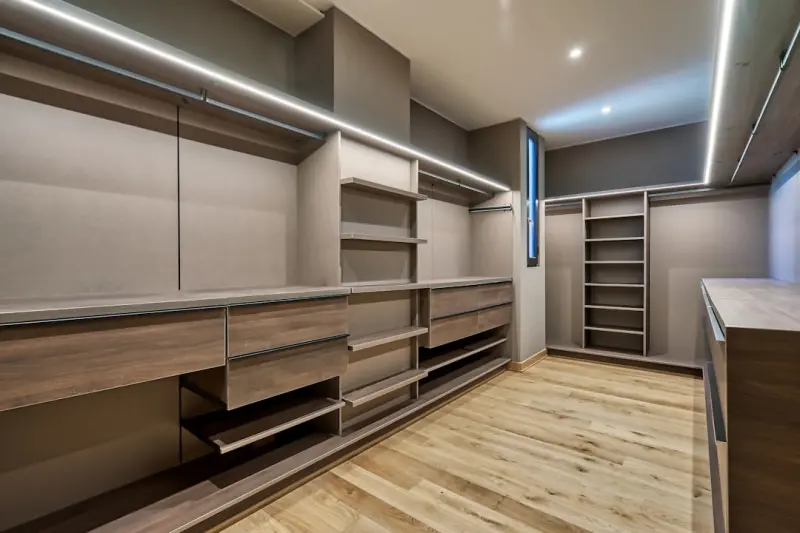
When a company’s most valuable assets are hidden behind a set of doors, the conversation usually drifts toward security, inventory audits, or the occasional “where did we put that spare projector?” Rarely does the dialogue focus on the closet itself—its layout, its intelligence, its ability to become a silent productivity booster. As someone who’s spent years turning overlooked facilities into measurable profit centers, I’ve learned that a well‑engineered storage environment can do more than just keep things tidy; it can become a data‑rich, adaptable platform that supports agile operations, sustainability goals, and even employee satisfaction.
Why Closet & Storage is the Next Frontier for Facility Optimization
Most businesses treat closets as static, low‑value real estate. The typical approach is to purchase a set of generic shelves, shove everything in, and call it a day. This mindset ignores three critical realities:
- Space is finite. As offices shrink to accommodate hybrid work and as supply chains tighten, every square foot counts.
- Inventory is dynamic. The items you store today—think seasonal marketing kits, spare IT hardware, or even office plants—might be completely different next quarter.
- Data is everywhere. Modern sensors and SaaS platforms can turn a simple shelf into a real‑time analytics hub.
When you combine these factors, the closet transforms from a passive container into an active component of your operational strategy.
From Shelves to Smart Shelves: The Core Technologies
Implementing a smart closet doesn’t require a full‑blown data center. A layered approach works best:
- Modular Structural Systems. Prefabricated, adjustable frames let you reconfigure layout on the fly. Think of them as the Lego bricks of commercial storage—quick to assemble, easy to relocate.
- IoT Sensors. Weight sensors, RFID readers, and environmental monitors (temperature, humidity) feed data into your facility‑management platform.
- AI‑Driven Forecasting. Machine‑learning models predict when you’ll need more of a certain item, flagging low‑stock scenarios before a project stalls.
- Integrations with Asset Management Software. Seamless sync with existing ERP or CMMS systems ensures the closet never lives in a silo.
These components can be rolled out incrementally, starting with high‑traffic storage zones and expanding as ROI becomes evident.
Design‑Build Micro‑Workspaces Meet Closet Innovation
One of the most effective ways to justify the investment is to align closet upgrades with broader micro‑workspace design principles. A micro‑workspace is essentially a pocket of functionality—think a pop‑up meeting nook or a dedicated brainstorming pod. When you integrate storage into these pockets, you create self‑contained units that can be deployed wherever teams need them.
Imagine a sales team that travels between two office locations. Instead of shipping product samples back and forth, you install a portable smart closet that tracks each sample’s location, condition, and usage. When the team moves to the next site, the closet’s data syncs automatically, and the new location receives a full inventory report. The result? Zero lost samples, reduced shipping costs, and a seamless handoff that feels like magic.
Case Study: Turning an Underutilized Supply Closet into a Revenue Engine
A regional healthcare provider approached us with a modest challenge: their central supply closet was overflowing, yet inventory reports showed a 15% discrepancy between recorded and actual stock. After a quick audit, we implemented a pilot smart‑closet solution in one department.
- We installed modular shelving with built‑in RFID readers.
- Weight sensors on each shelf fed real‑time usage data to the provider’s existing asset management system.
- AI models highlighted patterns—certain wound‑care kits were being over‑ordered, while a specific type of sterile glove was consistently under‑stocked.
Within three months, the provider reduced excess inventory by 22%, cut emergency re‑order costs by 18%, and uncovered a hidden revenue stream by reallocating surplus items to a nearby clinic that lacked its own storage. The pilot’s success prompted a rollout to all 12 regional sites, projected to save the organization over $500,000 annually.
Balancing Sustainability and Functionality
Smart closets also align with corporate sustainability initiatives. By monitoring environmental conditions, you can:
- Detect moisture that could damage sensitive equipment, preventing premature disposal.
- Optimize lighting with motion‑activated LEDs, cutting energy use.
- Use reclaimed or recycled materials for modular frames, reducing the carbon footprint of new construction.
In fact, integrating sensors that track temperature and humidity can feed into broader building‑automation systems, helping maintain optimal conditions for both stored goods and occupied spaces. This synergy reduces waste and supports ESG reporting requirements.
Financial Impact: Calculating the ROI of a Smart Closet
The financial case for upgrading storage is often overlooked because the savings are indirect. Here’s a simple framework to quantify the upside:
- Reduced Carrying Cost. Each square foot of over‑stock ties up capital. By tightening inventory levels, you free up cash flow.
- Lower Labor Hours. Automated pick‑lists and real‑time location data cut the time staff spend searching for items—often by 30% or more.
- Minimized Losses. Sensors detect spoilage, theft, or damage early, preventing costly write‑offs.
- Energy Savings. Smart lighting and climate control shave utility expenses.
- Revenue Generation. As the case study showed, surplus inventory can be monetized or re‑allocated to other profit centers.
When you add up these factors, the payback period for a modest smart‑closet deployment can be as short as six to twelve months, depending on the scale and the organization’s baseline inefficiencies.
Practical Steps to Get Started
Ready to turn your closets into strategic assets? Follow this roadmap:
- Audit Your Current Storage. Map out every closet, note dimensions, inventory types, and pain points.
- Define Success Metrics. Whether it’s reduced search time, lower inventory variance, or energy savings, set clear KPIs.
- Choose a Modular System. Look for vendors that offer adjustable frames, easy re‑configuration, and compatibility with sensor tech.
- Deploy Sensors Strategically. Start with weight and RFID on high‑turnover items; expand to environmental monitoring as needed.
- Integrate with Existing Platforms. Ensure data flows into your ERP, CMMS, or dedicated facilities‑management SaaS.
- Train Staff. A quick workshop on how to use the new system—especially the mobile UI for pick‑list generation—will drive adoption.
- Iterate. Use the data you collect to refine shelving layouts, reorder thresholds, and even the physical location of the closet itself.
Future Trends: What’s Next for Closet & Storage?
Looking ahead, a few emerging trends will reshape how we think about storage:
- Robotic Retrieval. Small‑scale robotic arms can pull items from high shelves, reducing the need for ladders or manual lifts.
- Digital Twins of Storage. A virtual replica of every closet, complete with sensor feeds, allows facilities managers to simulate re‑configurations before physically moving anything.
- Predictive Maintenance for Storage Fixtures. Just as proactive appliance care extends equipment life, sensors can alert you when a shelf bracket is nearing fatigue, preventing accidents.
These advances will further blur the line between “storage” and “infrastructure,” making closets a legitimate component of a smart building’s ecosystem.
Conclusion: Elevate the Overlooked
In an era where every part of the built environment is being digitized, it’s easy to overlook the humble closet. Yet, with modular design, IoT integration, and data‑driven management, a closet can evolve from a passive storage space into an active contributor to efficiency, sustainability, and even revenue.
If your organization is still treating closets as afterthoughts, you’re missing out on a low‑cost, high‑impact opportunity. Start small, measure rigorously, and let the data guide the next iteration. In doing so, you’ll discover that the true power of storage lies not in what you keep inside, but in the intelligence you extract from it.

Paul Gray is a dynamic blogger based in Brampton, where he shares his life with his amazing wife, Sarah. Known for his engaging writing style and relatable insights, Paul has carved out a niche in the blogging world that resonates with readers from all walks of life. When he's not crafting captivating posts, you can find him savoring a cold beer or indulging in the latest blockbuster movie. With a friendly demeanor and a passion for storytelling, Paul brings a unique perspective to his work, making him not just a blogger, but a voice for those who appreciate the simple joys of life.
Related Posts

The Sustainable Closet: How Eco-Friendly Design Can Transform Your Storage Space
Discover the benefits of sustainable closet design and learn how to create a greener storage space w... Read More
Flexible Closet Architecture: Turning Wardrobe Space into a Productivity Engine
A modern closet can be a strategic asset—offering modular flexibility, sensor‑driven insights, a... Read More

Adaptive Closets: Turning Storage Into a Smart, Modular Ecosystem
This article explores how to upgrade traditional closets into adaptive, data‑driven storage system... Read More
Top Posts

The Importance of Professional Help in Home Maintenance
Maintaining a home can be daunting, but with professional help, homeowners can enjoy a beautiful, functional, and safe living space. Learn about the importance ...Read More

The Rise of Interactive Countertops: Turning Surfaces into Digital Assistants
Interactive countertops embed touch displays, sensors, and smart controls into kitchen surfaces, turning them into command centers that improve workflow, safety...Read More

Mold Removal Mastery: A Pro’s Playbook for Healthy Spaces
A seasoned facilities expert shares a step‑by‑step playbook for diagnosing, eradicating, and preventing mold, turning remediation into a long‑term health ...Read More

Carbon‑Negative Concrete: How the Industry Is Rewriting Its Green Playbook
Concrete is undergoing a climate makeover. By swapping traditional cement for low‑carbon binders, capturing CO₂ during curing, and using waste aggregates, b...Read More
0 Comments
Post Comment
You will need to Login or Register to comment on this post!