
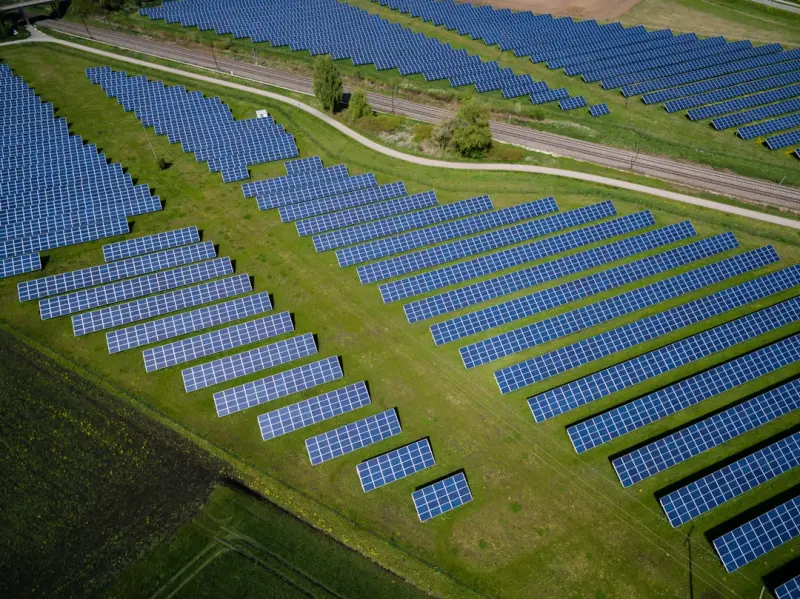
Why Solar Matters for SaaS Data Centers
When I first stepped onto a data‑center floor, the hum of servers felt like a modern‑day chorus of industry. Yet beneath that steady rhythm lies a quiet dependency on the grid—a dependency that can become a single point of failure during storms, price spikes, or regional outages. As a SaaS founder who’s watched customers lose access to critical tools in the middle of a blackout, I’ve become obsessed with building resilience into the very power that runs our platforms. Solar energy isn’t just a green checkbox; it’s a strategic asset that can keep the lights on, the code running, and the business thriving.
From Green Badge to Competitive Advantage
Many tech companies tout “carbon‑neutral” status as a marketing win, but the reality is deeper. Solar installations on‑site or nearby create an independent power envelope that reduces exposure to wholesale electricity volatility. This translates into predictable OPEX, lower carbon footprints, and a stronger ESG story that investors love.
But there’s a hidden payoff beyond the balance sheet: customer confidence. When a SaaS platform guarantees 99.999% uptime, clients ask “What if the grid goes down?” A solar‑backed data center can answer with a concrete plan—battery storage, smart inverters, and an islanding capability that lets the facility run autonomously for days.
Designing a Solar‑First Data Center
Transitioning from a conventional data‑center model to a solar‑first architecture involves three key pillars:
- Site Selection & Layout – Choose a location with abundant sun exposure and minimal shading. Rooftop space is a natural first candidate, but ground‑mounted arrays can double capacity when the footprint allows.
- Power Management Architecture – Integrate solar panels with an intelligent energy management system (EMS) that balances generation, storage, and load in real time.
- Cooling Synergy – Pair solar generation with efficient cooling solutions. For example, dynamic insulation can reduce HVAC demand, letting more of the solar harvest go straight to servers.
Solar Generation Meets Data‑Center Cooling
Cooling is the Achilles’ heel of any data‑center. Traditional chillers draw massive amounts of electricity, eroding the sustainability gains of solar panels. The trick is to align the peak solar output with the peak cooling load. By employing free‑cooling techniques—using outside air when ambient temperatures dip below a set threshold—you can dramatically cut the need for mechanical refrigeration during sunny days.
In practice, this means installing a variable‑speed air handling unit that modulates flow based on real‑time temperature and solar irradiance data. When the sun is blazing, the system ramps up airflow, letting the natural breeze do the heavy lifting. When clouds roll in, the EMS seamlessly blends in battery discharge or grid draw to maintain the precise temperature envelope servers demand.
Battery Storage: The Bridge Between Sun and Server
Solar is intermittent, and data‑center workloads are not. That’s why lithium‑ion or flow batteries become the bridge that smooths the supply curve. Modern battery management platforms can predict short‑term generation dips and pre‑emptively discharge to keep the power quality within the tight tolerances required for high‑density racks.
Beyond simple backup, batteries enable peak shaving. When utility rates soar during demand‑response events, the EMS can temporarily shift load to stored energy, avoiding costly demand charges. This not only protects the bottom line but also demonstrates to regulators that the facility is a net‑positive participant in grid stability.
Microgrids: The Ultimate Independence Layer
Think of a microgrid as a neighborhood of energy assets—solar panels, batteries, and the data‑center itself—managed by a single intelligent controller. When the main grid falters, the microgrid isolates (or “islands”) and continues to operate autonomously. This architecture is gaining traction in industrial parks and university campuses, and it’s a perfect fit for SaaS firms that need uninterrupted service.
Key components of a robust microgrid include:
- Smart inverters capable of both grid‑following and grid‑forming modes.
- A real‑time SCADA system that monitors voltage, frequency, and power flow across all assets.
- Automated protection schemes that prevent fault propagation during islanding.
When executed correctly, a microgrid can keep a data center humming even when the surrounding community experiences a blackout, a scenario that would otherwise cripple SaaS operations.
Economic Modeling: Making the Business Case
Investors ask, “What’s the ROI?” The answer hinges on three variables:
- Solar Capital Expenditure (CapEx) – Costs have fallen dramatically, with utility‑scale installations now averaging under $1,000 per kilowatt. For a 5 MW rooftop array, the upfront spend can be amortized over 20‑25 years.
- Operational Savings – By generating your own electricity, you shave off a significant portion of the utility bill. Add to that reduced demand charges thanks to battery dispatch.
- Risk Mitigation Value – Quantify the cost of downtime (lost revenue, SLA penalties, brand damage). Even a modest reduction in outage frequency can tip the scales dramatically.
A simple Net Present Value (NPV) model that incorporates these three levers often shows a positive return within the first 8‑10 years, with a compelling internal rate of return (IRR) that rivals traditional data‑center upgrades.
Regulatory Incentives and ESG Reporting
Governments worldwide are rolling out tax credits, accelerated depreciation (e.g., MACRS in the U.S.), and grant programs to accelerate solar adoption. SaaS companies can stack these incentives with renewable energy certificates (RECs) to claim additional carbon offsets.
From a reporting perspective, solar assets provide verifiable, meter‑read data that feed directly into ESG dashboards. Investors appreciate the granularity—kilowatt‑hours generated, CO₂ avoided, and the correlation between solar output and uptime.
Case Study: A Mid‑Size SaaS Firm’s Solar Journey
Consider a hypothetical company, DataPulse, that runs a subscription‑based analytics platform. Their primary data center sits in a suburban industrial park with a flat roof spanning 100,000 sq ft. Here’s how they transformed their power strategy:
- Solar Deployment – Installed a 4 MW rooftop array using high‑efficiency mono‑PERC modules. The system produces roughly 5.6 GWh annually, covering 65% of the data center’s electricity demand.
- Battery Integration – Added a 6 MWh lithium‑ion storage system, sized to cover the facility for up to 12 hours of darkness.
- Smart Cooling Upgrade – Implemented dynamic insulation in the chilled water loops, reducing HVAC load by 18%.
- Microgrid Control – Deployed a microgrid controller that can island the data center within 5 seconds of a grid fault detection.
- Financial Outcome – Achieved a 30% reduction in utility spend, avoided $1.2 M in potential downtime costs over three years, and earned a 3‑year tax credit worth $850 k.
The result? DataPulse can now market “99.999% uptime powered by 100% clean energy” as a differentiator—a claim that resonates with environmentally conscious enterprises.
Future‑Proofing with Solar‑Ready Architecture
Solar technology isn’t static. Emerging trends like bifacial modules, perovskite‑silicon tandem cells, and floating PV can boost yields dramatically. Designing a data‑center roof with extra load capacity and modular mounting systems ensures you can swap in next‑gen panels without major structural work.
Moreover, solar‑as‑a‑service (SaaS) models are gaining momentum. Instead of buying the array outright, companies can lease the system, turning CAPEX into OPEX and preserving cash flow for core product development. This aligns perfectly with the SaaS ethos of subscription‑based pricing.
Integrating Solar into the SaaS Product Roadmap
It may sound odd, but the solar strategy can become a feature of your product itself. Imagine a monitoring dashboard that shows customers not only their usage metrics but also the real‑time renewable energy percentage powering their instance. This transparency builds trust and can even be tied to pricing tiers—premium plans guarantee a higher share of renewable power.
Developers can expose an API endpoint that returns the site’s carbon intensity in grams CO₂ per kilowatt‑hour. Third‑party tools could then use this data for carbon‑aware scheduling, shifting non‑critical batch jobs to times when solar generation peaks.
Overcoming Common Challenges
While the benefits are compelling, several hurdles can trip up a solar‑centric data‑center plan:
- Intermittency – Mitigated by robust storage and demand‑response strategies.
- Regulatory Complexity – Navigating interconnection agreements and net‑metering rules requires specialized legal counsel.
- Space Constraints – If rooftop area is limited, consider vertical solar facades or partnering with nearby facilities for shared solar farms.
- Initial Capital – Leverage financing options like power purchase agreements (PPAs) or green bonds to spread costs.
Addressing each of these with a clear action plan keeps the project on schedule and within budget.
Conclusion: Sunlight as a Strategic Asset
For SaaS companies, the data center is the beating heart of the business. By weaving solar energy into its very fabric, you turn a utility expense into a resilient, sustainable, and marketable advantage. The sun doesn’t care about quarterly earnings—yet it can power the next wave of uninterrupted, green SaaS experiences.
If you’re ready to explore how solar can future‑proof your platform, start with a feasibility study, engage a solar EPC partner, and let your data center become a beacon of both reliability and responsibility.
Remember: the best downtime is the one that never happens, and the cleanest power is the one that’s already shining on your roof.

When it comes to the world of blogging and writing, Rose DesRochers is a name that stands out. Her passion for creating quality content and connecting with her audience has made her a trusted voice in the industry. Aside from her skills as a writer and blogger, Rose is also known for her compassionate nature.
Related Posts
Harnessing Sunlight: My Journey to a Solar-Powered Home
I share the highs and challenges of going solar, from panel placement to pairing with smart home tec... Read More
Solar‑Powered Edge Computing: Fueling the Next Generation Workplace
Solar‑powered edge computing merges renewable energy with on‑site data processing, delivering lo... Read More
Solar‑Powered Business Hubs: Turning Light into a Competitive Edge
A deep dive into leveraging solar power beyond utility bills, exploring service models, AI integrati... Read More
Top Posts

The Sustainable Awning Revolution: Eco-Friendly Options for Your Home
Explore the world of sustainable awnings and learn how eco-friendly practices are changing the game. From recyclable materials to energy-harvesting technology, ...Read More
Commercial Renovations: Paul Gray’s Blueprint for Sustainable Success
Paul Gray shares his insider strategies for turning commercial spaces into sustainable, high‑return assets, blending green practices with smart financial plan...Read More
Designing a Future‑Proof Home Addition That Grows With You
A strategic home addition can increase property value, improve daily comfort, and adapt to evolving family needs. This guide walks you through goal setting, fle...Read More

The Ultimate Renovation Checklist: A Sustainable Approach
Create a comprehensive renovation checklist to ensure a smooth and sustainable home upgrade. Learn how to prioritize sustainable practices and materials to enha...Read More
0 Comments
Post Comment
You will need to Login or Register to comment on this post!