
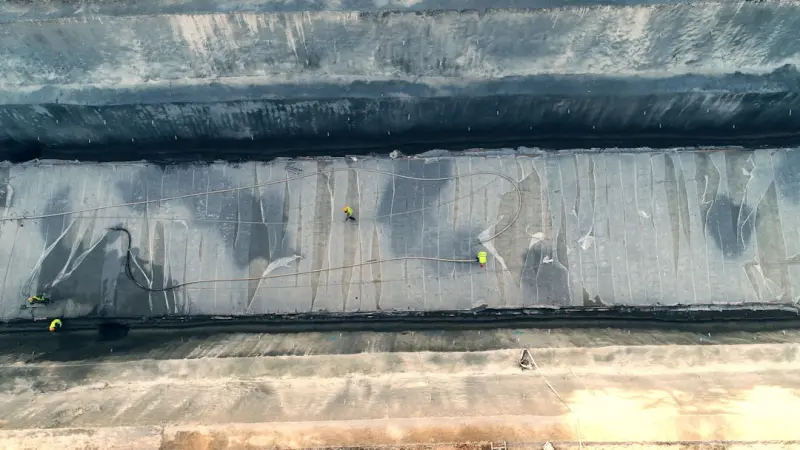
Waterproofing as a Service: Turning Protection into a Subscription
When I first stepped onto a construction site in my early career, the most common question from owners was simple: “Will this building stay dry?” That single query has followed me through every project, every retrofit, and every conversation with a facilities manager. Decades later, the answer isn’t just “yes” or “no” – it’s a continuous promise, and increasingly, that promise is being delivered through a subscription model I like to call Waterproofing as a Service (WaaS).
Think about the shift we’ve seen in software: instead of buying a perpetual license, companies pay a recurring fee for updates, support, and scalability. The same logic can be applied to the physical envelope of a building. By packaging waterproofing into a service, owners get ongoing assurance that water intrusion will be detected, prevented, and remediated before it becomes a costly emergency.
Why a Service Model Makes Sense Now
Traditional waterproofing is a one‑off, high‑ticket item. A contractor applies a membrane, a sealant, or a coating, and the job is considered complete. In reality, the performance of those systems degrades over time—UV exposure, thermal cycling, and even the building’s own movement can create tiny breaches that go unnoticed until a storm arrives.
- Predictable cash flow for owners: Instead of a massive upfront capital expense, a monthly or annual fee spreads the cost across the asset’s lifecycle.
- Continuous monitoring: Sensors embedded in the envelope feed real‑time data to a cloud platform, flagging humidity spikes, pressure changes, or membrane delamination before water finds a way in.
- Proactive maintenance rather than reactive repairs: The service provider can dispatch a crew at the first sign of trouble, often while the building is still occupied, minimizing disruption.
- Asset value protection: A building with a living waterproofing system retains its resale value and can command higher rents because tenants know they’re protected.
In short, the subscription model aligns the incentives of the service provider with the building owner’s long‑term goals. The provider gets paid for keeping the envelope dry; the owner gets paid for staying dry.
Core Components of a Waterproofing Subscription
A robust WaaS offering hinges on three pillars: technology, talent, and transparency.
1. Smart Sensors and IoT Integration
The first step is to embed a network of low‑power sensors throughout critical envelope locations—basement walls, roof decks, window flashings, and even interior moisture‑sensitive zones like bathrooms and kitchens. These devices capture temperature, relative humidity, and pressure differentials, sending the data to an analytics engine that learns the building’s “normal” moisture profile.
For those interested in the data side of things, you can explore smart moisture analytics that turn raw numbers into actionable insights.
2. Service‑Level Agreements (SLAs) Backed by Field Teams
Technology alone won’t stop a leak; you need a responsive crew that can interpret alerts and act. A typical SLA includes:
- Response time: 24‑hour on‑site assessment for critical alerts; 48‑hour for non‑critical.
- Repair window: Completion of remedial work within 72 hours of confirmation.
- Performance guarantees: Warranty extensions for the membrane if the provider fails to meet the SLA.
By tying compensation to these metrics, the provider has skin in the game, turning every maintenance ticket into a performance opportunity.
3. Transparent Reporting and ROI Dashboards
Owners love numbers, especially when they prove cost savings. A subscription portal should provide:
- Monthly moisture trend graphs.
- Cost‑avoidance calculations—how many potential leak events were averted.
- Comparative benchmarks against similar properties.
When the data is presented clearly, it’s easier to justify the ongoing fee and even negotiate better terms during lease renewals.
From Reactive Repairs to Proactive Asset Management
Historically, waterproofing has been treated as a “fix‑it‑once” task. That mindset is changing, and the shift is best illustrated by the emerging partnership between waterproofing specialists and facilities teams that view your foundation as a high‑value asset. When you start treating the envelope like a living system, every maintenance decision becomes part of a broader strategy to preserve capital.
Consider a mid‑rise office building in a coastal city. In a conventional model, the owner might spend $50,000 on a new roof membrane every ten years, plus $20,000 in emergency repairs when a storm uncovers a weak spot. Under a WaaS model, the owner pays $500 per month (roughly $6,000 annually) for continuous monitoring, quarterly inspections, and a 10‑year guarantee that the membrane will be refreshed before its performance drops below 85 %.
Financially, that’s a net saving of $70,000 over the decade, not to mention the avoided business interruption and tenant dissatisfaction during emergency repairs. The numbers tell a compelling story, but the real win is the peace of mind that comes from knowing the building’s envelope is being watched 24/7.
Addressing Common Concerns
“Isn’t a subscription just a way to lock me into higher costs?” – The key is to structure the contract with clear performance metrics and exit clauses. Most providers offer tiered plans, allowing owners to start small (sensor‑only monitoring) and scale up to full‑service membrane replacement when needed.
“What about data privacy?” – Sensors collect environmental data, not personal information. Still, reputable providers encrypt data in transit and at rest, and they typically comply with industry standards such as ISO 27001.
“Will the technology become obsolete?” – Subscription contracts often include hardware refresh cycles. As sensor technology advances, the provider upgrades the devices at no extra cost to the client, ensuring the system stays current.
Case Study: A Mixed‑Use Development That Went Subscription‑First
A recent project in the Pacific Northwest retrofitted a 150‑unit mixed‑use building with a full suite of waterproofing sensors, a cloud‑based analytics dashboard, and a three‑year service agreement. Within six months, the system flagged a rising humidity level behind a storefront façade that was invisible to the naked eye. The provider dispatched a crew, identified a compromised flashing, and repaired it during a scheduled tenant turnover—no water damage, no tenant complaints.
The building’s owners reported a 30 % reduction in insurance premiums after presenting the active monitoring data to their insurer. Moreover, the subscription model allowed them to allocate the capital they would have spent on a full membrane replacement into tenant‑improvement projects, boosting overall revenue per square foot.
Future Outlook: Integrating Waterproofing with Whole‑Building Platforms
The next evolution of WaaS will be its convergence with broader building‑performance platforms. Imagine a single dashboard that shows not only moisture trends but also energy consumption, indoor air quality, and predictive maintenance for HVAC, all fed by a unified IoT backbone. When the platform detects a humidity spike that could affect HVAC efficiency, it can automatically schedule a sealant inspection, preventing both water damage and energy waste.
In such an ecosystem, waterproofing ceases to be a siloed trade and becomes a core component of the building’s digital twin. This integration will empower owners to make data‑driven decisions that simultaneously improve resilience, reduce operating costs, and enhance tenant satisfaction.
Getting Started with Waterproofing as a Service
If you’re curious about how a subscription model could fit your portfolio, start with these steps:
- Audit your current envelope. Identify high‑risk zones—basements, flat roofs, and window perimeters.
- Partner with a provider that offers modular services. Look for flexibility in scaling from sensor‑only to full replacement.
- Define clear SLAs. Make sure response times, repair windows, and performance guarantees are written into the contract.
- Leverage data. Use the analytics portal to demonstrate cost avoidance and to negotiate better insurance terms.
- Plan for renewal. Review performance metrics annually and adjust the service tier to match your evolving needs.
Waterproofing isn’t just a line item on a construction budget; it’s a strategic, ongoing service that safeguards the heart of any property. By shifting from a “set‑and‑forget” mindset to a subscription‑driven approach, you transform a defensive measure into a proactive asset that pays dividends year after year.

William Roy is a freelance writer originally from Montreal who moved to Ottawa with his wife of 50 years to be closer to their grandkids. Alongside his writing, William has a passion for fishing.
Related Posts
Adaptive Waterproofing: Turning Barriers Into Living Defenses
Traditional waterproofing is static; adaptive waterproofing uses smart membranes with sensors and ac... Read More
Reviving Old Walls: Modern Waterproofing Tactics for Historic Homes
Learn how breathable membranes, nanotech coatings, and smart maintenance keep historic homes dry, he... Read More
Waterproofing as a Design Feature: Elevate Protection with Style
Learn to turn waterproofing into a stylish upgrade with decorative membranes, hidden drainage, and s... Read More
Top Posts
Embracing Sustainable Plastering: A New Era for Eco-Friendly Walls
Sustainable plastering is revolutionizing the construction industry, offering a healthier, more durable, and eco-friendly alternative to traditional plastering ...Read More

Rediscovering Handcrafted Joinery: Why the Needle‑Nose Still Matters
A deep dive into the resurgence of hand‑cut joinery, showing how reclaimed timber, ergonomic workshops, and selective use of digital tools empower modern wood...Read More

Layered Light: How to Light Your Home Smarter, Safer, and More Stylish
Learn how to create a three‑layer lighting system—ambient, task, and accent—that improves mood, saves energy, and integrates with smart home safety, using...Read More
Masonry Meets Climate Resilience: Harnessing Thermal Mass and Sustainable Materials
Masonry’s timeless durability and thermal mass are being revitalized with low‑carbon geopolymer blocks, embedded sensors, and prefabricated panels, offering...Read More
0 Comments
Post Comment
You will need to Login or Register to comment on this post!