
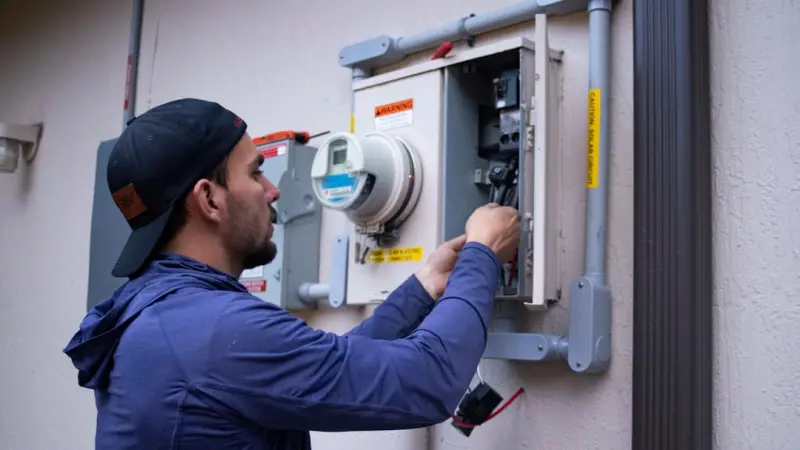
When I first stepped onto a commercial site armed with a handheld infrared camera, I expected a straightforward walk‑through: point, scan, jot a few notes, and call it a day. What I found instead was a living, breathing data stream that told a story about the building’s energy heartbeat. That moment sparked a shift in my career—from reacting to obvious leaks to interrogating every square foot for hidden inefficiencies. Today, the discipline of energy inspection has evolved from a periodic checklist to a continuous, AI‑augmented operation that can predict loss before it happens.
Why Traditional Energy Audits Are No Longer Enough
For decades, energy audits have been scheduled annually or bi‑annually, relying on static measurements and manual walkthroughs. While useful, that model suffers from three critical blind spots:
- Temporal Gaps: A snapshot taken in winter says little about summer peak loads.
- Human Error: Even the most diligent inspector can miss a poorly insulated conduit tucked behind a wall.
- Scalability Limits: Large campuses with dozens of buildings quickly become too costly to audit comprehensively.
The result? Facilities continue to bleed energy, miss out on ESG incentives, and scramble to explain unexpected spikes in utility bills.
Enter Real‑Time Energy Inspection
Real‑time energy inspection (RTEI) fuses IoT sensors, edge computing, and machine‑learning analytics into a single, continuously operating system. Instead of a yearly “once‑upon‑a‑time” audit, you get an always‑on sentinel that watches every kilowatt hour, flags anomalies, and suggests corrective actions on the fly.
Key components of an RTEI ecosystem include:
- Distributed Sensors: Thermal cameras, smart meters, vibration monitors, and humidity probes installed at critical points—air handling units, pipe insulation, glazing, and even ceiling tiles.
- Edge Controllers: Small, rugged computers that preprocess data locally, reducing bandwidth and latency.
- Cloud‑Based AI Engine: Trained on millions of data points to recognize patterns of waste, such as a HVAC fan running against a closed damper.
- Actionable Dashboard: Visual alerts, heat maps, and prioritized work orders that integrate directly with CMMS platforms.
How AI Detects the Undetectable
Machine learning excels at spotting subtle deviations that escape human eyes. Consider a scenario where a wall-mounted thermostat consistently reads 2‑3°F higher than adjacent zones. An AI model, trained on historic temperature gradients, can infer that the wall’s insulation has degraded—perhaps due to moisture intrusion. The system then generates an inspection ticket with exact location coordinates, recommended sealing material, and an estimated payback period.
Another powerful use case involves Passive Solar Shading strategies. By correlating interior temperature spikes with solar irradiance data, the AI can advise whether existing shading devices are under‑performing or if dynamic shading controls should be added. This turns what was once a design‑time consideration into an operational lever.
From Data to Dollars: Quantifying the ROI
Energy‑focused CEOs often ask, “What’s the payback?” The answer lies in three measurable streams:
- Immediate Savings: Anomalies like a motor running idle can be corrected within hours, shaving 5‑10% off monthly electricity usage.
- Capital Planning Efficiency: Predictive insights schedule retrofits during low‑occupancy periods, reducing labor overhead and downtime.
- Regulatory and ESG Benefits: Transparent, continuous data supports sustainability reporting, unlocking incentives and improving stakeholder confidence.
Industry benchmarks suggest that facilities adopting RTEI see a 12‑18% reduction in energy costs within the first year, with payback periods ranging from 6 to 18 months depending on the building’s baseline efficiency.
Implementation Blueprint: A Step‑by‑Step Guide
Transitioning to a real‑time inspection model may feel daunting. Below is a practical roadmap that breaks the journey into digestible phases.
Phase 1: Baseline Mapping
Start with a conventional audit to establish a performance baseline. Capture:
- Utility bill history (at least 12 months)
- Existing sensor infrastructure
- Critical equipment inventory
This data feeds the AI’s initial training set, ensuring it understands what “normal” looks like for your specific facility.
Phase 2: Sensor Deployment
Select sensor types based on the most common loss pathways in your building:
- Thermal Imaging Sensors: Detect heat loss through walls, roofs, and ducts.
- Current Transformers (CTs): Measure real‑time electricity draw on major loads.
- Acoustic Leak Detectors: Listen for pneumatic leaks in compressed‑air systems.
Leverage Tiles as Data Hubs concepts—using existing building elements like floor tiles as mounting points for low‑power Bluetooth beacons, turning every square foot into a data node.
Phase 3: Edge Integration
Deploy edge controllers at strategic points—near HVAC rooms, electrical panels, and water treatment areas. These devices run lightweight analytics, filter noise, and push only relevant events to the cloud, preserving bandwidth and enhancing security.
Phase 4: AI Model Training & Validation
Feed the collected data into a cloud‑based platform that offers pre‑built models for:
- HVAC performance drift
- Building envelope degradation
- Equipment fault prediction
Validate the model by cross‑checking flagged anomalies against manual inspections. Fine‑tune thresholds until false positives drop below 5%.
Phase 5: Operational Rollout
Integrate the inspection dashboard with your existing Computerized Maintenance Management System (CMMS). Set up automated work orders that include:
- Priority level (critical, high, medium, low)
- Location (building, floor, room)
- Suggested corrective action and estimated labor hours
Train facilities staff on interpreting the heat maps and responding to alerts. Continuous feedback loops improve model accuracy over time.
Overcoming Common Barriers
Every technology adoption faces resistance. Here’s how to address the three most frequent objections:
“We don’t have the budget.”
Begin with a pilot on a single high‑energy‑use building. The modest sensor investment (often under $5,000) can produce measurable savings that fund expansion to the rest of the portfolio.
“Our team lacks technical expertise.”
Partner with a specialist vendor that offers managed services. They handle sensor installation, model training, and dashboard configuration, while your staff focuses on remediation.
“Data security is a concern.”
Edge computing keeps raw data on‑premise, transmitting only aggregated insights to the cloud. Choose providers that support end‑to‑end encryption and comply with ISO 27001 or similar standards.
The Future: Energy Inspection Meets Digital Twin
Looking ahead, the convergence of real‑time inspection and digital twin technology will unlock unprecedented control. A digital twin—a virtual replica of the building—will ingest sensor streams to simulate energy flows under varying conditions. Facility managers could test the impact of a new shading device, a change in thermostat set‑points, or even a hypothetical occupancy pattern before implementing anything in the physical world.
This “what‑if” capability transforms inspection from a reactive safety net into a proactive design tool, aligning operational performance with long‑term sustainability goals.
Key Takeaways
- Traditional, periodic audits miss temporal dynamics and are prone to human error.
- Real‑time energy inspection leverages IoT sensors, edge computing, and AI to provide continuous, actionable insight.
- The ROI is tangible: rapid cost savings, smarter capital planning, and stronger ESG reporting.
- A phased implementation—baseline, sensor rollout, edge integration, AI training, and operational handoff—ensures a smooth transition.
- Future integration with digital twins will elevate inspection from detection to simulation and optimization.
Energy is the lifeblood of any commercial operation. By turning inspection into an always‑on, intelligent process, you not only safeguard that lifeblood—you amplify it.

Tom Ferguson is a Canadian freelance writer with a passion for storytelling, current events, and thoughtful commentary. Drawing on years of writing experience, he shares engaging insights on a wide range of topics, bringing a uniquely Canadian perspective to his work.
Related Posts

Beyond the Checklist: How AI‑Powered Energy Inspections Are Redefining Facility Performance
Traditional energy inspections miss hidden waste. This post explains how AI‑driven sensors, digita... Read More
Unlocking Hidden Savings: Real‑Time Energy Inspection for Modern Renovations
Explore the power of real‑time energy inspection, learn why one‑time audits fall short, and see ... Read More
How Real‑Time Energy Audits Are Redefining Facility Management
Real‑time energy audits combine sensor networks, AI analytics, and digital twins to turn tradition... Read More
Top Posts

The Hidden Power of Paint: Health, Tech, and Sustainable Upgrades
Explore how modern paint technologies—low‑VOC formulas, AI color selection, scented and smart coatings—can transform your home’s health, sustainability,...Read More
Restoring Heritage Homes: A Layered, Sustainable Blueprint
Discover a step‑by‑step, eco‑focused strategy for restoring heritage houses, balancing authentic preservation with modern efficiency and minimal disruptio...Read More

Transforming Light: The Latest Window Treatment Trends for a Sustainable Home
Explore how modern window treatments merge design, technology, and sustainability, offering smarter light control, energy savings, and fresh style for any home....Read More

Why Your Carpet Deserves a Tech‑Powered Deep Clean
A fresh look at carpet care that combines fiber science, natural cleaning solutions, and simple sensor data to boost indoor health and sustainability....Read More
0 Comments
Post Comment
You will need to Login or Register to comment on this post!