
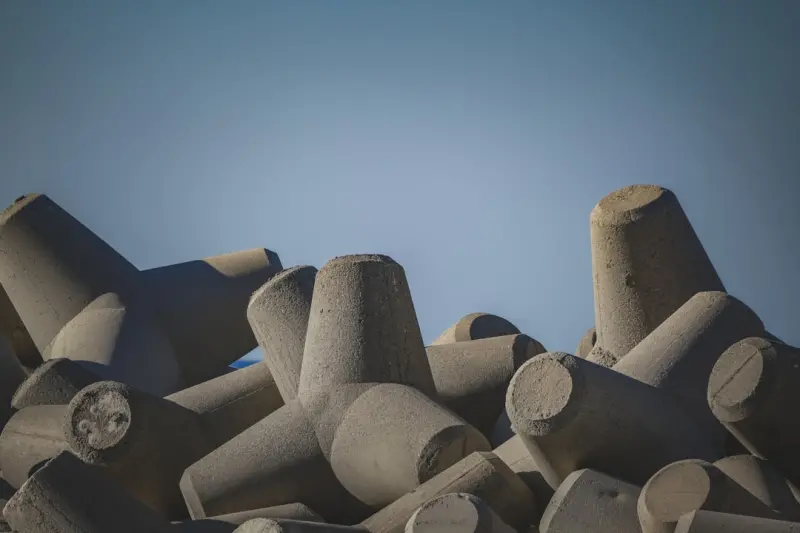
Why Concrete Is the Unsung Hero of the Green Building Movement
When most people think of sustainability, the mind jumps to solar panels, bamboo flooring, or reclaimed wood. Concrete—massive, gray, and seemingly inert—rarely gets the spotlight. Yet, behind its stoic façade lies a world of innovation that’s reshaping how we think about carbon, durability, and urban resilience. In this deep‑dive, I’ll walk you through the latest breakthroughs that are turning concrete from a carbon‑heavy legacy material into a cornerstone of a low‑impact future.
The Carbon Paradox: How a Heavyweight Can Lighten Its Footprint
Traditional Portland cement, the binding agent in most concrete mixes, is responsible for roughly 8% of global CO₂ emissions. That number feels daunting, but it’s also a catalyst for rapid change. Researchers and manufacturers are now exploring three main pathways to slash that carbon load:
- Supplementary cementitious materials (SCMs) such as fly ash, slag, and calcined clay replace a portion of cement, sequestering industrial by‑products that would otherwise sit in landfills.
- Carbon capture and utilization (CCU) technologies that inject captured CO₂ directly into the concrete during mixing, where it mineralizes and becomes permanently locked within the matrix.
- Low‑clinker blends that dramatically reduce the amount of clinker—the energy‑intensive heart of cement—by swapping it with alternative binders.
These strategies aren’t just theory. Projects across Europe and North America are already delivering structures with up to 40% lower embodied carbon. The ripple effect is profound: reduced emissions, lower operating costs, and a material that actively contributes to carbon sequestration.
Self‑Healing Concrete: The Future of Maintenance‑Free Structures
Imagine a bridge that can mend its own cracks, or a parking garage that seals surface fissures before water can infiltrate. Self‑healing concrete makes that vision a reality by embedding tiny capsules of healing agents—often bacteria‑based or polymeric—within the mix. When a crack forms, moisture triggers the capsules, releasing agents that fill and solidify the gap.
Key benefits include:
- Extended service life, cutting down the frequency of costly repairs.
- Enhanced durability in harsh climates, reducing the need for protective coatings.
- Lower lifecycle emissions because fewer replacement cycles mean less material consumption.
Early adopters, such as a coastal highway in the Pacific Northwest, report a 30% reduction in maintenance spend after just two years of operation. It’s a clear example of how performance‑based design can deliver both economic and environmental wins.
3D‑Printed Concrete: From Blueprint to Building in Hours
Traditional formwork is labor‑intensive, wasteful, and often limits architectural creativity. Additive manufacturing—or 3D printing—reimagines the process by extruding a specially engineered concrete paste layer by layer, guided by a digital model.
What makes this technology a game‑changer?
- Design freedom: Complex geometries, internal voids, and organic shapes that would be impossible with conventional casting become achievable.
- Material efficiency: Precise deposition reduces waste, while the ability to blend SCMs on‑the‑fly allows for on‑site customization of strength and insulation properties.
- Speed: Entire wall panels can be printed in a single day, accelerating construction timelines and reducing labor costs.
One notable project—a two‑storey residential prototype in a dense urban block—went from foundation to roof in just ten days, showcasing the technology’s potential to address housing shortages without sacrificing quality.
Embedding Sensors: Turning Concrete Into a Living Data Platform
Concrete isn’t just a passive slab; it can become an active participant in building management. By integrating fiber‑optic or wireless sensor networks directly into the mix, owners gain real‑time insight into temperature, strain, moisture, and even chemical composition.
This data can feed predictive maintenance platforms, allowing facilities teams to anticipate issues before they become visible. For instance, a sensor‑rich parking structure can alert managers to early signs of chloride‑induced corrosion, prompting targeted interventions that extend the structure’s lifespan.
To see how data‑driven monitoring can transform asset management, check out our data‑driven concrete monitoring guide.
Recycled Aggregate: Giving Old Concrete New Life
Demolition waste is a massive, underutilized resource. By crushing and cleaning old concrete, we can produce recycled aggregate that substitutes natural gravel in new mixes. The benefits are twofold:
- Conservation of natural resources: Reducing the demand for virgin sand and stone preserves ecosystems.
- Landfill diversion: Keeping millions of tons of waste out of landfills each year.
Modern processing techniques ensure that recycled aggregate meets or exceeds performance standards for most non‑structural applications, and even many structural uses when paired with high‑performance binders.
Thermal Mass and Energy Efficiency: Concrete as a Passive Heating System
One often‑overlooked advantage of concrete is its high thermal mass. In climates with significant day‑night temperature swings, concrete walls can absorb heat during the day and release it at night, reducing reliance on HVAC systems.
Designers are pairing this property with strategic glazing and shading to create truly passive buildings. The result is a reduction in operational energy use that can offset the higher embodied carbon of the material—a classic example of a holistic sustainability approach.
Case Study: A Resilient Waterfront Pavilion
Let’s walk through a real‑world example that ties many of these innovations together. A waterfront municipality commissioned a pavilion that would serve as a community hub while withstanding rising sea levels and storm surges.
Key features included:
- A resilient building strategy using low‑clinker concrete with 30% fly ash substitution.
- Self‑healing capabilities to address potential micro‑cracks caused by salt spray.
- Integrated fiber‑optic sensors that monitor structural health and moisture ingress in real time.
- Recycled aggregate for the non‑structural floor slab, reducing material costs by 15%.
The pavilion not only passed all local flood‑resilience tests but also achieved a 25% reduction in lifecycle emissions compared to a conventional concrete build. Its success is prompting neighboring districts to adopt similar approaches for schools, transit stations, and public parks.
Future Trends: From Carbon Negative to Carbon Positive
The next frontier is ambitious: concrete that actively removes more CO₂ from the atmosphere than it emits during production. Researchers are experimenting with bio‑mineralization, where microorganisms convert CO₂ into calcite, essentially growing concrete in a lab‑scale environment.
While still in early stages, pilot projects suggest a pathway toward “carbon‑positive” concrete—materials that could serve as both structural elements and carbon sinks. When paired with large‑scale construction, the cumulative impact could be transformative.
Practical Tips for Specifiers and Contractors
If you’re considering integrating these advances into your next project, here are some actionable steps:
- Start with a carbon audit. Quantify the embodied carbon of your baseline design and set reduction targets.
- Partner with innovative suppliers. Look for manufacturers offering low‑clinker mixes, SCMs, or self‑healing additives.
- Incorporate sensor planning early. Embed monitoring points during the design phase to avoid retrofitting challenges.
- Leverage recycled aggregate for non‑critical components to cut material costs and environmental impact.
- Engage with local regulators. Many municipalities now provide incentives for low‑carbon construction, which can offset material premiums.
By treating concrete not as a static commodity but as a dynamic platform for sustainability, you unlock new value streams—longer service life, reduced maintenance, and a greener brand narrative.
Conclusion: Concrete’s Quiet Revolution
Concrete has been the backbone of civilization for millennia. Today, thanks to breakthroughs in chemistry, manufacturing, and digital integration, it’s poised to lead the charge toward a more sustainable built environment. From self‑healing and 3D‑printing to embedded sensors and carbon‑positive mixes, the possibilities are as solid as the material itself. The challenge now lies in scaling these innovations, fostering collaboration across the supply chain, and redefining industry standards to embrace concrete’s new role as a climate‑positive ally.

Tom Ferguson is a Canadian freelance writer with a passion for storytelling, current events, and thoughtful commentary. Drawing on years of writing experience, he shares engaging insights on a wide range of topics, bringing a uniquely Canadian perspective to his work.
Related Posts

Concrete Reimagined: Crafting Sustainable Strength for the Modern City
A deep dive into how cutting‑edge mix designs, recycled aggregates, carbon‑capture techniques, a... Read More

Concrete Creations: Turning Slabs into Stories
Discover the hidden artistry of concrete—from historic roots to modern DIY projects—showcasing s... Read More
Concrete Gets Smart: Turning Slabs into Business Sensors
Smart concrete turns ordinary slabs into intelligent platforms, providing real‑time data for predi... Read More
Top Posts
Unlocking Hidden Value: Proactive Plumbing Audits for Commercial Spaces
A proactive plumbing audit reveals hidden leaks, inefficiencies, and sustainability opportunities, delivering measurable ROI and aligning with ESG goals for com...Read More
Why Modern Roofs Should Be Smart, Sustainable, and Stylish
Explore innovative roofing strategies that blend smart sensors, sustainable materials, and artistic design to create a roof that protects, saves energy, and enh...Read More
The Rise of Sunrooms: A Sustainable Solution for Modern Homes
Sunrooms are a sustainable solution for modern homes, providing a bright and airy space to relax and entertain while minimizing environmental impact. Learn how ...Read More

The Hidden Engine of Handyman Success: Mastering Tool Hygiene
A disciplined approach to tool hygiene transforms a handyman’s reliability, cutting re‑work, boosting client trust, and creating a competitive edge—all wi...Read More
0 Comments
Post Comment
You will need to Login or Register to comment on this post!