

Why Edge AI Is the Secret Sauce for Real‑Time Electrical Load Balancing
When I first stepped onto a construction site as a junior electrician, the hum of a breaker panel was the loudest thing in the room. Fast forward a decade, and that same panel now talks to a cloud‑based dashboard, predicts its own failures, and even decides when to shed load before a storm hits. The transformation isn’t magic—it’s the convergence of edge computing and artificial intelligence (AI) right at the point where electricity meets the wire.
The Problem: Traditional Load Management Is Too Slow
Classic electrical design assumes a static load profile: you size conductors, breakers, and transformers based on peak demand estimates from historical data. In reality, building usage is anything but static. A conference center can jump from a handful of attendees to a packed keynote in minutes. A warehouse may shift from a night‑shift loading dock to a daytime manufacturing floor, each with dramatically different power signatures.
Utilities still rely on centralized SCADA systems that collect data every five minutes or longer. By the time an overload is detected, protective devices have already tripped, or worse, equipment has suffered damage. The lag is no longer acceptable in a world that expects instant responsiveness from every system, from HVAC to lighting to EV chargers.
Enter Edge AI: Bringing Intelligence to the Panel
Edge AI moves the computational heavy‑lifting from distant data centers to the very edge of the electrical network—right at the circuit breaker, sub‑panel, or intelligent meter. These devices run lightweight machine‑learning models that can:
- Continuously forecast load for the next 5–15 minutes based on real‑time sensor inputs.
- Detect anomalous patterns that indicate equipment malfunction or wiring faults.
- Automatically re‑route power, dim lighting, or stagger HVAC start‑ups to keep the system within safe limits.
Because the inference happens locally, decisions are made in milliseconds, not minutes. The result is a self‑adjusting electrical backbone that can keep the lights on, the servers humming, and the coffee makers brewing—without human intervention.
How It Works: A Peek Under the Hood
At the heart of an edge‑enabled panel is a microcontroller paired with a neural processing unit (NPU). Sensors feed it data on voltage, current, temperature, and even acoustic signatures of equipment. The model—trained on months of operational data—learns the normal rhythm of the building and flags deviations.
Take a real‑world example: a commercial office tower equipped with occupancy sensors and smart lighting. When a large conference is scheduled, the edge device predicts a surge in lighting and HVAC demand. It proactively throttles non‑essential loads (like decorative façade lighting) and coordinates with the building management system to pre‑cool zones, smoothing the demand curve. If an unexpected device—say, a new 3D printer—gets plugged in, the edge AI instantly recalculates the load and adjusts settings to avoid tripping a breaker.
Benefits That Extend Beyond the Electrical Room
Cost Savings: By shaving even a few percent off peak demand, tenants can negotiate lower demand charges with utilities. Over a year, those savings quickly offset the modest hardware investment.
Extended Equipment Life: Early fault detection means maintenance can be scheduled before catastrophic failures occur, reducing downtime and replacement costs.
Energy Resilience: In the event of a grid outage, edge AI can orchestrate a graceful transition to on‑site battery storage or backup generators, prioritizing critical loads without manual oversight.
Environmental Impact: Smoother load profiles reduce the need for peaker plants, cutting emissions and aligning with corporate sustainability goals.
Real‑World Success: A Case Study in a Multi‑Tenant Building
One of our recent projects involved retrofitting a 12‑story mixed‑use building with edge AI‑enabled breakers. The building housed a co‑working space, a boutique gym, and a rooftop garden with irrigation pumps. Prior to the upgrade, the building frequently exceeded its 500 kW demand limit during weekend events, incurring hefty demand fees.
After installing edge devices on each floor’s main distribution board, the system began predicting load spikes 10 minutes ahead of time. It automatically dimmed non‑critical lighting in the gym and shifted irrigation cycles to off‑peak hours. Within three months, the building’s peak demand dropped by 8 %, translating to a 15 % reduction in demand charges. Maintenance staff also reported a 30 % drop in breaker trips, thanks to early fault alerts.
This success story is a testament to the power of local intelligence. If you’re curious about how modular power solutions can complement edge AI, check out Modular Power Grids for a deeper dive.
Integrating Edge AI With Existing Infrastructure
Concerned that edge AI requires a full‑blown rewrite of your electrical system? Not at all. Most manufacturers offer plug‑and‑play smart breakers that snap into existing panels. The installation process mirrors a standard breaker swap—no extensive rewiring needed.
Key steps for a smooth rollout:
- Audit Current Loads: Use a portable power quality analyzer to map out baseline consumption and identify critical circuits.
- Select Compatible Edge Devices: Look for devices that support open‑source ML frameworks (TensorFlow Lite, PyTorch Mobile) for future model upgrades.
- Data Strategy: Decide whether you’ll keep data on‑premises for privacy or stream it to a secure cloud for long‑term analytics.
- Pilot Phase: Start with a single floor or subsystem (e.g., lighting) to fine‑tune models before scaling.
- Training & Support: Provide your facilities team with dashboards that visualize predictions, alerts, and actionable recommendations.
Challenges and How to Overcome Them
While the promise is huge, implementing edge AI isn’t without hurdles:
- Model Drift: Electrical usage patterns evolve. Schedule regular model retraining using recent data to keep accuracy high.
- Cybersecurity: Edge devices are a new attack surface. Enforce strong authentication, encrypt communications, and keep firmware up to date.
- Interoperability: Ensure your edge platform speaks the same language as existing BMS (BACnet, Modbus, LonWorks) to avoid silos.
Addressing these challenges head‑on will future‑proof your building’s electrical ecosystem.
The Bigger Picture: Edge AI as a Bridge to Full Electrification
As the industry pushes toward full electrification—replacing gas furnaces with heat pumps, integrating EV chargers, and deploying large‑scale battery storage—edge AI becomes the glue that holds everything together. It can orchestrate the timing of EV charging to avoid peak demand, balance heat pump operation with solar generation, and dynamically allocate battery discharge to the most critical loads.
In fact, the synergy between edge AI and renewable integration is already being explored in AI‑Solar collaborations. The next logical step is a unified platform where AI at the edge, cloud analytics, and distributed energy resources converse in real time, delivering an electrical system that’s as intelligent as the occupants it serves.
Getting Started: A Checklist for Decision‑Makers
If you’re convinced that edge AI could transform your building’s electrical performance, here’s a quick checklist to keep you on track:
- Define Business Objectives: Cost reduction, reliability, sustainability, or all of the above?
- Assess Existing Infrastructure: Determine compatibility and identify any legacy components that need replacement.
- Choose a Scalable Vendor: Look for open APIs, robust security, and a clear roadmap for future features.
- Pilot and Measure: Establish baseline metrics, run a pilot, and compare results before full rollout.
- Plan for Continuous Improvement: Set up a schedule for model retraining, firmware updates, and performance reviews.
Remember, edge AI is not a one‑size‑fits‑all solution. Tailor the deployment to your building’s unique load profile, occupancy patterns, and sustainability goals. When done right, the payoff is a resilient, cost‑effective, and future‑ready electrical backbone.
Looking Ahead
The electrical landscape is on the cusp of a revolution. Edge AI gives us the tools to move from reactive protection to proactive optimization. It empowers facilities managers to make data‑driven decisions in real time, reduces waste, and extends the life of critical assets. Most importantly, it aligns the electrical system with the broader push toward net‑zero emissions and smarter, more adaptable buildings.
As someone who has wired both historic brownstones and cutting‑edge data centers, I can attest that the best projects are the ones that blend solid engineering fundamentals with forward‑thinking technology. Edge AI is that blend—grounded in the physics of electricity but elevated by the intelligence of modern computing. It’s time we let the edge do the heavy lifting, so the rest of us can focus on designing spaces that inspire, rather than merely power.

Kelly Reynolds is a dynamic freelance writer hailing from the picturesque landscapes of Alberta. A master of the written word, she juggles her passion for storytelling with the exhilarating chaos of being a mother to five spirited children. With an impressive portfolio that spans various genres, Kelly captivates readers through her engaging blog posts and thought-provoking articles.
Related Posts

Observable Electrical Systems: Turning Data Into Power Efficiency
The post explores the rise of observable electrical systems, detailing how sensor‑driven data, dig... Read More

Digital Twins Transform Building Electrical Systems
Digital twins turn static electrical schematics into live, data‑rich replicas that predict failure... Read More
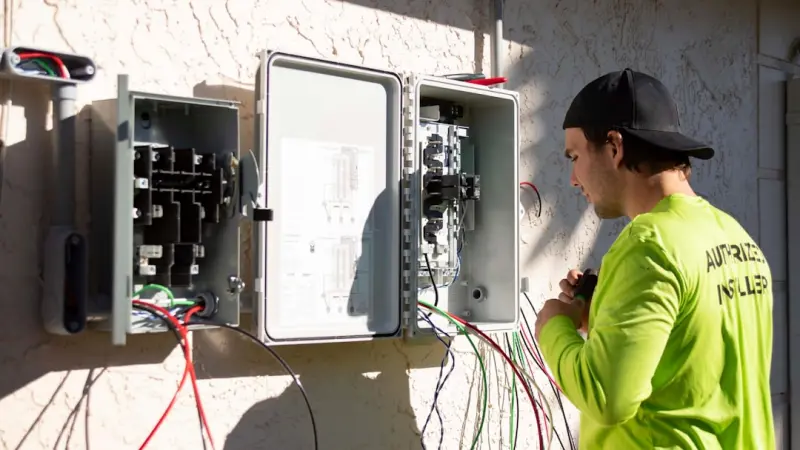
Modular Electrical Distribution: Building Agile Power for Modern Workplaces
A deep dive into modular electrical distribution, exploring its components, benefits, real‑world a... Read More
Top Posts

Embracing Sustainable Architectural Design: A New Era for Modern Homes
Sustainable architectural design is no longer a niche concern; it's a critical aspect of modern construction. Learn how to create eco-friendly buildings that ar...Read More
Embracing Sustainable Home Security: The Future of Alarm Systems
Sustainable home alarm systems are revolutionizing home security, providing eco-friendly and energy-efficient solutions for homeowners. Learn how to create a se...Read More

Harvesting Harmony: Designing an Edible Garden That Feeds Body and Soul
A step‑by‑step guide to building an edible garden that nourishes both body and mind, with tips on layout, plant selection, soil health, water efficiency, an...Read More

The Hidden Dangers of Dirty Carpets: Why Professional Cleaning Matters
Dirty carpets can harbor allergens, bacteria, and pollutants that can exacerbate respiratory issues and reduce your home's energy efficiency. Learn why professi...Read More
0 Comments
Post Comment
You will need to Login or Register to comment on this post!