
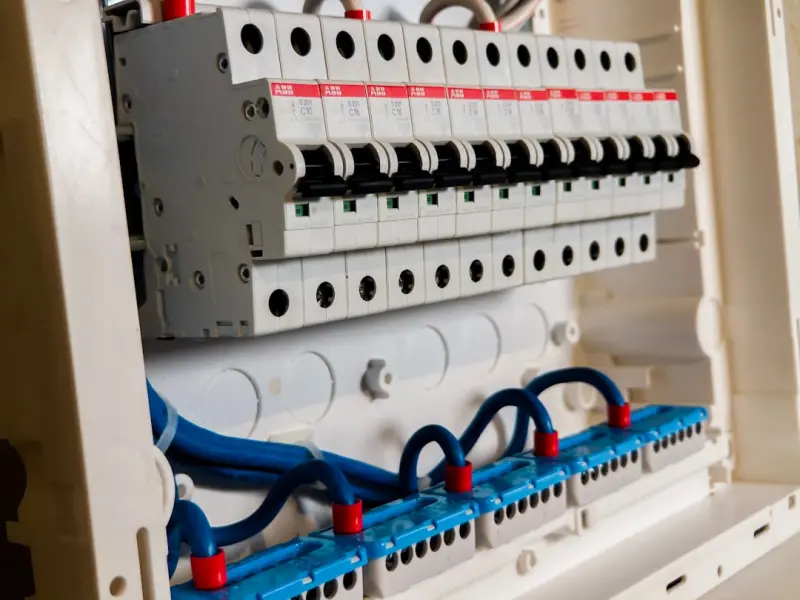
When I first opened the breaker box in my childhood home, I felt like I’d stumbled into a secret control room. Rows of switches, a faint metallic scent, the hum of unseen forces—nothing felt more powerful than that little metal box. Fast forward to today, and the same box can now host intelligent software, communicate with the grid, and even predict when you’ll need extra juice for a weekend project. This evolution isn’t just a tech fad; it’s the backbone of a resilient, low‑carbon future for homeowners and businesses alike.
From Static Switches to Adaptive Panels
Traditional electrical panels were designed for a single purpose: distribute power safely. They were static, manual, and largely invisible to the occupants of the home. Adaptive panels flip that script. By embedding micro‑controllers, Wi‑Fi, and even AI‑driven load‑balancing algorithms, these panels become an active participant in your energy ecosystem.
- Real‑time monitoring: See exactly how much power each circuit draws, down to the watt, on a sleek smartphone dashboard.
- Dynamic load shifting: The panel can temporarily divert non‑essential loads (like a pool pump) when the grid signals a demand‑response event, saving you money and helping the grid stay stable.
- Predictive maintenance: Sensors detect heat buildup or loose connections before they become safety hazards, alerting you via push notification.
In short, the panel evolves from a passive conduit to a proactive manager of electricity.
Why This Matters for the Modern Homeowner
Imagine you’re hosting a dinner party and the power demand spikes as you turn on the oven, the dishwasher, and the wine cooler simultaneously. An adaptive panel can automatically prioritize essential circuits (like lighting and the kitchen’s main outlets) while momentarily dimming decorative lighting. No blackout, no inconvenience—just a seamless, intelligent response.
Beyond convenience, these panels enable energy independence. Pair them with home battery storage, solar PV, or even a small wind turbine, and you have a micro‑grid that can operate autonomously when the main grid falters. In regions prone to storms or brownouts, that autonomy isn’t a luxury; it’s a lifeline.
Integrating Energy Storage: The Home Battery Advantage
Battery technology has leapt forward in the past decade, with costs dropping dramatically and performance soaring. When paired with an adaptive panel, a home battery becomes more than just a backup source—it turns into a strategic asset. The panel can schedule charging during off‑peak hours, store excess solar generation, and discharge during peak demand or utility price spikes.
For businesses, this translates into significant operational cost reductions. For households, it means staying warm during a winter outage without relying on a noisy generator. The synergy between intelligent panels and storage is the cornerstone of the “energy‑as‑a‑service” model that’s reshaping utility relationships.
Smart Grid Interaction: Becoming a Grid Citizen
Utility companies are no longer just suppliers; they’re orchestrators of a complex, real‑time network. Adaptive panels give homeowners the ability to actively participate in this network. Through standardized protocols like OpenADR, panels can receive demand‑response signals and automatically reduce load, earning you incentives or lower rates.
Moreover, aggregated data from thousands of these panels can help utilities better forecast demand, integrate more renewables, and reduce the need for fossil‑fuel peaker plants. It’s a win‑win: you get savings and the grid becomes cleaner.
Safety First: The Quiet Benefits You Might Overlook
While the headline features are dazzling, the understated safety upgrades are perhaps the most impactful. Continuous temperature monitoring, arc‑fault detection, and rapid shut‑off capabilities mean that potential fire hazards are addressed before they ignite. In older homes, retrofitting an adaptive panel can be the single most effective upgrade for both safety and energy efficiency.
Additionally, the panel’s ability to log events creates a forensic trail for electricians. If an issue arises, they can pinpoint the exact circuit and time of the fault, drastically reducing diagnostic time and cost.
Installation Realities: What to Expect
Transitioning to an adaptive system isn’t a DIY weekend project. It requires a licensed electrician familiar with both electrical codes and the digital aspects of the technology. Here’s a typical rollout:
- Assessment: An electrician evaluates your existing service size, load profile, and any future expansion plans (like EV chargers).
- Panel Selection: Choose a panel that supports the necessary communication protocols and has enough slots for future circuits.
- Wiring & Integration: Existing circuits are re‑routed as needed; sensors are installed in high‑risk areas.
- Software Configuration: The homeowner or a professional sets up preferences via a mobile app, linking the panel to the home battery, solar inverter, or utility portal.
- Testing & Commissioning: A thorough test ensures safety, compliance, and smooth communication.
While the upfront cost can be higher than a conventional panel, the long‑term savings—both monetary and environmental—often justify the investment.
Case Study: A Neighborhood Goes Adaptive
In a midsize suburb, a community of 50 homes collaborated with a local utility to install adaptive panels paired with a shared solar array. The result? A 30% reduction in peak demand during summer afternoons, and each homeowner earned an average of $150 annually from demand‑response incentives.
This initiative also sparked a cultural shift: residents began sharing tips on load‑shifting, coordinating EV charging times, and collectively advocating for more renewable integration. The experience mirrors the collaborative spirit seen in solar communities, but with electricity distribution at its core.
Future Trends: AI‑Driven Energy Orchestration
We’re on the cusp of panels that don’t just react, but anticipate. By analyzing historical usage patterns, weather forecasts, and real‑time utility pricing, AI can pre‑emptively adjust loads, schedule battery charging, and even suggest appliance usage windows to homeowners via gentle nudges.
Think of it as a personal energy concierge that learns your habits and optimizes for both comfort and cost. As these algorithms become more sophisticated, the distinction between “smart home” and “energy‑aware home” will blur, giving rise to truly autonomous dwellings.
Integrating with Other Smart Home Systems
The modern home is a tapestry of interconnected devices: thermostats, lighting, security, and now, adaptive panels. Seamless integration is essential. For example, when your smart thermostat revolution detects a spike in heating demand, the panel can pre‑emptively shift non‑critical loads to maintain a stable draw, preventing potential overloads.
Open platforms and standardized APIs are making these cross‑system conversations smoother, ensuring that every device works in concert rather than at cross purposes.
Economic Incentives and Policy Landscape
Governments worldwide are recognizing the value of adaptive panels. Tax credits, rebates, and low‑interest financing are becoming commonplace, especially when paired with renewable energy installations. Moreover, utilities are rolling out tariff structures that reward flexible loads, making the financial case even stronger.
Staying informed about local incentives can shave thousands off the total project cost, turning what once seemed like a premium upgrade into a pragmatic, future‑proof investment.
Choosing the Right Partner
Not all adaptive panels are created equal. Look for manufacturers that prioritize:
- Open communication standards: Compatibility with multiple utilities and devices.
- Robust cybersecurity: Regular firmware updates and encrypted data transmission.
- Scalability: Room for additional circuits, EV chargers, or future tech.
- Transparent warranty and support: Peace of mind for long‑term operation.
Partnering with an electrician who embraces ongoing education in both electrical codes and emerging digital tools will ensure you get the most out of your system.
Closing Thoughts: Powering Possibility
Electrical infrastructure has always been the silent workhorse of our built environment. By infusing it with intelligence, adaptability, and a dash of foresight, we’re unlocking a realm where homes and businesses are not just consumers of electricity, but active participants in a cleaner, more resilient grid. The breaker box of tomorrow will be as dynamic as the lives it powers—ready to respond, optimize, and protect.

When it comes to the world of blogging and writing, Rose DesRochers is a name that stands out. Her passion for creating quality content and connecting with her audience has made her a trusted voice in the industry. Aside from her skills as a writer and blogger, Rose is also known for her compassionate nature.
Related Posts
Protect Your Home: The Ultimate Guide to Whole‑Home Surge Protection
Learn how a whole‑home surge protector shields every device, saves money, and fits into smart‑ho... Read More
A Practical Guide to Home Electrical Upgrades for Safety and Future‑Proofing
Learn how to evaluate your electrical panel, add safety devices, and plan for EV chargers and batter... Read More

Why Power‑over‑Ethernet Is the Unsung Hero of Modern Building Intelligence
Power‑over‑Ethernet merges power and data in a single cable, cutting costs and simplifying insta... Read More
Top Posts
Waterproofing Reimagined: How Sensors and Lifecycle Planning Cut Costs
A deep dive into sensor‑enabled waterproofing reveals how real‑time data, predictive maintenance, and integrated building platforms turn water protection fr...Read More

The Ultimate Renovation Checklist: A Step-by-Step Guide
A comprehensive renovation checklist is essential to ensure that your project stays on track, within budget, and meets your expectations. Learn from a seasoned ...Read More

Seeing the Future: How Augmented Reality Is Redefining Commercial Renovations
Augmented reality is turning static blueprints into interactive experiences, enabling real‑time design tweaks, cost savings, and employee‑focused spaces in ...Read More

Design‑Build Synergy: Harnessing AI‑Driven Collaboration for Faster Turnkey Projects
A deep dive into AI‑enhanced workflows that unify architects, engineers, and contractors, cutting decision latency and boosting project performance in designâ...Read More
0 Comments
Post Comment
You will need to Login or Register to comment on this post!