
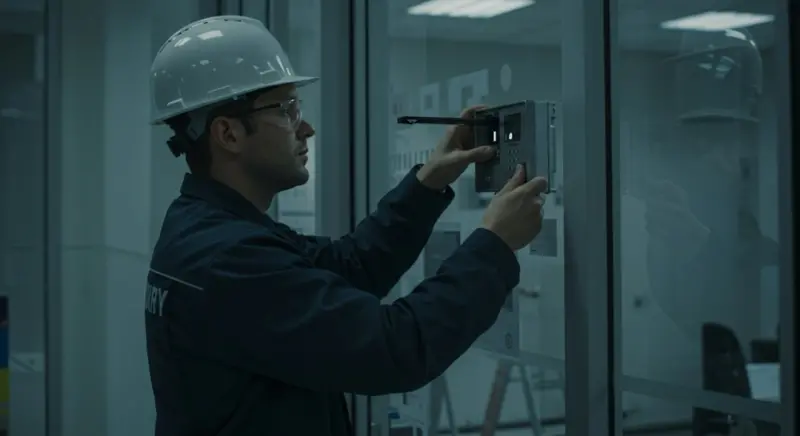
Why “Inspection” Should No Longer Mean “Once‑a‑Year”
For most facilities managers, an energy inspection still feels like a scheduled inconvenience—a box to tick before the auditor arrives. The reality is that the building’s energy profile is a living, shifting system, reacting to occupancy, weather, equipment wear, and even the subtle hum of a server rack. Treating inspection as a static snapshot locks you into a reactive mindset, where you discover problems after they’ve already bled money and credibility.
The New Paradigm: Continuous Energy Insight
Imagine a dashboard that lights up the moment a chiller’s efficiency drifts 2 % from its baseline, or when a lighting zone draws power outside its programmed envelope. This isn’t a futuristic fantasy; it’s the outcome of marrying high‑resolution sensor data with intelligent analytics. By shifting from “annual audit” to “always‑on monitoring,” you gain three decisive advantages:
- Pre‑emptive maintenance – Spot the first signs of wear before a component fails.
- Dynamic ESG compliance – Feed real‑time carbon metrics into sustainability reports.
- Operational agility – Adjust settings on the fly to match occupancy patterns or market‑driven energy pricing.
Building the Data Backbone
Continuous insight hinges on three layers:
- Edge sensing: Install low‑power IoT nodes that capture voltage, current, temperature, humidity, and even vibration. Modern devices can run for years on a single battery, transmitting data over secure LoRaWAN or mesh Wi‑Fi.
- Edge processing: Rather than flooding the cloud with raw waveforms, the node performs first‑level analytics—detecting anomalies, calculating power factor, and normalizing readings to a common baseline.
- Central intelligence: A cloud‑native analytics engine aggregates streams, applies machine‑learning models, and surfaces actionable alerts. The platform should expose APIs so you can embed insights into existing BMS or ERP systems.
From Raw Numbers to Business Language
Data is only as good as the story it tells. Facilities teams need to see the financial impact of an inefficiency, not just a 5 % deviation in motor current. A well‑designed insight platform translates kilowatt‑hour spikes into projected cost overruns, CO₂ equivalents, and even potential penalties under local energy‑use regulations. This translation turns an engineering metric into a board‑room conversation starter.
Case Study: Integrating Energy Insight with HVAC Optimization
One multinational office campus deployed a suite of edge sensors across its chilled water plant. The data fed into an AI‑driven controller that constantly re‑balanced supply‑side temperature against real‑time occupancy. The result? A 12 % reduction in cooling energy consumption within six months, without sacrificing occupant comfort.
Read how AI-powered HVAC zoning can become a catalyst for such outcomes, and why the synergy between continuous inspection and automated control is where the real value lives.
Energy Inspection as a Service (EIaaS)
Traditional inspection models involve a contract, a site visit, a report, and then a long silence. EIaaS flips that model on its head. Providers install the sensor network, manage the data pipeline, and deliver a subscription‑based insight feed. For the client, the cost shifts from a lump‑sum project to a predictable operating expense, aligning incentives to keep the building as efficient as possible.
Key components of an EIaaS offering include:
- Scalable sensor kits that can be retrofitted to legacy equipment.
- Managed analytics with regular model retraining to adapt to equipment upgrades.
- Actionable playbooks that prescribe specific interventions—tightening belt tension, cleaning filters, recalibrating set points.
- Compliance dashboards that automatically generate reports for local energy codes and corporate sustainability goals.
Leveraging Existing Smart Infrastructure
Many buildings already boast “smart” elements—automated shading, occupancy sensors, and networked lighting. These components are gold mines for energy inspection when you treat them as data sources rather than isolated control points. For instance, smart windows & doors can report real‑time solar gain, which, combined with HVAC sensor data, reveals whether shading strategies are over‑ or under‑performing.
By integrating these disparate data streams, you can answer questions like:
- Is the daylight harvesting algorithm actually reducing lighting load, or does it cause HVAC penalties by raising interior temperatures?
- Do certain door usage patterns correlate with spikes in HVAC demand during off‑peak hours?
- How does the building envelope’s thermal performance evolve over seasons, and where are the hidden leaks?
Predictive Modeling: From Correlation to Causation
Machine‑learning models excel at spotting patterns, but the real power lies in turning those patterns into causative insights. A well‑trained model can predict that a 2 °C rise in return‑air temperature will increase chiller energy use by 3 kWh per hour, given the current load profile. Armed with this knowledge, the facilities team can schedule a pre‑emptive cleaning of the condenser coils before the predicted efficiency dip occurs.
Beyond equipment, predictive models can forecast energy cost exposure based on market price volatility. By integrating real‑time utility tariffs, the system can suggest load‑shifting actions—such as pre‑cooling a building when electricity is cheap—to flatten the cost curve.
From Insight to Action: Closing the Loop
The final piece of the puzzle is a robust workflow that ensures insights lead to concrete steps. Consider a three‑tiered loop:
- Detect – Sensors flag an anomaly and push an alert to the platform.
- Diagnose – The analytics engine cross‑references the anomaly with historical data, equipment specs, and environmental conditions, producing a recommended remedy.
- Remediate – An automated work‑order is generated in the CMMS, assigned to the appropriate technician, and tracked to completion.
When the loop is closed, the system records the outcome, feeding back into the model to improve future predictions—a self‑learning ecosystem.
Addressing Data Security and Privacy
Continuous monitoring raises legitimate concerns about data security. A responsible EIaaS provider must adopt a zero‑trust architecture:
- End‑to‑end encryption for sensor‑to‑cloud communication.
- Role‑based access controls to restrict who can view or modify data.
- Regular third‑party penetration testing and compliance audits (e.g., ISO 27001).
By establishing transparent security protocols, you build trust with both internal stakeholders and external regulators.
Measuring ROI: The Real Numbers
ROI for continuous energy inspection isn’t just about energy savings; it’s about the broader financial picture:
| Metric | Typical Impact |
|---|---|
| Energy reduction | 8‑15 % YoY |
| Maintenance cost avoidance | $30 k–$120 k per annum |
| Downtime reduction | 0.5–1 day per year |
| ESG rating boost | 0.2–0.5 points in most scoring models |
| Utility incentive eligibility | Up to 5 % of saved energy cost |
These figures illustrate that the financial upside often pays for the sensor deployment within a single fiscal cycle, especially when combined with utility rebate programs.
Getting Started: A Pragmatic Roadmap
Transitioning to continuous energy inspection can be tackled in phased steps:
- Audit the current data landscape – Identify existing sensors, BMS points, and data silos.
- Pilot a high‑impact zone – Choose a subsystem (e.g., chillers, large lighting banks) and deploy a small sensor set.
- Validate the analytics – Compare model predictions against actual performance, refine thresholds.
- Scale the network – Extend sensor coverage building‑wide, integrate with other smart systems.
- Institutionalize the workflow – Embed alerts into CMMS, define SLA response times, and train staff.
Even a modest pilot can surface quick wins—often a single cleaning or recalibration that saves thousands of dollars.
The Human Element: Cultivating a Data‑Driven Culture
Technology alone won’t deliver sustained improvement. Leadership must champion a culture where data is trusted, shared, and acted upon. Encourage cross‑functional teams—facilities, finance, sustainability, and operations—to meet regularly, review dashboards, and co‑create action plans. When everyone sees the same transparent numbers, the organization aligns around common goals, and the energy inspection becomes a strategic lever rather than a compliance checkbox.
Future Horizons: What’s Next?
Looking ahead, several emerging trends will further amplify the power of continuous inspection:
- Digital twins – Real‑time virtual replicas of building systems that can simulate “what‑if” scenarios before implementing changes.
- Edge AI – Deploying more sophisticated analytics directly on the sensor, reducing latency and bandwidth usage.
- Carbon accounting APIs – Seamless integration with corporate sustainability platforms for automated reporting.
- Peer‑to‑peer energy markets – Using inspection data to participate in localized energy trading, monetizing excess generation.
These innovations will turn the humble energy inspection into a cornerstone of the smart, resilient building ecosystem.
Conclusion: From Inspection to Insight
Energy inspection is at a crossroads. The old paradigm—periodic, manual, siloed—cannot keep pace with the demands of modern operations, sustainability mandates, and financial scrutiny. By embracing continuous, data‑driven inspection, you transform a compliance exercise into a strategic advantage that fuels cost savings, operational resilience, and ESG performance. The journey starts with a single sensor, but the destination is a building that talks back, learns, and evolves—every day.

Lifan Chen is a freelancer based in Toronto specializing in marketing. With expertise in crafting effective marketing strategies and campaigns, Lifan helps businesses grow their brand presence and reach target audiences. As a Toronto-based freelancer, Lifan combines local market insights with creative marketing skills to deliver tailored solutions for clients.
Related Posts
Digital Twin Energy Inspection: A Proactive Blueprint for Building Performance
The post explains how digital twins revolutionize energy inspection by providing real‑time, predic... Read More

Beyond the Meter: How Micro‑Inspections Reveal Hidden Energy Leaks
A micro‑inspection focuses on the smallest leaks, using portable tools and smart sensors to turn h... Read More
Beyond the Meter: How Real‑Time Energy Inspection Is Rewriting Building Efficiency
Continuous energy inspection transforms static audits into a living system, using sensor fusion, AI ... Read More
Top Posts

The Sustainable Contractor’s Guide to Duct Cleaning: Why It Matters and How to Do It Right
A seasoned contractor shares sustainable duct cleaning strategies, debunking myths, linking to related eco‑friendly practices, and outlining maintenance tips ...Read More

Why a Fresh Bathtub Finish Is the Secret Weapon for Modern Homeowners
A fresh bathtub finish offers a cost‑effective, eco‑friendly upgrade that elevates bathroom aesthetics, boosts home resale value, and creates a canvas for m...Read More

Sunroom Renaissance: Designing Health‑Focused Hybrid Spaces
A deep dive into creating sunrooms that serve as wellness hubs, remote‑work studios, and sustainable extensions of the home, with practical design tips and sm...Read More

The Green Revolution in Handyman Services
The handyman industry has evolved to incorporate sustainable solutions. Learn how energy-efficient upgrades, eco-friendly materials, and green design can create...Read More
0 Comments
Post Comment
You will need to Login or Register to comment on this post!