
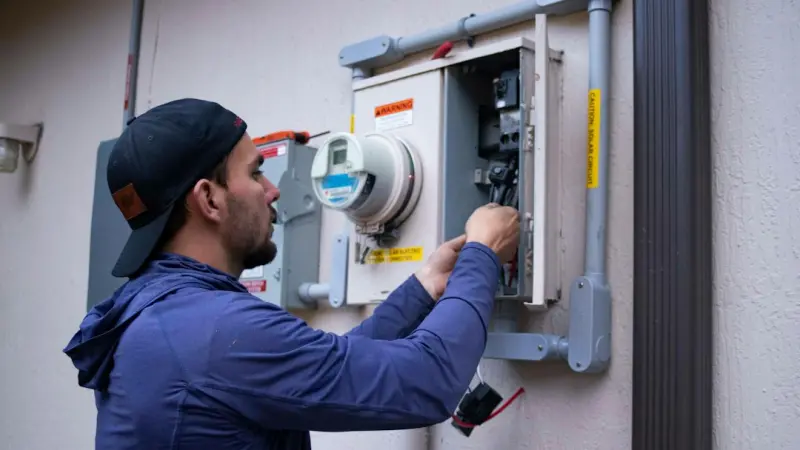
Why Energy Inspection Needs a Real‑Time Mindset
When I first stepped onto a newly‑finished office tower, the glossy façade and sleek lobby told a story of modern design. Yet, hidden behind that façade was a silent dialogue between pipes, ducts, and circuits that most building managers never hear. Traditional energy audits, conducted once a year or after a major retrofit, are like asking a marathon runner about their performance after just one mile. They miss the nuances, the micro‑fluctuations, and the emerging patterns that dictate long‑term efficiency.
In my years consulting for facilities that span from boutique studios to multinational campuses, I’ve learned that the real power of an energy inspection lies in its ability to be continuous. By turning inspection from a periodic checklist into a living, breathing data stream, we can shift from reactive fixes to proactive stewardship.
The Three Pillars of Continuous Energy Inspection
To make this transformation tangible, I break the approach down into three interlocking pillars: Sensor Fusion, AI‑Enhanced Analytics, and Actionable Feedback Loops. Each pillar builds on the other, creating a virtuous cycle that drives down waste while boosting occupant comfort.
- Sensor Fusion: Deploy a dense network of low‑power sensors that monitor temperature gradients, voltage harmonics, airflow velocity, and even humidity. The goal isn’t just to count kilowatt‑hours, but to understand how energy moves through the building envelope.
- AI‑Enhanced Analytics: Feed the raw data into machine‑learning models that recognize normal operating envelopes and flag outliers in real time. These models can predict equipment fatigue before a fan motor trips or a chiller slips into a low‑efficiency mode.
- Actionable Feedback Loops: Translate insights into concrete recommendations—automated set‑point adjustments, maintenance tickets, or even nudges for occupants to close blinds during peak solar gain.
Sensor Fusion: The Backbone of Modern Inspection
Most legacy buildings still rely on a handful of utility meters. While these meters provide aggregate consumption, they obscure the story of where and why inefficiencies arise. Imagine placing a thermal camera on every rooftop, a vibration sensor on each pump, and a smart plug on every workstation outlet. The data avalanche may sound daunting, but modern edge‑computing devices can preprocess streams locally, sending only meaningful anomalies to the cloud.
Key considerations for a robust sensor architecture include:
- Redundancy: Overlap coverage in critical zones to ensure data integrity when a single node fails.
- Interoperability: Choose open protocols (e.g., MQTT, BACnet) so that new sensor types can be added without a massive rewrite.
- Energy Harvesting: Where possible, power sensors from ambient light or vibrational energy, reducing maintenance overhead.
When I guided a client through a phased rollout, we started with high‑impact zones—HVAC plant rooms and data centers—where even a 2% efficiency gain translates into massive cost savings. Within six months, the sensor mesh revealed a misaligned damper that was throttling airflow, costing the building an estimated 150,000 kWh annually.
AI‑Enhanced Analytics: Turning Data into Insight
Raw numbers are only as valuable as the narrative they support. This is where artificial intelligence shines. By training models on historical performance, we establish a “baseline fingerprint” for each system. Any deviation—be it a sudden rise in compressor discharge temperature or an unexplained dip in lighting power factor—triggers an alert.
Two categories of AI techniques prove especially useful:
- Supervised anomaly detection: Using labeled incidents (e.g., past equipment failures), the model learns to recognize precursor patterns.
- Unsupervised clustering: The algorithm groups similar consumption profiles, allowing managers to spot outliers that may indicate leakage, insulation failure, or user behavior drift.
One of the most rewarding outcomes I've seen is the model’s ability to forecast energy drift. Instead of waiting for a utility bill to spike, the system predicts a 5% increase in cooling load over the next quarter and recommends a coil cleaning before the issue manifests.
Actionable Feedback Loops: From Insight to Impact
The final, and perhaps most critical, step is ensuring that insights translate into tangible action. Too often, facilities receive a flood of PDFs that sit untouched on a shared drive. To avoid this trap, I advocate for three practical mechanisms:
- Automated Controls: Integrate the analytics platform with building management systems (BMS) to adjust set‑points autonomously when safe thresholds are breached.
- Work Order Generation: Connect alerts to a computerized maintenance management system (CMMS) so that a technician receives a ticket with exact location, symptom, and recommended remedy.
- Occupant Engagement Apps: Provide real‑time dashboards on smartphones, encouraging users to adopt energy‑savvy habits (e.g., turning off unused equipment).
By closing the loop, we shift the culture from “fix‑it‑when‑it‑breaks” to “optimize‑as‑you‑go.” A pilot in a co‑working hub demonstrated a 12% reduction in lighting energy after occupants received weekly prompts highlighting rooms that remained lit after hours.
Case Study: From Static Audits to Dynamic Inspection
To illustrate the impact, let’s walk through a recent engagement with a regional logistics firm. Their warehouses were subject to traditional annual audits, which identified only gross inefficiencies. We introduced a continuous inspection framework anchored by the three pillars above.
Key outcomes after a twelve‑month cycle:
- Overall energy use intensity (EUI) dropped by 18%.
- Predictive maintenance prevented three major chiller failures, saving roughly $250,000 in emergency repair costs.
- Occupant comfort scores improved by 15% as HVAC systems responded more intelligently to real‑time occupancy data.
For a deeper dive into how digital replication of physical spaces can accelerate such transformations, see this case study. While the original article focuses on virtual twins, the principles of data fidelity and rapid iteration apply equally to energy inspection.
Integrating Energy Inspection with Existing Sustainability Programs
Many organizations already track carbon footprints, pursue LEED certification, or participate in utility demand‑response programs. Continuous energy inspection doesn’t replace these initiatives; it enriches them. By feeding granular consumption data into carbon accounting tools, companies can produce more accurate Scope 2 emissions reports.
Furthermore, the real‑time nature of the system makes participation in demand‑response events seamless. When the grid signals a peak‑load event, the inspection platform can automatically dim non‑critical lighting, adjust thermostat set‑points, or temporarily shed non‑essential loads—earning incentives without manual intervention.
Overcoming Common Barriers
Adopting a continuous inspection mindset isn’t without challenges. Here are the hurdles I’ve seen most often, along with practical mitigations:
- Budget Constraints: Start small—target the highest‑energy‑use subsystems first. Many sensors cost under $50, and ROI can be demonstrated within months.
- Data Overload: Leverage edge analytics to filter noise before data reaches the central platform. This reduces storage costs and focuses attention on true anomalies.
- Change Management: Involve facility staff early in the process. Use preventive maintenance guides to illustrate how early detection reduces day‑to‑day workload.
- Cybersecurity Concerns: Adopt a zero‑trust architecture, encrypt data in transit, and regularly audit device firmware.
The Future: Energy Inspection as a Service (EIaaS)
Looking ahead, I see a shift toward subscription‑based Energy Inspection as a Service. In this model, a third‑party provider deploys the sensor network, maintains the AI engine, and delivers actionable insights on a monthly cadence. Facility owners benefit from expertise without the upfront capital outlay, while providers can scale solutions across portfolios, continually refining models with aggregated data.
Key enablers for EIaaS include:
- Standardized sensor hardware platforms.
- Open‑source AI frameworks that can be rapidly customized.
- Robust API ecosystems that allow seamless integration with existing BMS, CMMS, and sustainability dashboards.
As the market matures, we’ll likely see tiered service levels—basic monitoring for small offices, advanced predictive analytics for data centers, and full‑stack optimization for campus‑scale facilities.
Getting Started: A Practical Checklist
If you’re ready to transition from static audits to a dynamic inspection regime, follow this concise roadmap:
- Define Objectives: Are you aiming to cut costs, improve comfort, or meet regulatory targets? Clear goals shape sensor placement and analytics depth.
- Map Energy Hotspots: Conduct a quick walkthrough with a thermal camera to locate obvious losses; prioritize these zones for initial sensor deployment.
- Select a Scalable Platform: Choose a vendor that supports edge processing, open protocols, and easy API access.
- Pilot and Iterate: Deploy a small‑scale test, evaluate ROI, and refine models before full‑scale rollout.
- Embed Feedback Loops: Ensure alerts feed directly into maintenance workflows and occupant engagement tools.
- Review and Report: Schedule quarterly performance reviews, aligning results with broader sustainability KPIs.
Embarking on this journey transforms the way you view energy—no longer as a static utility bill, but as a dynamic, living system that can be tuned, optimized, and continuously improved.
Conclusion: Inspection as a Competitive Advantage
Energy inspection has long been relegated to the back‑office, a compliance checkbox performed once a year. By embracing continuous, data‑driven inspection, organizations unlock a competitive edge: lower operating costs, higher occupant satisfaction, and a stronger sustainability story.
In my experience, the most successful projects are those where technology, people, and processes converge. Sensors provide the raw truth, AI uncovers the hidden patterns, and clear feedback loops turn insight into action. When these elements align, the building becomes not just a place to work, but a high‑performing asset that actively contributes to the bottom line.

Lifan Chen is a freelancer based in Toronto specializing in marketing. With expertise in crafting effective marketing strategies and campaigns, Lifan helps businesses grow their brand presence and reach target audiences. As a Toronto-based freelancer, Lifan combines local market insights with creative marketing skills to deliver tailored solutions for clients.
Related Posts

Continuous Energy Inspection: Turning Real‑Time Data into Facility Savings
A deep dive into Continuous Energy Inspection, showing how sensors, edge processing, and analytics r... Read More

Uncovering the Invisible: A Homeowner’s Guide to Smart Energy Inspection
Learn the art of energy inspection with practical tools, thermal imaging tips, and smart sensors to ... Read More

Invisible Energy: Continuous IoT Audits Redefine Building Performance
Continuous IoT audits replace periodic checklists with real‑time insights, enabling predictive mai... Read More
Top Posts

Designing Intentional Micro‑Zones: A Practical Guide to Boosting Home Wellbeing
Discover a step‑by‑step guide to turning everyday rooms into purposeful micro‑zones that improve focus, relaxation, and sustainability—all without major...Read More

Why Proactive Carpet Care Is the Secret Weapon for High‑Performance Workspaces
A proactive, data‑infused carpet cleaning program can cut sick days, extend carpet lifespan, lower energy costs, and elevate brand perception—turning an ord...Read More

Turning Your Home into a Weather‑Smart Fortress
A comprehensive guide to modern weather proofing, covering micro‑climate management, adaptive envelope materials, sensor monitoring, and predictive maintenanc...Read More

The Evolution of Plastering: How Sustainable Solutions Are Revolutionizing the Industry
The plastering industry is undergoing a significant transformation, driven by the growing demand for sustainable solutions. Learn how eco-friendly materials and...Read More
0 Comments
Post Comment
You will need to Login or Register to comment on this post!