
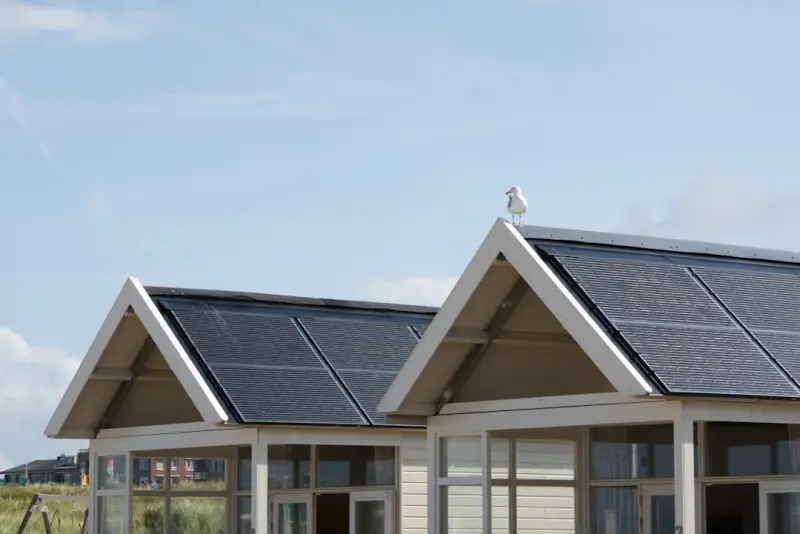
Why Rooftops Are the Untapped Goldmine for Modern Enterprises
When I first stepped onto a downtown office building with a glass‑capped roof, I expected just another sleek façade. What I saw instead was a sprawling canvas of potential—one that could generate clean electricity, lower operating expenses, and future‑proof a company against grid volatility. Solar panels are no longer a niche add‑on; they are becoming the strategic backbone of forward‑thinking businesses.
The Business Case Beyond the Bill‑Split
Most CFOs still treat solar as a “green” line item, a nice‑to‑have that sits beside marketing spend. The reality is far richer. By converting unused roof real estate into a power plant, firms can:
- Slash energy costs by up to 70% after the payback period, turning a variable expense into a predictable, depreciable asset.
- Lock in price certainty in markets where electricity rates swing dramatically from season to season.
- Earn ESG points that translate into better access to capital, higher valuation multiples, and stronger brand equity.
- Boost resilience by keeping critical loads running during outages—a competitive advantage when continuity is non‑negotiable.
These benefits are not abstract; they are measurable on the balance sheet and can be modeled with a simple spreadsheet. The challenge lies in turning the concept into a deployed system that integrates seamlessly with existing infrastructure.
From Concept to Commission: A Step‑by‑Step Playbook
Below is the roadmap I’ve refined over the past decade, distilled from dozens of projects ranging from boutique startups to Fortune 500 headquarters.
1. Site Assessment – More Than Sunlight
Start with a detailed audit of the roof’s structural capacity, shading patterns, and orientation. Use a drone equipped with LiDAR to generate a 3‑D model, then overlay solar irradiance data. This yields a “solar suitability score” that tells you whether a rooftop can support a 200 kW array or if you need to look at adjacent parking canopies.
2. Financial Modeling – Aligning with Business Goals
Map the projected generation to your utility bills, accounting for demand charges, time‑of‑use rates, and any net‑metering or feed‑in tariff structures. Incorporate tax incentives, accelerated depreciation (e.g., §179), and potential green‑bond financing. The result is a clear internal rate of return (IRR) that can be presented to the board alongside other capital projects.
3. Selecting the Right Technology
While monocrystalline panels dominate the market, emerging bifacial modules can capture reflected light from the roof surface, boosting output by 10‑15%. Pair them with micro‑inverters for module‑level optimization, especially on roofs with uneven shading. For larger sites, string inverters combined with power optimizers offer a cost‑effective balance.
4. Integrating Energy Management
Solar doesn’t exist in a vacuum. To harvest maximum value, you need an energy management system (EMS) that can:
- Shift loads to daylight hours, reducing peak demand.
- Store excess generation in batteries for later use or grid services.
- Communicate with the utility for demand‑response participation.
For firms already exploring next‑gen power distribution, the EMS can be a natural extension, turning a simple rooftop array into an intelligent micro‑grid.
5. Navigating Permits and Interconnection
Every municipality has its own set of building codes, fire‑rating requirements, and interconnection procedures. Early engagement with local authorities and the utility’s interconnection team can prevent costly redesigns. Remember, compliance is not a hurdle—it’s an opportunity to demonstrate corporate responsibility and can even become a marketing story.
6. Construction and Commissioning
Choose a contractor with experience in commercial rooftop installations. Look for certifications like NABCEP (North American Board of Certified Energy Practitioners) and a track record of delivering on schedule. During commissioning, verify that each inverter is reporting correctly, and run performance ratio (PR) tests to confirm expected output.
7. Ongoing Operations – Turning Data Into Dollars
Post‑installation, the real work begins: monitoring, maintenance, and optimization. A cloud‑based monitoring portal provides real‑time performance metrics, alerts for under‑performance, and analytics that can inform future upgrades. Routine cleaning (especially in dusty environments) and thermal imaging inspections keep the system humming at peak efficiency.
Case Study: A Mid‑Size Tech Firm’s Solar Leap
When the leadership at Arcadia Solutions approached me, their 120,000 sq ft office in a dense urban core was paying $45,000 per month in electricity. Their roof was a flat expanse of concrete, structurally sound but underutilized. After a site assessment, we sized a 350 kW system using bifacial panels and micro‑inverters. The financial model projected a 5‑year payback, with an IRR of 12% after tax credits.
Six months after commissioning, the firm reported a 62% reduction in electricity spend. They also enrolled in a demand‑response program, earning an additional $8,000 annually for curtailing load during peak events. Most importantly, the solar story became a core part of their ESG narrative, helping them close a $10 M Series C round with investors who prioritized sustainability.
Leveraging Solar for Resilience and Grid Services
Beyond cost savings, solar can be a pillar of business continuity. In regions prone to storms or grid congestion, a rooftop array paired with a modest battery bank (e.g., 500 kWh) can keep critical systems—data centers, security, HVAC—online for hours. Some forward‑looking enterprises are even exploring behind‑the‑meter battery arbitrage: charging during low‑price periods, then discharging when rates spike.
Furthermore, many utilities now offer “grid‑service markets” where commercial solar owners can sell ancillary services like frequency regulation or voltage support. Participating in these markets transforms a passive asset into a revenue generator, further accelerating the return on investment.
Solar and ESG: Turning Green Into Gold
Investors are scrutinizing ESG metrics more rigorously than ever. Solar installations provide tangible, verifiable data points: reduced CO₂ emissions, renewable energy certificates (RECs), and improved sustainability scores. Companies can bundle these metrics into their annual reporting, making the case for higher valuation multiples.
In fact, a recent analysis of S&P 500 firms showed that those with on‑site solar saw an average 4% premium in market valuation relative to peers. This “green premium” is not a myth; it reflects the market’s confidence in the long‑term risk mitigation that renewable energy offers.
Financing Options That Align With Corporate Objectives
Not every company wants to own the panels outright. Several financing models exist:
- Power Purchase Agreements (PPAs): A third‑party developer installs and operates the system; the company buys electricity at a fixed, lower rate.
- Solar Leases: Similar to PPAs but with a lease structure; often includes maintenance.
- Green Bonds: Issued by the corporation to raise capital specifically for renewable projects, appealing to ESG‑focused investors.
- On‑Balance‑Sheet Purchase: Capitalizing the asset, taking advantage of tax benefits and depreciation.
Choosing the right model depends on balance‑sheet considerations, tax position, and strategic goals. For instance, a company seeking rapid ESG reporting may favor a PPA to get immediate renewable energy consumption data without the capital outlay.
Beyond Electricity: Solar’s Role in Integrated Building Systems
Solar can feed into more than just lights and computers. Thermal solar collectors can pre‑heat water for corporate cafeterias, reducing boiler fuel use. Photovoltaic canopies over parking lots not only generate power but also provide shade for electric‑vehicle (EV) charging stations—a win‑win for sustainability and employee amenities.
Consider a scenario where a firm installs solar canopies that double as EV chargers. The generated electricity powers the chargers directly, eliminating the need for additional grid draw and showcasing a holistic approach to clean mobility.
Future Trends: From Static Panels to Adaptive Solar Façades
While traditional rooftop arrays are still the workhorse, the next wave of innovation lies in dynamic, building‑integrated photovoltaics (BIPV). These are solar modules that double as cladding, windows, or shading devices, turning the entire envelope of a building into a power generator. When paired with AI‑driven controls, these systems can adjust tilt and orientation in real time to maximize capture.
Companies that adopt BIPV early position themselves as architectural leaders, merging aesthetics with performance—a narrative that resonates strongly with design‑savvy stakeholders.
Putting It All Together: A Checklist for Decision Makers
Before you walk into a boardroom armed with solar ambitions, run through this quick checklist:
- Is the roof structurally sound and free of excessive shading?
- What is the current electricity spend and demand charge profile?
- Which financing model aligns with your capital strategy?
- Do you have an EMS or are you prepared to implement one?
- Are there local incentives, tax credits, or RECs you can capture?
- Can you leverage the system for grid services or demand response?
- How will you measure and report ESG impact?
If you can answer “yes” to most of these, you’re ready to move forward. The journey from a vacant roof to a revenue‑producing solar hub is more accessible than ever, and the payoff—both financial and reputational—can be transformative.
Next Steps: From Vision to Reality
Start the conversation today. Bring together facilities, finance, and sustainability teams to map out the potential. Engage a certified solar consultant for a preliminary feasibility study. And, as you design the system, remember that solar is not just a cost‑saving tool—it’s a strategic asset that can power growth, resilience, and brand leadership for years to come.
For those interested in digging deeper into the compliance side of energy projects, our guide on energy compliance strategies offers a solid foundation. And if you’re already modernizing your power architecture, the insights from data‑driven sustainability planning can help you integrate solar into a holistic, future‑ready energy ecosystem.

Tom Ferguson is a Canadian freelance writer with a passion for storytelling, current events, and thoughtful commentary. Drawing on years of writing experience, he shares engaging insights on a wide range of topics, bringing a uniquely Canadian perspective to his work.
Related Posts

How Solar Microgrids Empower Commercial Resilience
Solar microgrids combine photovoltaic generation, storage, and intelligent controls to turn power ou... Read More

Solar‑Infused Biophilic Design: Turning Light into Wellness
A deep dive into how solar‑powered glazing, adaptive lighting, and living walls combine to transfo... Read More

Solar Energy as a Strategic Business Asset: Turning Sunlight into Competitive Advantage
Solar isn’t just a green initiative; it’s a strategic asset that delivers predictable cash flow,... Read More
Top Posts

Science‑Driven Carpet Care: Extending Life and Boosting Indoor Health
A deep dive into science‑based carpet cleaning: learn how fiber knowledge, sustainable agents, smart building integration, and emerging robotics can preserve ...Read More

Shade‑Smart Awnings: Cutting Energy Bills and Boosting Home Sustainability
Learn how to turn a simple awning into a powerful energy‑saving tool, from material choices to smart HVAC integration, and start cutting your utility bills to...Read More
Masonry’s Quiet Revolution: Harnessing Thermal Mass and Modern Fabrication
Masonry is undergoing a quiet transformation, merging its centuries‑old durability with modern thermal‑mass benefits, prefabricated panels, and digital tool...Read More

Embracing Sustainable Kitchen Renovations: A Guide to Eco-Friendly Upgrades
Learn how to create a sustainable kitchen with eco-friendly upgrades and materials. Discover the benefits of sustainable kitchen renovations and get started on ...Read More
0 Comments
Post Comment
You will need to Login or Register to comment on this post!