
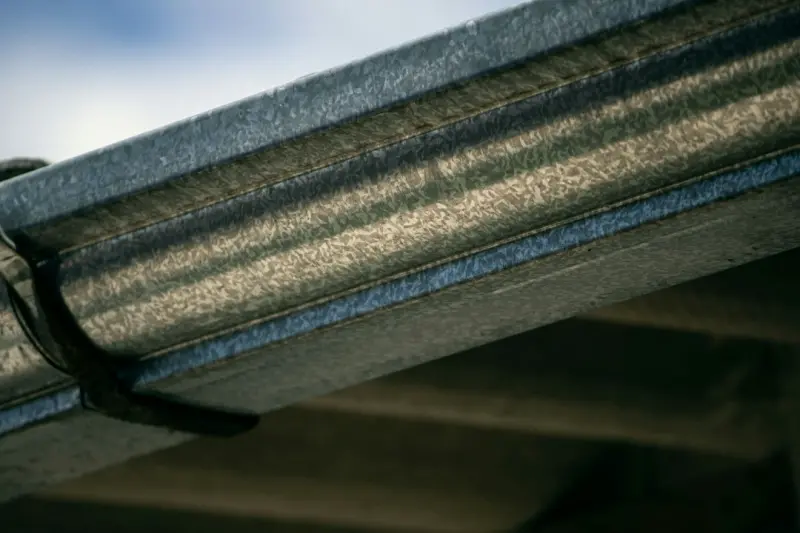
When most people think about a building’s exterior, the roof, windows, and façade dominate the conversation. Gutters, however, have been relegated to the background—a simple conduit for rainwater that, when working, is invisible, and when failing, becomes a costly headache. In today’s data‑driven construction landscape, that perception is about to change dramatically. By turning gutters into intelligent, connected assets, owners and facilities teams can unlock a hidden stream of actionable information that drives sustainability, reduces risk, and adds measurable value.
The Untapped Potential of a Conventional Gutter
At first glance a gutter is nothing more than a trough that channels water away from a roof. Yet that simplicity masks a complex set of interactions: the rate at which water is shed, the volume of runoff, the temperature of the fluid, and the presence of debris that can cause blockages. All of these variables have a direct impact on:
- Structural integrity—standing water can infiltrate walls, corrode fasteners, and accelerate rot.
- Stormwater compliance—municipal regulations increasingly demand precise control of runoff to protect local waterways.
- Energy consumption—wet insulation or damp walls force HVAC systems to work harder, inflating utility bills.
Until now, these data points have remained invisible, collected only when a failure occurs. By equipping gutters with sensors, we can shift from a reactive “fix‑when‑it‑breaks” model to a proactive, data‑informed strategy.
From Passive Drainage to Active Asset
Imagine a gutter system that continuously measures flow rate, temperature, and particulate load, then streams that data to a building‑management platform. The system would automatically flag a sudden drop in flow—a potential blockage—or a spike in temperature that suggests a roof leak. Facility managers could receive a push notification on their phone, schedule a maintenance crew, and even order the exact replacement parts needed before the problem escalates.
This transition is enabled by a combination of low‑power Internet of Things (IoT) sensors and edge‑computing modules. Modern low‑cost flow meters can be mounted inside the gutter channel without compromising its structural profile. Temperature probes, placed at strategic points, help differentiate between rainwater and condensation, while ultrasonic sensors detect the presence of leaves or debris that would otherwise go unnoticed.
Embedding Sensors for Predictive Health
Predictive maintenance has taken hold in industries ranging from aviation to manufacturing, but its application to building envelopes is still nascent. By feeding continuous gutter data into a machine‑learning model, patterns emerge that predict when a blockage will occur, how quickly a roof leak will grow, or when corrosion is likely to compromise a support bracket.
For example, a model trained on historical flow data can learn that a 30% drop in flow during a steady rain event usually precedes a blockage caused by pine needles. The system can then generate a pre‑emptive work order, dispatching a crew with a specialized cleaning tool, thereby avoiding water overflow onto the foundation.
Beyond the immediate maintenance benefits, the aggregated data creates a longitudinal health record for the building envelope. This record becomes a valuable asset during property appraisal, insurance underwriting, or sustainability certification processes, where documented proactive stewardship often translates into financial incentives.
Harvesting Every Drop: Rainwater Integration
While the primary function of a gutter is to protect the building, a connected gutter can also become a gateway to water reuse. By pairing the sensor suite with a real‑time building performance monitoring platform, owners can synchronize rainwater capture with demand cycles. When a forecast predicts a substantial rain event, the system can pre‑emptively divert excess flow into a storage cistern, ready for irrigation, toilet flushing, or even cooling‑tower make‑up water.
This integration does more than reduce municipal water bills—it aligns with emerging water‑scarcity regulations and corporate ESG goals. The data logged by the gutter sensors provides verifiable proof of water captured, reused, and saved, which can be reported directly into sustainability dashboards.
Designing for Climate Resilience
Climate patterns are shifting. Heavy downpours are becoming more frequent, while prolonged dry spells interrupt traditional water‑budget planning. A connected gutter system equips building owners with the agility needed to respond to these changes. By monitoring not only flow volume but also the intensity of each event, the system can dynamically adjust downstream storage capacity, trigger overflow alerts, or even modulate roof‑top green‑roof irrigation to mitigate runoff.
When integrated with a broader responsive architectural design strategy, gutters can act as the circulatory system for a building’s water ecosystem. Excess water can be routed to vertical plant installations, reducing heat island effect and providing additional insulation—a virtuous cycle that improves both comfort and energy performance.
Case Study: A Connected Gutter Retrofit in a Mid‑Size Office Tower
One regional office tower, built in the early 2000s, suffered recurring gutter blockages each spring, leading to water intrusion on the lower‑level parking deck. The property manager partnered with a technology integrator to install a retrofit kit comprising:
- Ultrasonic debris detectors every 15 feet.
- Low‑power flow meters with Bluetooth LE connectivity.
- Edge‑computing nodes that preprocess data and forward anomalies to the building‑management system.
Within three months, blockage‑related incidents dropped by 85 %. Moreover, the system identified a previously unnoticed roof leak that was leaking at a rate of 0.2 gallons per minute—an issue that would have taken years to surface without continuous monitoring. The data also revealed that the building’s rainwater capture system was operating at only 40 % capacity because overflow events were not being logged. By fine‑tuning the diversion valves based on sensor insights, the facility increased capture efficiency to 68 %.
Financially, the retrofit paid for itself within 18 months through reduced emergency repair costs, lower water bills, and a modest insurance premium reduction thanks to the documented risk mitigation.
Implementation Roadmap for the Forward‑Thinking Facility
Adopting a connected gutter strategy does not require a full building overhaul. Below is a pragmatic roadmap that scales with budget and ambition:
- Audit Existing Infrastructure—Map out all gutter runs, downspouts, and drainage points. Identify high‑risk zones (e.g., long horizontal runs, proximity to trees).
- Select Sensor Suite—Choose flow meters, temperature probes, and debris detectors that match the conduit size and material.
- Integrate with Existing BMS—Leverage an open API to feed sensor data into the building‑management platform, ensuring alerts and dashboards are consistent with other asset data.
- Develop Predictive Models—Start with rule‑based alerts (e.g., flow drop > 25 % during rain) and evolve to machine‑learning models as data accumulates.
- Link to Water‑Reuse Systems—If the building has cisterns or irrigation, configure valve control logic based on real‑time storage levels and forecasted rain.
- Establish Maintenance Protocols—Define how alerts translate into work orders, who receives them, and the SLA for resolution.
Each phase can be piloted on a single roof section before scaling building‑wide, allowing the team to refine sensor placement and data workflows without disrupting operations.
Future Outlook: From Gutter to Building Nervous System
As sensor costs continue to fall and edge‑computing becomes more capable, gutters will evolve from passive conduits into active nodes within a building’s nervous system. The next generation may incorporate:
- Self‑cleaning coatings that reduce debris buildup.
- Embedded photovoltaics that harvest solar energy while capturing rainwater.
- Adaptive flow channels that reshape based on real‑time runoff volume, optimizing hydraulic efficiency.
These advances will blur the line between building envelope and building services, turning every rain event into a data point that fuels sustainability, resilience, and operational excellence.
In the end, the humble gutter is poised to become a cornerstone of intelligent building design. By embracing connectivity, predictive analytics, and water‑reuse integration, owners can transform a traditional maintenance nuisance into a strategic asset that delivers measurable financial, environmental, and performance benefits.

Craig Brett is a freelancer with a passion for the outdoors. His love for nature inspires his work, bringing authentic and engaging perspectives to projects related to outdoor activities, adventure, and environmental topics.
Related Posts

Smart Gutter Management: Turning Rainfall Into Data‑Driven Asset Protection
Explore how smart sensors, digital twin integration, and predictive maintenance turn ordinary gutter... Read More
Beyond Drainage: How Intelligent Gutter Systems Are Future‑Proofing Buildings
Intelligent gutter systems transform traditional rainwater channels into data‑rich, adaptive, and ... Read More

How to Keep Your Gutters Happy All Year Long
Learn easy, seasonal gutter upkeep strategies, material choices, and aesthetic tips to protect your ... Read More
Top Posts
Energy Inspection as a Service: Turning Audits into Ongoing Partnerships
Energy Inspection as a Service (EIaaS) redefines traditional audits by delivering continuous monitoring, predictive analytics, and actionable remediation under ...Read More

Beyond Boundaries: How Modern Fencing Redefines Function and Form
Modern fencing transcends mere boundaries, integrating smart security, eco‑friendly materials, and customizable design. Discover how these trends turn a simpl...Read More

Wallpapering as Art: Transforming Walls into Personal Storytelling Canvases
Explore a fresh, personal approach to wallpapering—sustainable picks, pattern mixing, custom prints, and sensory‑friendly designs that turn any room into a ...Read More

From Parking Spot to Power Hub: Rethinking Garage Construction for the Modern Maker
Learn how to transform a standard garage into a sustainable, high‑performance hub using data‑driven design, smart foundations, circular material reuse, and ...Read More
0 Comments
Post Comment
You will need to Login or Register to comment on this post!