
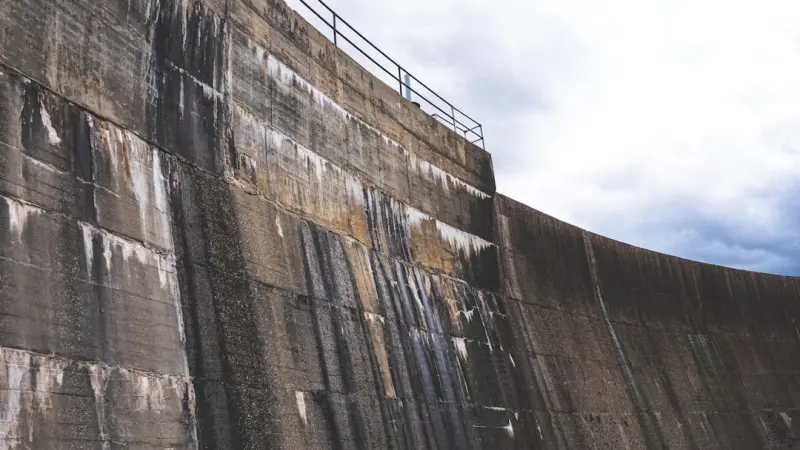
Why Waterproofing Is No Longer a Maintenance Afterthought
When I first stepped onto a construction site fresh out of college, the word “waterproofing” sounded like a line‑item tucked under a long list of “finish work.” It was something the crew would slap on a roof or a basement slab and then move on. Decades later, after overseeing dozens of large‑scale projects, I’ve learned that waterproofing is the silent sentinel that determines whether a building thrives or starts leaking money—literally and figuratively.
The Hidden Cost of Ignoring Water Intrusion
Most facility managers track obvious expenses: HVAC service contracts, lighting upgrades, and tenant improvements. What they often miss is the cumulative drain caused by water ingress:
- Structural degradation: Even a slow seep can corrode reinforcement steel, leading to costly slab repairs or, in extreme cases, a total rebuild.
- Indoor air quality decline: Moisture fuels mold, which not only triggers health complaints but also forces expensive remediation.
- Insurance premiums: Insurers look at loss history. A property with repeated water claims is labeled high‑risk, inflating premiums.
- Operational downtime: Leaky roofs or basements can force tenants out of spaces, resulting in lost revenue and reputational damage.
When you add up these hidden costs over the life of a building, they easily eclipse the upfront investment in a robust waterproofing system.
Reframing Waterproofing as a Strategic Asset
Instead of viewing waterproofing as a line‑item, treat it as a strategic asset—a proactive investment that delivers measurable returns. Below are three pillars that help re‑position waterproofing in the executive agenda:
1. Risk Mitigation and Insurance Savings
Insurance carriers increasingly offer discounts to properties that can demonstrate “loss‑prevention” measures. A documented waterproofing plan, complete with material certifications and performance warranties, serves as tangible proof. Companies that have adopted this approach report premium reductions of up to 15%.
2. Asset Longevity and Capital Preservation
Every square foot of a concrete slab or façade protected from moisture retains its structural integrity longer. This translates directly into deferred capital expenditures. For a typical office tower, a well‑engineered waterproof membrane can push the need for major slab repairs out by 10–15 years, preserving capital for growth initiatives.
3. Operational Efficiency and Tenant Satisfaction
Dry, comfortable interiors keep HVAC loads stable, reduce the need for dehumidification, and improve occupant comfort. Tenants in well‑sealed buildings report higher satisfaction scores, leading to lower turnover and higher lease rates.
Design‑Phase Waterproofing: The Right Time to Act
Most facilities think about waterproofing during renovation, after a leak has already manifested. The truth is that the most cost‑effective waterproofing decisions happen before the first concrete pour. Early integration offers three undeniable benefits:
- Seamless coordination: By aligning waterproofing with structural and architectural detailing, you eliminate the need for retrofit patches that compromise performance.
- Material optimization: Selecting the right membrane—whether a sheet, liquid‑applied coating, or crystalline additive—depends on exposure conditions, substrate type, and design intent. Early decisions avoid costly swaps later.
- Regulatory alignment: Many jurisdictions now require water‑resistive barrier (WRB) documentation as part of the building permit process. Getting this right from the start speeds approvals and prevents costly re‑submissions.
Choosing the Right Waterproofing System
The market offers a spectrum of solutions. Picking the optimal system requires a data‑driven assessment of three factors:
Exposure Profile
Is the membrane exposed to UV radiation, traffic loads, or chemical agents? For high‑traffic zones, a reinforced sheet membrane with a protective topcoat may be appropriate. For buried foundations, a liquid‑applied elastomeric coating that adheres to irregular surfaces can be more effective.
Substrate Compatibility
Concrete, steel, wood, and masonry each demand a specific primer or adhesion promoter. Skipping this step leads to delamination. For example, when working with smart concrete solutions, integrating waterproofing compounds that do not interfere with embedded sensors is crucial.
Service Life and Maintenance
Consider the warranty period and the ease of inspection. Some systems incorporate visual inspection windows or embedded moisture sensors that alert you to early failure. This is where IoT-driven waterproofing insights become a differentiator, allowing you to move from reactive repairs to predictive maintenance.
Case Study: A Multi‑Tenant Office Building Saves Millions
One of our clients, a 20‑story office tower in a humid climate, faced recurring basement leaks that disrupted tenant operations twice a year. The initial fix was a surface‑applied coating that lasted three years before failing. After a comprehensive audit, we recommended a two‑part approach:
- Install a high‑modulus sheet membrane with a built‑in drainage plane at the slab level.
- Integrate a network of moisture sensors linked to the building management system for real‑time monitoring.
Within the first year, the building recorded zero water‑related incidents. Insurance premiums dropped by 12%, and the property’s net operating income (NOI) increased by 2.5% due to higher tenant retention. The client estimates a total ROI of 180% over the system’s 20‑year design life.
Embedding Waterproofing into the Digital Twin
Modern facilities are moving toward “digital twins”—virtual replicas that model physical performance. By feeding waterproofing sensor data into the twin, you can simulate water ingress scenarios, test mitigation strategies, and forecast maintenance windows. This integration also supports sustainability goals by reducing waste from unnecessary repairs.
Balancing Sustainability and Durability
There is a misconception that “green” waterproofing must sacrifice performance. In reality, many high‑performance membranes are formulated with low‑VOC, recyclable materials. Pairing these with a design that reduces water demand—such as rainwater harvesting for landscape irrigation—creates a virtuous cycle where the building both resists and responsibly manages water.
Practical Checklist for Facility Leaders
Before you green‑light your next construction or renovation project, run through this checklist:
- Define exposure zones: Identify where water pressure, vapor, and splash risks exist.
- Select compatible materials: Verify membrane and primer compatibility with your structural substrates.
- Plan for inspection: Install access points, visual windows, or sensor arrays.
- Document warranty and performance criteria: Ensure contracts include clear performance metrics and maintenance obligations.
- Integrate with BIM: Tag waterproofing components in your building information model for lifecycle tracking.
- Coordinate with insurance: Provide waterproofing documentation to qualify for premium discounts.
- Align with sustainability targets: Choose low‑impact membranes and integrate rainwater management where possible.
Looking Ahead: The Next Wave of Waterproofing Innovation
While we have covered the strategic, financial, and operational advantages of proactive waterproofing, the horizon holds even more promise. Emerging technologies such as self‑healing polymers that seal micro‑cracks automatically, and nanocoatings that repel water at a molecular level, are poised to redefine durability standards. When these innovations mature, the ROI calculus will become even more compelling.
Take the First Step
Waterproofing is no longer a “nice‑to‑have.” It’s a cornerstone of asset protection, tenant satisfaction, and financial performance. If you’re still treating it as an after‑thought, you’re leaving money on the table and exposing your portfolio to unnecessary risk. Start the conversation with your design team today, embed waterproofing into your BIM workflow, and let your building’s envelope become a competitive advantage.

Tom Ferguson is a Canadian freelance writer with a passion for storytelling, current events, and thoughtful commentary. Drawing on years of writing experience, he shares engaging insights on a wide range of topics, bringing a uniquely Canadian perspective to his work.
Related Posts
Waterproofing Reimagined: How Sensors and Lifecycle Planning Cut Costs
A deep dive into sensor‑enabled waterproofing reveals how real‑time data, predictive maintenance... Read More
The Silent Revenue Engine: How Strategic Waterproofing Fuels Commercial Success
A deep dive into why waterproofing should be treated as a strategic asset, exploring ROI, sensor int... Read More
Beyond the Seal: Smart Waterproofing for Resilient Buildings
Waterproofing is evolving from a passive barrier into an active, data‑driven system. Learn how sen... Read More
Top Posts

The Plasterer's Playbook: Mastering Texture, Efficiency, and Eco‑Smart Techniques
Explore how modern plastering blends texture, eco‑smart mixes, and smart tools to transform walls into durable, high‑value design features....Read More

Future‑Proofing Property Maintenance: A Veteran Contractor’s Playbook
Learn how to blend sustainability with smart maintenance strategies, using seasonal checklists, energy‑saving upgrades, and modern tech to protect and enhance...Read More

Designing Spaces That Breathe: A Multisensory Approach to Modern Interiors
Discover a fresh interior design philosophy that blends nature, color psychology, smart lighting, and adaptable furniture to craft spaces that engage sight, tou...Read More

Data‑Driven Mold Removal: Turning Moisture Into Measurable Action
Mold removal is evolving from reactive cleaning to a data‑first approach. Learn how moisture sensors, IAQ analytics, thermal imaging, and next‑gen waterproo...Read More
0 Comments
Post Comment
You will need to Login or Register to comment on this post!