
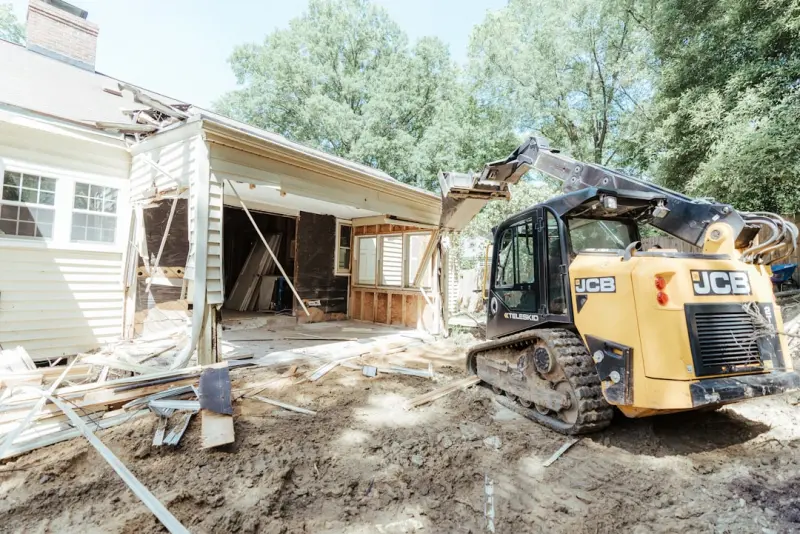
Why Modular Construction Is the Game‑Changer General Contractors Can’t Afford to Ignore
When I first stepped onto a bustling job site, the smell of fresh concrete and the clatter of steel frames felt like the heartbeat of the industry. Decades later, that rhythm is being rewritten—not by louder equipment, but by quieter, smarter, and faster building blocks. Modular construction, once a niche for temporary structures, has surged into mainstream acceptance, and it’s doing more than just accelerating schedules; it’s reshaping the very business model of general contracting.
The Misconception That Modular = “Cheap”
Many still equate modular with low‑cost, low‑quality housing. That stereotype was born in the early days of prefabricated homes that looked like they were assembled in a garage. Today, a modular unit can be a high‑performance, net‑zero office wing, a data‑center pod with built‑in cooling, or a luxury hotel suite with custom finishes. The key is precision engineering combined with advanced material science. Factories now operate under ISO‑9001 quality systems, and every panel is tracked from raw material to final delivery.
For a general contractor, this means a shift from “guess‑and‑check” on‑site workmanship to a predictable, repeatable process where the majority of the work is done under controlled conditions. The result? Fewer re‑works, tighter tolerances, and a dramatic reduction in on‑site waste.
Speed Without Sacrificing Safety
Time is money, but safety is non‑negotiable. Modular construction compresses the critical path by allowing parallel processing: while the foundation is being poured, walls, floors, and even MEP (mechanical, electrical, plumbing) assemblies are being fabricated off‑site. This concurrency not only shortens the overall schedule but also minimizes the exposure of crews to hazardous weather and site‑related incidents.
Moreover, factory environments enforce rigorous safety protocols that are harder to maintain in the chaotic field. Workers operate with the same safety equipment they’d use on a traditional site, but the risk of trips, falls, and struck‑by hazards drops dramatically because the physical site is less cluttered. The only heavy lifting left for the field crew is the strategic placement of modules—a task that can be executed with cranes and trained operators, further reducing manual labor.
Quality Assurance Powered by Data
One of the most compelling arguments for modular construction is the data trail it leaves behind. Each component is scanned, logged, and stored in a digital twin of the building. When a defect surfaces, you can trace it back to its exact point of origin in the factory line, not to a mysterious “field error.” This level of traceability dovetails perfectly with the insights offered by Predictive Maintenance: Turning Data Into Your Property’s Superpower. While predictive maintenance focuses on post‑occupancy performance, modular data gives you a pre‑emptive edge: you can predict assembly issues before the modules ever leave the warehouse.
Labor Shortages Meet Their Match
The industry’s chronic labor shortage is no longer an abstract headline; it’s a daily reality on many sites. Modular construction offers a strategic answer: it moves the most skilled, labor‑intensive work to a controlled environment where labor can be more efficiently allocated. Skilled tradespeople become “assembly supervisors” rather than “general laborers,” allowing contractors to maximize the impact of a smaller, more qualified workforce.
In addition, the factory setting enables better training pipelines. Apprentices can learn in a predictable environment with standardized tasks, leading to faster skill acquisition and reduced turnover. When the modules finally arrive on‑site, the crews are focused on integration rather than fabrication, which is a far less demanding skill set.
Supply Chain Resilience Through Prefabrication
Recent global events have exposed how vulnerable traditional supply chains are to disruptions. By ordering components in bulk for a factory, you lock in pricing and reduce exposure to spot market volatility. Moreover, a modular approach allows you to stagger deliveries based on project milestones, rather than having a massive influx of materials sit idle on a job site.
The result is a leaner inventory, less storage space, and a reduced risk of material degradation or theft. It also means you can respond more nimbly to design changes—swapping a wall panel or upgrading insulation is simply a matter of swapping a module, not tearing down drywall.
Design Flexibility Without the Compromise
One myth that lingers is that modular buildings are “boxy” and lack architectural flair. The truth is that modern BIM (Building Information Modeling) tools allow architects to design complex geometries that are then sliced into manufacturable components. Curved façades, cantilevered sections, and even custom fenestration can be achieved with the same precision as traditional stick-built methods.
For general contractors, this translates into a broader portfolio of project types. Whether you’re working on a boutique retail space, a multi‑family residence, or a high‑tech lab, modular can adapt to the aesthetic and functional demands of the client while still delivering the efficiencies you crave.
Integrating Modular with Existing Project Management Tools
The transition to modular does not require abandoning the software stack you already trust. In fact, the data‑rich nature of modular projects makes them an ideal candidate for integration with Rethinking Commercial Renovations: The Rise of Data‑Driven Space Planning. By feeding factory production schedules into your project management platform, you gain a real‑time view of when modules will be ready, shipped, and installed.
These insights enable more accurate critical path analysis, risk mitigation, and stakeholder communication. You can also use the same dashboards to monitor quality metrics—like panel flatness or joint integrity—directly from the factory to the field.
Cost Implications: Upfront Investment vs. Long‑Term ROI
It’s tempting to focus on the initial cost premium that modular may present. However, when you factor in reduced labor hours, lower waste, decreased rework, and shorter schedules, the total cost of ownership often tilts in favor of modular. Moreover, owners increasingly demand faster delivery times, and the ability to occupy a building sooner can translate into earlier revenue streams—a hidden financial benefit that’s hard to quantify but significant nonetheless.
Financing institutions also view modular projects favorably because the reduced risk profile—thanks to controlled factory conditions—means lower default probabilities. This can lead to better loan terms, further enhancing the ROI.
Environmental Impact: Beyond the Green Buzzword
While sustainability is a buzzword on many rooftops, modular construction offers genuine environmental benefits. Factories can implement closed‑loop recycling for scrap materials, use renewable energy sources, and optimize material usage with computer‑aided design. On‑site, the reduced construction footprint means less disturbance to the surrounding ecosystem and lower emissions from equipment.
Clients looking for LEED or other green certifications appreciate the measurable reductions in waste and energy consumption that modular projects provide. It’s a win‑win: you meet client expectations and position your firm as a leader in responsible building practices.
How to Get Started: A Practical Roadmap for Contractors
- Assess Your Project Portfolio: Identify projects where time, quality, or labor constraints are critical. Pilot modular on a mid‑size office build or a residential community before scaling.
- Partner With a Trusted Fabricator: Look for factories with proven track records, robust QA processes, and the ability to handle the design complexity you require.
- Invest in Digital Integration: Ensure your project management and BIM tools can ingest factory data streams. This will be the backbone of your new workflow.
- Train Your Field Teams: Shift the focus from on‑site fabrication to module installation, safety coordination, and quality verification.
- Communicate With Stakeholders Early: Educate owners, architects, and subcontractors on the benefits and logistics of modular. Transparent communication reduces resistance and aligns expectations.
- Monitor and Iterate: Use the data collected throughout the project to refine your processes. Track metrics like labor hours saved, waste reduction, and schedule adherence.
The Bottom Line
Modular construction isn’t a fleeting trend; it’s an evolution that aligns perfectly with the pressures facing today’s general contractors: tighter timelines, skilled labor shortages, escalating material costs, and an ever‑growing demand for sustainable, high‑quality outcomes. By embracing modular, contractors can transform their operations from reactive, labor‑heavy enterprises into data‑driven, precision‑focused partners capable of delivering complex projects faster, safer, and greener.
If you’re still on the fence, ask yourself: would you rather continue wrestling with the old paradigm, or would you rather lead the industry into a future where the building process is as predictable as an assembly line, yet as creative as an architect’s sketch? The answer, I think, is clear.

David MacKinnon is a dynamic freelance writer known for his captivating storytelling and keen insights into the world of technology. With a passion for exploring the intersection of innovation and everyday life, he crafts engaging narratives that not only inform but also inspire his readers.
Related Posts

The Evolution of General Contracting: How Sustainable Solutions Are Revolutionizing the Industry
The general contracting industry is undergoing a significant transformation, driven by growing conce... Read More
Unlocking Value: How Pre‑Construction Digital Twins Elevate General Contracting
A deep dive into how digital twins—dynamic, data‑driven replicas of construction projects—enab... Read More

Digital Twins Meet Integrated Project Delivery: A New Era for General Contractors
Discover how the synergy of Integrated Project Delivery and digital twin technology is revolutionizi... Read More
Top Posts

Beyond the Wall: Mastering Modern Drywall Techniques
A deep dive into contemporary drywall practices, covering eco‑friendly materials, acoustic solutions, fire‑rating, and integrating smart sensors to create h...Read More

Regenerative Landscaping: Building a Living, Food‑Rich Garden That Works With Nature
Learn to redesign your yard with regenerative practices—soil building, native planting, rain gardens, and edible layers—for a thriving, sustainable landscap...Read More

Silencing the Garage: Acoustic Design Strategies for a Quiet Home Gym
A step‑by‑step guide shows homeowners how to tackle reverberation, impact noise, and air sealing, turning a noisy garage into a peaceful, high‑performance...Read More
Elevating the Garage Door: Smart, Sustainable, and Strategic Upgrades
A garage door is more than a functional entry; it’s a first‑impression powerhouse. Learn how smart technology, eco‑friendly materials, and predictive main...Read More
0 Comments
Post Comment
You will need to Login or Register to comment on this post!