
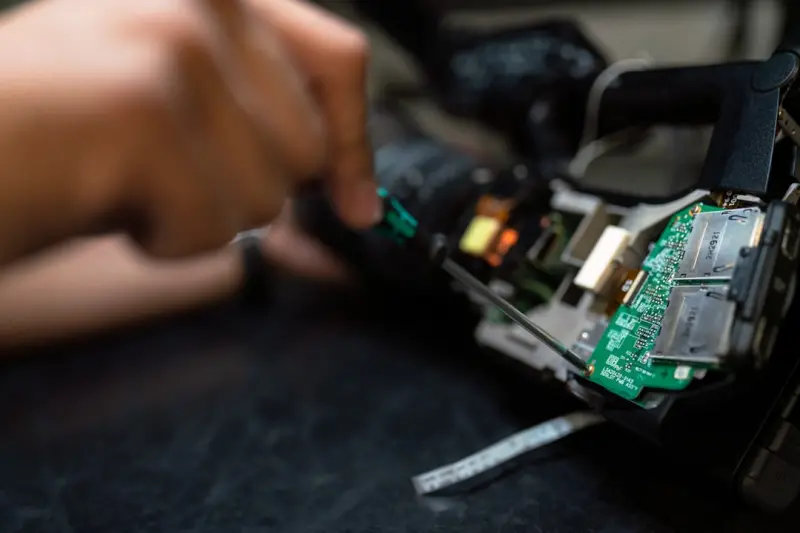
From Broken to Brilliant: My Journey with Remote Appliance Diagnostics
When I first stepped onto the service floor of a bustling repair shop, the scent of hot coils and the clatter of tools were my daily companions. Over the years, I’ve watched refrigerators hum back to life, dryers spin out stubborn lint, and dishwashers regain their sparkling rhythm. Yet, the most striking transformation I’ve witnessed isn’t in the machines themselves—it’s in how we, as technicians, diagnose and solve problems.
The Old Playbook: Guesswork, On‑Site Visits, and Reactive Fixes
Traditional appliance repair has long been a game of react‑and‑repair. Homeowners call when a refrigerator stops cooling or a washing machine leaks, and we scramble to schedule a visit, pack a toolbox, and hope our intuition lines up with the fault. This model suffers from three chronic pain points:
- Time loss: Travel, waiting for the right part, and repeated trips inflate the cost for both service provider and client.
- Diagnostic uncertainty: Without real‑time data, we often rely on the “listen for the click” method, which can lead to misdiagnoses.
- Customer frustration: The longer a device stays offline, the greater the disruption to daily life and the higher the churn risk for service contracts.
These challenges are not new, but the tools to solve them have finally caught up with the demand.
Enter Remote Diagnostics: Data Meets the Kitchen
Imagine a world where your refrigerator sends a silent alert the moment its compressor temperature spikes, or your oven notifies you that a heating element is degrading before it fails. That world is unfolding right now, driven by embedded sensors, cloud analytics, and AI‑powered anomaly detection.
Remote diagnostics turn appliances from passive devices into active participants in their own care. By continuously streaming performance metrics—voltage, temperature, vibration, and usage cycles—to a secure platform, manufacturers and service providers can spot patterns that precede failure. When a threshold is crossed, an automated ticket is generated, and a technician can be dispatched with the exact part needed, or the issue can be resolved remotely through firmware updates.
Why This Matters for the Modern Consumer
Homeowners today expect the same convenience from their appliances as they do from their smartphones. A broken fridge is not just an inconvenience; it’s a risk to food safety, a spike in grocery expenses, and a source of stress. Remote diagnostics provide:
- Proactive alerts: Early warnings allow users to plan for repairs during off‑peak hours, reducing disruption.
- Predictive part ordering: With fault data in hand, service teams can pre‑stock the correct component, shaving hours off repair time.
- Extended appliance lifespan: Timely interventions prevent minor wear from snowballing into catastrophic failures.
Data‑Driven Maintenance: Borrowing from Other Industries
While the concept may feel novel for home appliances, it mirrors strategies that have already reshaped sectors like HVAC and building management. For instance, the Predictive Maintenance for HVAC playbook showcases how AI can keep air handlers humming efficiently. The same algorithms, once fine‑tuned for temperature and airflow, can be adapted to monitor a refrigerator’s evaporator fan speed or a dishwasher’s pump pressure.
What’s exciting is that we’re now seeing these insights migrate from large‑scale commercial systems to the modest appliances that live on kitchen counters and laundry rooms. The democratization of sensor tech and cloud platforms means even a mid‑range washing machine can benefit from enterprise‑grade analytics.
From One‑Off Repairs to Subscription‑Based Care
Parallel to the rise of remote diagnostics is a shift toward subscription models for appliance care. Just as handyman services are moving to subscriptions, many appliance manufacturers are launching “care plans” that bundle monitoring, annual tune‑ups, and priority service into a monthly fee.
These plans are more than a revenue stream; they’re an ecosystem enabler. Subscribers receive a connected hub that aggregates data from all their smart appliances, providing a dashboard of health scores, energy usage, and recommended actions. When the system flags an anomaly, the service provider can intervene before the homeowner even knows something’s wrong.
From a business perspective, subscriptions create a predictable cash flow and deepen customer relationships. From a consumer angle, the peace of mind that comes with a “never‑break‑down” guarantee is priceless.
Building a Sustainable Repair Loop
Beyond convenience and cost savings, remote diagnostics play a pivotal role in sustainability. By catching issues early, we reduce the need for full‑part replacements, which often end up in landfills. A refrigerator that receives a firmware tweak to recalibrate its defrost cycle can avoid a costly compressor swap—a component that is notoriously hard to recycle.
Moreover, the data harvested from millions of devices can inform manufacturers about design weaknesses. If a particular model shows a recurring fault in the door seal, engineers can redesign that component for the next production run, reducing future waste.
Challenges on the Road to Full Adoption
Despite the promise, several hurdles remain:
- Privacy concerns: Homeowners must trust that their appliance data won’t be misused. Transparent policies and robust encryption are non‑negotiable.
- Legacy devices: Many households still run older appliances that lack connectivity. Retrofit kits and aftermarket sensors are emerging, but scaling them is a work in progress.
- Skill gaps: Technicians need training to interpret data dashboards, run remote diagnostics, and collaborate with AI tools.
Addressing these challenges will require collaboration across manufacturers, service providers, and tech firms.
Case Study: A Smart Refrigerator That Saved a Family $300
Last quarter, a family in the suburbs experienced a sudden temperature rise in their refrigerator. Thanks to remote diagnostics, the appliance sent an alert the moment the evaporator coil’s temperature deviated by 3°C from its baseline. The service platform generated a ticket, and the technician arrived with a pre‑ordered coil, replacing it within 45 minutes. Without remote monitoring, the family would have faced a full compressor failure, costing upwards of $800 in parts and labor. This real‑world example highlights how data can translate directly into dollar savings and reduced food waste.
Integrating Remote Diagnostics with Existing Service Workflows
For service companies looking to embrace this new paradigm, the transition can be broken down into three steps:
- Infrastructure upgrade: Deploy IoT gateways or partner with appliance OEMs that already embed sensors. Ensure a secure, scalable cloud backend.
- Data strategy: Define key performance indicators (KPIs) such as motor vibration levels, temperature variance, and cycle counts. Build dashboards that surface anomalies in real time.
- Team enablement: Train field technicians on interpreting alerts, using mobile diagnostic apps, and performing remote firmware updates where possible.
By aligning technology with human expertise, companies can create a hybrid model that leverages the speed of AI and the nuance of seasoned technicians.
Future Glimpses: AI‑Guided Repairs and Autonomous Parts Reordering
The next frontier lies in fully autonomous repair cycles. Imagine a dishwasher that detects a pump motor bearing wear, orders the exact replacement part from a local distributor, and schedules a service visit with a technician who arrives already equipped with the part. AI could even guide the technician step‑by‑step through augmented reality overlays, ensuring flawless execution.
While this vision may sound futuristic, pilots are already underway in pilot programs for commercial laundry facilities, where downtime directly impacts revenue. The lessons learned there will soon trickle down to residential settings.
Conclusion: A New Era of Careful, Connected Appliances
Appliance repair is no longer a reactive, wrench‑in‑hand activity. It’s evolving into a data‑rich, customer‑centric service that blends remote monitoring, predictive insights, and subscription‑based care. As we continue to embed intelligence into the everyday tools that keep our homes running, the line between “broken” and “maintained” blurs—turning what once felt like a dreaded emergency into a manageable, even preventive, part of modern living.
For technicians like me, this shift is both a challenge and an opportunity. It asks us to become data interpreters, digital communicators, and strategic partners in the lifecycle of each appliance. The payoff? Happier homeowners, greener footprints, and a repair industry that finally moves from the dark ages of guesswork into the bright future of smart care.

Lifan Chen is a freelancer based in Toronto specializing in marketing. With expertise in crafting effective marketing strategies and campaigns, Lifan helps businesses grow their brand presence and reach target audiences. As a Toronto-based freelancer, Lifan combines local market insights with creative marketing skills to deliver tailored solutions for clients.
Related Posts

The Real Value of Proactive Appliance Repair: Small Fixes, Big Savings
A proactive approach to appliance repair prevents expensive breakdowns, reduces downtime, and suppor... Read More

Predictive Maintenance: The Future of Appliance Repair
Discover how proactive, data‑driven maintenance can prevent costly appliance breakdowns, improve e... Read More
The Sustainable Revolution in Appliance Repair: A Comprehensive Guide
As the world shifts towards sustainable practices, appliance repair is playing a critical role in re... Read More
Top Posts

Listening to Leaves: Data‑Driven Tree Care for Urban Landscapes
Kelly Reynolds shares how modern sensors, drones, and data analytics are revolutionizing tree care, enabling proactive maintenance, water savings, and stronger ...Read More

Tile Trends: Sustainable, Smart, and Stylish Solutions for Modern Homes
Discover how sustainable materials, smart technology, and clever patterns make tile the ultimate design tool for durability, style, and long‑term home value....Read More

Algorithmic Architecture: Crafting Form with Code
Algorithmic architecture merges code with craft, letting designers generate responsive, efficient forms. Learn how parametric tools drive performance, collabora...Read More
Dynamic Weatherproofing: Turning Your Home Into a Smart Shield
Learn how to upgrade traditional weatherproofing with flexible membranes and smart IoT systems, creating a home that anticipates storms, cuts energy costs, and ...Read More
0 Comments
Post Comment
You will need to Login or Register to comment on this post!