

Why Edge AI Is the Game‑Changer Electrical Engineers Have Been Waiting For
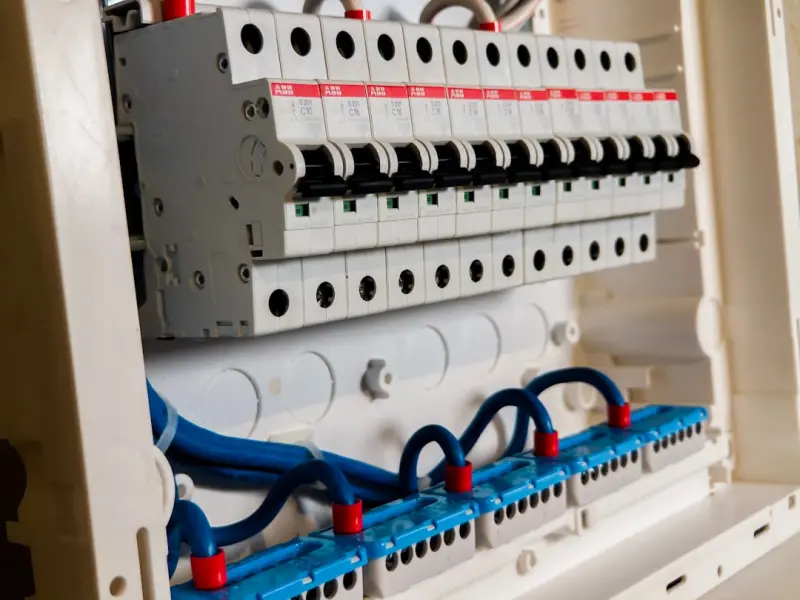
When I first stepped onto a construction site as a fresh‑out graduate, the most exciting thing I could point to was a bank of blinking LEDs on a breaker panel. Fast forward a decade, and those panels now whisper data to cloud servers, predict their own failures, and even optimize energy flow in real time. The silent revolution is happening at the edge of our networks, and it’s reshaping every facet of electrical design, operation, and maintenance.
From Centralized Control to Distributed Intelligence
Traditional electrical management has always been a top‑down affair: a central control room monitors a handful of meters, and human operators react to alarms. Edge artificial intelligence (AI) flips that script. By embedding low‑latency processors directly on sensors, panels, and even individual circuit breakers, the system can analyze voltage, current, harmonic distortion, and temperature in the moment—without waiting for a round‑trip to a remote server.
What does that mean for you, the facility manager or design engineer? It means fewer false alarms, faster fault isolation, and the ability to tune power quality on the fly, rather than after the fact.
Real‑Time Power Quality Monitoring: The New Baseline
Power quality isn’t just a buzzword for compliance auditors. Poor power quality can shave years off the lifespan of motors, degrade lighting, and even corrupt data centers. Edge AI modules, equipped with high‑resolution analog‑to‑digital converters, continuously sample waveforms at kilohertz rates. The AI then classifies events—sags, swells, transients—using trained models that understand the nuances of your specific load profile.
Because the analysis happens at the edge, you get sub‑second alerts that pinpoint the exact circuit and even the offending device. No more scrambling through rows of data logs to find the culprit; the system tells you, “Phase B, Circuit 12, motor #3 is experiencing a 30 % voltage sag lasting 150 ms.”
Predictive Energy Savings: Turning Data Into Dollars
Edge AI isn’t limited to reactive protection. By learning the typical consumption patterns of HVAC, lighting, and plug‑load equipment, the system can suggest subtle adjustments that shave off kilowatts without sacrificing comfort. For instance, a machine that idles for ten minutes each hour can be nudged into a low‑power standby mode automatically. Over a year, those micro‑adjustments compound into significant cost reductions.
One of my favorite success stories involved a mid‑size manufacturing plant that reduced its utility bill by 12 % within six months—simply by letting the edge AI orchestrate staggered start‑ups of non‑critical equipment during off‑peak hours.
Seamless Integration with Existing Building Systems
Adopting edge AI doesn’t require ripping out your existing wiring. Modern edge devices speak smart window treatments protocols—think BACnet, Modbus, and MQTT—so they slot into Building Management Systems (BMS) just like any other sensor. This interoperability means you can layer electrical intelligence on top of your existing HVAC, lighting, and security ecosystems.
The real magic happens when the AI starts cross‑referencing data streams. Imagine the system noticing that a surge in lighting demand coincides with a sudden drop in solar generation on the roof. It can preemptively draw from battery storage, keeping the grid connection stable and avoiding costly demand charges.
Case Study: Edge AI in High‑Performance Multi‑Use Garages
Consider the evolving landscape of urban high‑performance multi‑use garages. These structures are no longer just concrete boxes for cars; they host retail, coworking spaces, and increasingly, electric vehicle (EV) charging stations. Managing power distribution in such a mixed‑use environment is a nightmare—unless you bring edge AI to the table.
- Dynamic Load Balancing: Edge nodes monitor each EV charger’s draw and redistribute power to prioritize critical loads during peak demand.
- Predictive Maintenance: By analyzing temperature trends on power cables, the AI predicts insulation breakdown before a fire hazard emerges.
- Energy Harvesting Coordination: When the garage’s solar canopy produces excess energy, the AI routes it to on‑site battery banks, ensuring that the next wave of vehicles charges at the lowest possible cost.
The result? A garage that can host double the number of EVs without upgrading the main transformer, all while keeping operational costs in check.
The Human Element: Empowering Teams, Not Replacing Them
It’s easy to fall into the sci‑fi narrative that AI will replace electricians. In reality, edge AI is a collaborative partner. It surfaces insights that seasoned technicians might miss, freeing them to focus on strategic upgrades rather than firefighting. Training programs now include a module on “Interpreting Edge AI Diagnostics,” ensuring that your staff can translate a data point into a concrete action plan.
Getting Started: A Pragmatic Roadmap
- Audit Your Current Infrastructure: Identify critical loads, existing sensors, and communication protocols.
- Select an Edge Platform: Look for devices that support over‑the‑air updates, have a proven AI inference engine, and offer open APIs.
- Pilot on a Single Circuit: Deploy a handful of edge nodes on a high‑risk circuit, such as a main HVAC compressor, and monitor the AI’s recommendations for a month.
- Scale Gradually: Expand to other zones, integrating the AI’s outputs into your BMS dashboards. Use the data to refine the AI models—most platforms allow you to upload site‑specific training data.
- Establish Governance: Define thresholds for automated actions versus human‑approved interventions. This safeguards against unintended trips or load shedding.
Future Outlook: From Edge to Edge‑to‑Cloud Synergy
While edge AI shines in low‑latency, high‑reliability scenarios, the future belongs to hybrid models. Edge devices will continue to make split‑second decisions, while aggregated insights travel to the cloud for long‑term trend analysis, benchmarking across facilities, and continuous model improvement. The result is a feedback loop where every building contributes to a smarter, more resilient electrical grid.
As we push toward electrification of transport, renewable integration, and zero‑carbon goals, edge AI will be the silent conductor ensuring that every amp, volt, and watt plays in harmony.
Conclusion: Embrace the Edge, Stay Ahead
The electrical world is at a crossroads. You can cling to legacy monitoring systems that react too slowly, or you can adopt edge AI and turn your electrical infrastructure into a proactive, self‑optimizing asset. The technology is mature, the ROI is measurable, and the ecosystem—thanks to open standards and plug‑and‑play devices—has never been more approachable.
Take the first step. Deploy an edge node, let the AI speak, and watch as your facility not only saves money but also gains a new level of reliability that was once the stuff of engineering textbooks.

William Roy is a freelance writer originally from Montreal who moved to Ottawa with his wife of 50 years to be closer to their grandkids. Alongside his writing, William has a passion for fishing.
Related Posts

Modular Electrical Architecture: Building a Scalable, Resilient Power Backbone
A deep dive into modular electrical architecture reveals how interchangeable, intelligent power modu... Read More

Home EV Charging: Wiring, Safety & Smart Planning
Planning to plug in an electric car? I break down the essential wiring steps, safety checks, and sma... Read More
Powering the Future Home: Adaptive Electrical Panels and On‑Demand Energy Management
Adaptive electrical panels transform traditional breaker boxes into intelligent energy managers, ena... Read More
Top Posts

The Subscription Kitchen: How Modular Design Is Redefining Home Cooking
Discover how modular, subscription‑style kitchen upgrades are transforming the heart of the home into a flexible, sustainable space that adapts to your evolvi...Read More

Silencing the Garage: Acoustic Design Strategies for a Quiet Home Gym
A step‑by‑step guide shows homeowners how to tackle reverberation, impact noise, and air sealing, turning a noisy garage into a peaceful, high‑performance...Read More

Transforming My Bathroom: A Sustainable Renovation Journey
A personal, eco‑focused bathroom makeover that blends radiant floor heating, smart water fixtures, and reclaimed materials for a stylish, energy‑saving sanc...Read More

Turning Rooms into Storytelling Canvases: The Art of Curating Personal Narrative Spaces
Learn to transform each room into a chapter of your life, using purposeful design choices, sustainable upgrades, and flexible furniture to craft a home that nar...Read More
0 Comments
Post Comment
You will need to Login or Register to comment on this post!