
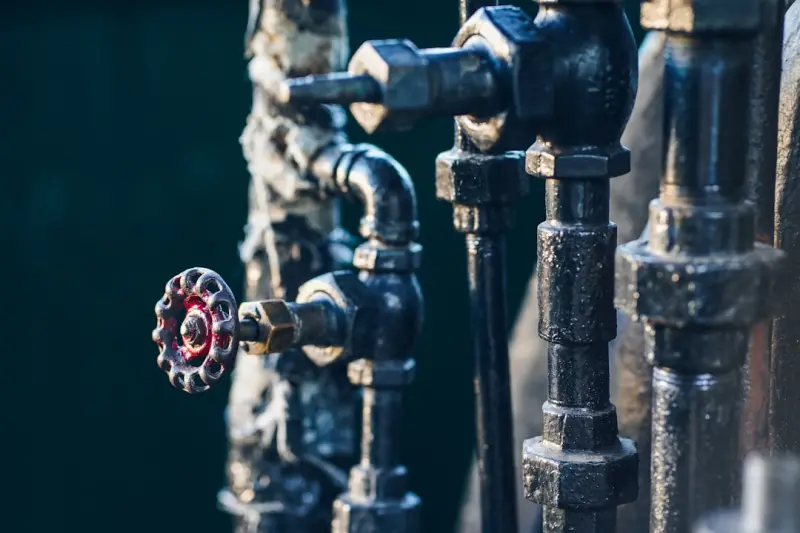
Plumbing Meets Tech: How IoT Is Redefining Home Water Systems
When I first started tinkering with my own kitchen faucet, I never imagined that a simple turn of the handle could become a data‑rich conversation between my home and the cloud. As a lifelong plumber turned tech enthusiast, I’ve watched the industry evolve from bulky copper guts to sleek, sensor‑driven ecosystems. Today, the Internet of Things (IoT) is not just a buzzword—it’s the backbone of a new generation of plumbing that promises efficiency, safety, and convenience without sacrificing the craftsmanship we love.
From Leaky Pipes to Predictive Intelligence
Traditional plumbing has always been reactive: a drip appears, a homeowner calls a plumber, the problem is fixed, and life goes on. The downside? Millions of gallons of water are wasted each year before anyone even notices a leak. Enter predictive analytics. By embedding flow sensors, pressure transducers, and temperature gauges into every branch of the water network, we can now anticipate a failure before the first drop hits the floor.
Imagine a sensor tucked under your sink that monitors the minute fluctuations in water pressure. It learns the “normal” rhythm of your household—morning coffee brews, evening showers, occasional garden watering. When it detects an anomaly—a subtle pressure dip that precedes a pipe fatigue—it sends a silent alert to your smartphone. You get a heads‑up, schedule a service, and avoid a flood that would have cost both time and money.
Touchless Faucets: Hygiene Meets Data
Touchless faucets have become a staple in commercial kitchens and hospitals, but they’re finally making a splash in residential settings. The magic lies in infrared sensors that detect hand proximity and instantly open the valve. Beyond the obvious hygiene boost—no more spreading germs from a dirty handle—these faucets log every activation, measuring flow volume and temperature.
Why does this matter? By aggregating usage data, homeowners can identify wasteful habits. “Did you know you left the faucet running for 45 seconds while brushing your teeth?” the app might prompt. The system can even suggest a “smart schedule” that synchronizes with off‑peak electricity rates, ensuring your water heater runs when the grid is cheapest.
Smart Water Heaters: Learning the Rhythm of Your Home
Modern water heaters are no longer dumb metal boxes. With IoT connectivity, they become learning devices. They monitor how often you draw hot water, the temperature preferences of each family member, and even the weather outside. On a chilly morning, the heater pre‑emptively raises its temperature to meet the demand; on a mild day, it backs off, saving energy.
The integration with edge AI brings processing power right to the device, allowing real‑time adjustments without relying on constant cloud communication. This reduces latency, protects privacy, and ensures the system remains functional even during internet outages.
Greywater Recycling: Turning Waste Into Resource
Water scarcity is prompting homeowners to rethink every drop. Greywater—lightly used water from sinks, showers, and laundry—can be filtered and repurposed for irrigation, toilet flushing, or even cooling towers. IoT plays a pivotal role in making these systems user‑friendly.
Smart controllers track the quality of greywater, automatically diverting it when contaminant levels rise. They also coordinate with weather forecasts: if rain is expected, the system stores less water, conserving energy for the pump. The result is a seamless loop where the plumbing network talks to the landscape and the local utility, optimizing both water and energy consumption.
Leak Detection: The Silent Guardian
Leaks are the silent killers of plumbing health. A single pinhole in an underground pipe can waste up to 3,000 gallons per year. Traditional leak detection often involves invasive inspections and costly equipment. Today’s IoT‑enabled leak detectors are compact, wireless, and battery‑powered, making them easy to install in hard‑to‑reach places.
These devices use acoustic sensing to “listen” for the high‑frequency hiss of water escaping a pipe. When the sound signature crosses a threshold, the sensor triggers an alarm and logs the exact location via GPS‑enabled mapping. Homeowners receive an instant push notification, while the service provider can dispatch a technician with precise coordinates, reducing diagnostic time dramatically.
Water Quality Monitoring: From Taste to Safety
Beyond quantity, the quality of water is a growing concern. IoT sensors can measure pH, chlorine levels, hardness, and even the presence of contaminants like lead or bacteria. Real‑time dashboards give homeowners a clear picture of what’s flowing through their taps.
If a sudden spike in hardness is detected, the system can automatically activate a water softener, adjusting its regeneration cycle to prevent scale buildup in appliances. In the rare event of a contamination alert, the system can shut off the affected branch, isolate the problem, and notify both the homeowner and local water authority.
Integration with Home Automation Platforms
The modern smart home ecosystem thrives on interoperability. Plumbing devices now speak the same language as lights, thermostats, and security cameras. Using platforms like Apple HomeKit, Google Home, or Amazon Alexa, you can ask, “Hey Alexa, how much water did we use last month?” and receive a concise report.
Voice commands can also trigger actions: “Turn off the garden irrigation,” or “Set the water heater to 120°F.” Automated routines can be set based on occupancy sensors—if no one is home for the day, the system reduces water heater standby temperature and pauses irrigation, conserving resources without manual intervention.
Challenges: Data Security and Legacy Infrastructure
With great data comes great responsibility. Plumbing data may seem innocuous, but it reveals patterns about when a home is occupied—a valuable piece of information for malicious actors. Secure communication protocols (TLS 1.3), device authentication, and regular firmware updates are essential safeguards.
Another hurdle is retrofitting older homes. Many legacy systems use metal pipework that lacks the space for modern sensors. Solutions include clamp‑on flow meters, wireless sensor nodes that attach to existing fixtures, and modular control units that can be installed without tearing down walls.
Future Outlook: The Convergence of Plumbing, Energy, and AI
We’re on the cusp of a convergence where water, electricity, and heat are managed as a unified resource. Imagine a scenario where your solar panels generate excess power, the smart water heater stores that energy as hot water, and the grey‑water system uses the same heat to pre‑warm incoming cold water. All decisions are orchestrated by AI that optimizes for cost, sustainability, and comfort.
Such a holistic approach requires standards—open APIs, common data models, and industry certifications—to ensure devices from different manufacturers can cooperate seamlessly. As these standards mature, the average homeowner will gain the power of a mini‑utility, controlling water and energy with the same ease they now control lights and music.
Practical Steps to Future‑Proof Your Plumbing
- Start with the basics: Replace outdated fixtures with touchless or low‑flow models that have built‑in sensors.
- Upgrade the control hub: Choose a central smart home controller that supports Z‑Wave, Zigbee, and Wi‑Fi for maximum compatibility.
- Install leak detection early: Wireless sensors can be placed under sinks, near water heaters, and in basements for early warnings.
- Consider grey‑water loops: Even a small system for garden irrigation can cut water bills dramatically.
- Embrace data: Use the dashboards provided by manufacturers to track usage, set goals, and spot inefficiencies.
By taking these steps, you’re not just fixing a pipe—you’re joining a movement toward smarter, greener homes that respect both the environment and the wallet.
Conclusion: Plumbing as a Digital Frontier
The old image of a plumber in a blue jumpsuit, wrench in hand, is evolving. Today’s professionals are part‑engineer, part‑data analyst, and part‑environmental steward. The integration of IoT into plumbing systems turns a once‑static network into a living, learning entity that safeguards our homes, conserves precious resources, and provides unprecedented convenience.
If you’ve ever stared at a dripping faucet and wished for a magic button to stop it, that button now exists—just a tap away on your smartphone.

Kelly Reynolds is a dynamic freelance writer hailing from the picturesque landscapes of Alberta. A master of the written word, she juggles her passion for storytelling with the exhilarating chaos of being a mother to five spirited children. With an impressive portfolio that spans various genres, Kelly captivates readers through her engaging blog posts and thought-provoking articles.
Related Posts

The Trending Taps: A Lifan Chen Guide to Mastering Your Home's Plumbing
From preventing leaks to embracing smart home tech, Lifan Chen offers a comprehensive guide to under... Read More

Silent Water Intruders: Mastering Hidden Leak Detection for a Healthy Home
Learn how to detect invisible leaks before they cause damage. From acoustic listening devices to sma... Read More
The Importance of Regular Plumbing Maintenance
Regular plumbing maintenance is crucial for homeowners to prevent costly repairs, ensure efficient w... Read More
Top Posts
Foundation Futures: Embedded Sensors and Sustainable Design
A deep dive into how modern foundations are becoming data‑rich, energy‑active systems through sensors, low‑carbon concrete, and renewable integration, off...Read More

Embracing Sustainable Practices in Commercial Renovations
Sustainable commercial renovations are no longer a niche consideration; they've become a business imperative. Learn how businesses can prioritize sustainability...Read More

Quiet Kitchen Renovations: How Sound Design Transforms Your Cooking Space
Explore the art of quiet kitchen renovations, blending sound‑absorbing materials, biophilic design, and smart lighting to craft a serene, functional cooking h...Read More

When Buildings Learn to Breathe: The Rise of Adaptive Facades
Adaptive façades turn static walls into living skins, using smart glass, kinetic louvers, and responsive materials to boost energy efficiency, occupant comfort...Read More
0 Comments
Post Comment
You will need to Login or Register to comment on this post!