

Reimagining Comfort: The Strategic Edge of Radiant Floor Heating
When we think about building performance, the conversation often circles around HVAC efficiency, airtight envelopes, or renewable power sources. Yet, a silent, floor‑level technology is quietly reshaping occupant experience and operational metrics: radiant floor heating. As someone who spends a lot of time walking through commercial spaces and consulting on building performance, I’ve come to see floor heating not just as a luxury, but as a measurable asset that can align comfort, health, and the bottom line.
Why Floor Heating Deserves a Seat at the Table
Traditional forced‑air systems have dominated for decades because they’re familiar and relatively cheap to install. However, they come with trade‑offs that are increasingly hard to ignore:
- Thermal stratification: Warm air rises, leaving the floor—and the people standing or sitting there—chilly.
- Airborne particulate circulation: Fans and ducts can stir dust, allergens, and even pathogens.
- Energy spikes: Rapid temperature changes demand high‑capacity equipment, driving up peak demand charges.
Radiant floor heating flips the script. By delivering low‑grade heat directly to the occupied zone, it eliminates stratification, reduces airborne movement, and operates at lower temperature differentials. The result is a more even, pleasant environment that can be maintained with less energy input.
The Data‑Driven Advantage
What makes floor heating truly compelling today is the ability to embed it within a data‑rich building ecosystem. Sensors can monitor surface temperature, humidity, and even foot traffic patterns, feeding that data into a building management system (BMS). The BMS then optimizes heating schedules based on real‑time occupancy, weather forecasts, and energy pricing.
Imagine a conference room that only ramps up its floor temperature 15 minutes before a meeting is booked, then gracefully steps down once the room is vacated. Or a retail space that subtly warms its entrance during a cold snap, encouraging customers to linger longer. These micro‑adjustments translate into noticeable energy savings—often 10‑20 % compared to a baseline forced‑air system.
Integrating With Predictive HVAC Strategies
Floor heating isn’t an isolated solution; it can complement and even enhance predictive HVAC management. By lowering the load on air‑handling units, the whole HVAC system can run at a steadier, more efficient point. For teams already exploring predictive HVAC strategies, adding radiant floor heating provides another lever to fine‑tune comfort while flattening demand peaks.
Health and Wellness Benefits That Extend Beyond Comfort
Occupant health is a hot topic, but most discussions focus on ventilation and daylight. Radiant floor heating contributes in subtler ways:
- Reduced drafts: No cold spots mean fewer musculoskeletal complaints from people constantly adjusting blankets or clothing.
- Improved indoor air quality: With fewer fans circulating air, there’s less dust resuspension, which benefits allergy sufferers.
- Enhanced foot health: Warm surfaces can aid circulation, a small but appreciated perk for older occupants or those on their feet all day.
These wellness advantages can be quantified through employee satisfaction surveys or reduced absenteeism, adding another layer to the ROI narrative.
Choosing the Right System: Hydronic vs. Electric
There are two primary technologies for radiant floor heating:
- Hydronic: Water‑based loops embedded in concrete or underfloor panels. Ideal for larger footprints and when integrating with existing boiler or heat‑pump infrastructure.
- Electric: Thin heating mats or cables that plug into dedicated circuits. Best for retrofits, small zones, or spaces where water‑based installation is impractical.
Both can be equipped with zone controllers that communicate with the BMS, but hydronic systems often provide superior efficiency at scale, especially when paired with a heat‑pump that extracts ambient heat from the environment.
Design Considerations for Architects and Engineers
Implementing radiant floor heating successfully requires early coordination. Here are three design checkpoints to keep in mind:
- Thermal mass planning: Concrete slabs or screed act as a heat reservoir. The thickness and material composition influence how quickly the floor responds to control signals.
- Insulation strategy: Proper under‑slab insulation prevents heat loss to the sub‑grade, ensuring that the majority of energy goes into the occupied zone.
- Floor finish compatibility: Not all floor coverings conduct heat equally. Tile and stone are excellent conductors, while thick carpet can insulate the floor too much, diminishing efficiency.
By addressing these items during the schematic phase, teams avoid costly redesigns later and can fully leverage the system’s performance potential.
Quantifying the Return on Investment
Financial justification often hinges on clear, data‑backed numbers. A typical office building that swaps a conventional forced‑air system for a hybrid solution—radiant floor heating for occupied zones plus a smaller air‑handling unit for ventilation—can see:
- Annual energy cost reduction of 12‑18 %.
- Peak demand reduction of 5‑10 kW, translating into lower utility demand charges.
- Extended equipment lifespan due to reduced cycling of air‑handlers.
When you add the intangible benefits—enhanced employee comfort, improved indoor air quality, and a greener building profile—the payback period often falls within 3‑5 years, well within the typical asset lifecycle.
Case Study: A Data‑Center Adjacent Office Complex
One client, a tech firm with a campus that included both data‑center facilities and office buildings, faced a challenge: their offices suffered from cold floors in winter, prompting complaints and higher heating bills. By installing a hydronic radiant floor system under the office slabs and linking it to their existing BMS, they achieved:
- Floor surface temperatures that stayed within the comfort band of 23‑24 °C without raising the air temperature.
- A 15 % reduction in total HVAC energy use, verified through human‑first, data‑driven energy inspection reports.
- Positive feedback from staff, noting “the warmth underfoot makes a huge difference during long coding sessions.”
This example illustrates how floor heating can be a strategic differentiator, especially in environments where high‑tech equipment already drives up baseline energy use.
Future‑Proofing with Modular Controls
One of the most exciting developments is the rise of modular, wireless thermostatic controls that snap onto existing floor heating circuits. These devices can be programmed via cloud dashboards, allowing facilities managers to roll out updates across an entire portfolio with a few clicks. The modular approach also supports phased retrofits: you can start with high‑traffic zones and expand as budget permits.
Addressing Common Concerns
Installation Cost: While the upfront expense can be higher than a standard furnace, the long‑term energy savings and reduced maintenance often offset this. Financing options and utility rebates for high‑efficiency systems are increasingly available.
Response Time: Floor heating isn’t as instantaneous as a space heater, but modern control algorithms can pre‑condition spaces based on occupancy forecasts, ensuring comfort when needed.
Compatibility with Existing Systems: Radiant heating can coexist with conventional HVAC. In many cases, the air‑side system can be downsized, yielding a net reduction in overall capacity and cost.
Conclusion: A Warm Invitation to Re‑Think Building Comfort
Floor heating may not be the flashiest headline in a sustainability report, but its ability to deliver consistent, low‑level heat, improve indoor air quality, and integrate seamlessly with data‑driven building strategies makes it an underutilized powerhouse. For architects, engineers, and facility managers seeking a holistic approach to performance—one that balances occupant wellness, energy efficiency, and financial prudence—radiant floor heating deserves a prominent place on the design table.
As we continue to embed sensors, analytics, and automation into our built environment, let’s not overlook the floor beneath our feet. It’s a subtle, yet profound, lever for creating spaces that feel just right, every season.

Lifan Chen is a freelancer based in Toronto specializing in marketing. With expertise in crafting effective marketing strategies and campaigns, Lifan helps businesses grow their brand presence and reach target audiences. As a Toronto-based freelancer, Lifan combines local market insights with creative marketing skills to deliver tailored solutions for clients.
Related Posts
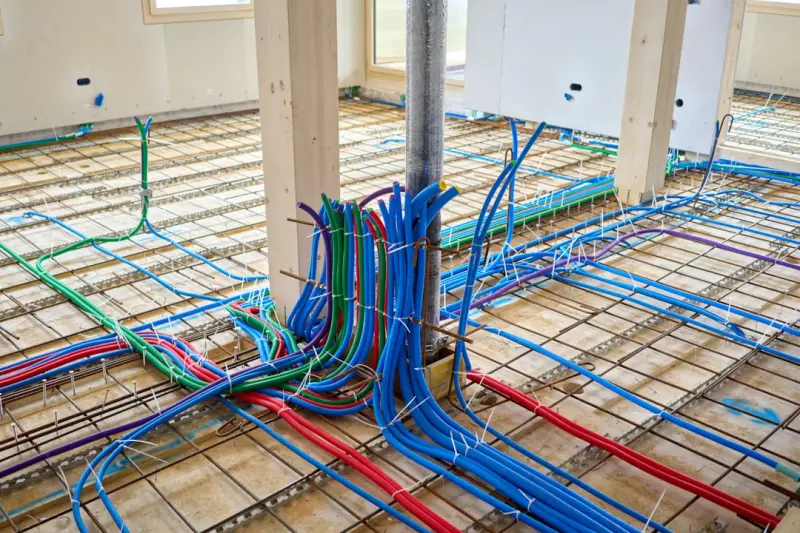
The Untapped Power of Radiant Floor Heating: Health, Efficiency, and Smart Integration
Radiant floor heating is evolving from a comfort feature to a strategic asset, delivering health ben... Read More

Warmth Underfoot: Why Floor Heating is a Game-Changer for Home Comfort
Floor heating is a game-changer for home comfort, providing energy efficiency, even heat distributio... Read More

The Hidden Comfort: How Radiant Floor Heating Redefines Modern Living
I’ve swapped out chilly tiles for warm, whisper‑quiet floors and never looked back. Here’s how... Read More
Top Posts

When Wood Meets Tech: Crafting Smarter Workshops for the Modern Maker
Explore the convergence of traditional woodworking with cutting‑edge technology—from real‑time moisture monitoring to AI‑generated designs—offering a ...Read More
Revolutionizing Kitchen Design: The Future of Countertops
The future of countertops is here. Learn how sustainable materials, innovative manufacturing processes, and smart home renovations are transforming kitchen desi...Read More

The Sustainable Awning Revolution: A Game-Changer for Eco-Friendly Homes
The sustainable awning revolution is a game-changer for eco-friendly homes. Learn about the environmental benefits, energy efficiency, and cost savings of susta...Read More

From Storage to Sanctuary: Reimagining Your Garden Shed as a Year‑Round Creative Retreat
Explore a step‑by‑step guide to redesigning a garden shed into a comfortable, multifunctional sanctuary that adapts to every season....Read More
0 Comments
Post Comment
You will need to Login or Register to comment on this post!