
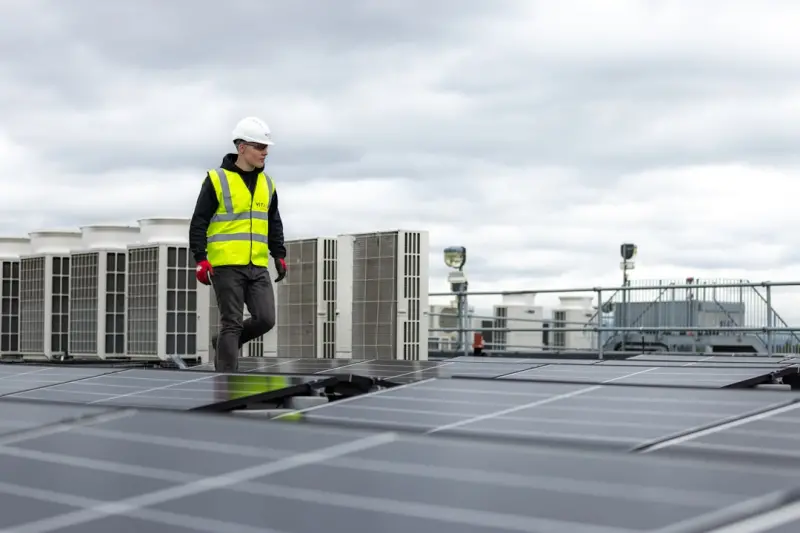
Why HVAC is the Untapped Engine of Building Performance
When I first walked onto a construction site fresh out of college, I was dazzled by the steel beams, the sleek glass façades, and the promise of a “smart” building. Yet, as the months turned into years, I realized that the true heart of any commercial or industrial space isn’t the façade or the structural skeleton—it’s the heating, ventilation, and air‑conditioning (HVAC) system humming behind the walls. Most facility managers treat HVAC as a cost center, a necessary evil that just needs to stay on. I’ve learned, however, that when you flip that perspective and view HVAC as a strategic performance lever, you unlock a cascade of benefits: lower energy spend, healthier occupants, and even a measurable boost to your property’s market value.
The Conventional Blind Spot
Traditional HVAC management is reactive. A thermostat trips, a filter clogs, a coil freezes—then you call a contractor, replace a part, and hope the problem doesn’t recur. This “break‑fix” mindset is costly for three reasons:
- Energy waste: Faulty compressors or mis‑calibrated airflow can spike consumption by 15‑30% without any obvious sign.
- Occupant health: Poor ventilation leads to stale indoor air, higher CO₂ levels, and the spread of airborne pathogens.
- Asset depreciation: Premature wear on components shortens equipment lifespan, forcing earlier capital expenditures.
What if, instead of reacting after the fact, we could predict and prevent these inefficiencies before they manifest?
Data‑Driven HVAC: The New Normal
Enter the era of predictive HVAC management. Sensors, edge computing, and cloud analytics now give us a real‑time pulse on every fan, valve, and refrigerant line. The secret sauce isn’t just more data—it’s a human‑first, data‑driven approach that blends algorithmic insight with the intuition of seasoned technicians.
Consider a typical commercial office tower with a variable air volume (VAV) system. By installing low‑cost temperature, humidity, and pressure sensors at each air handling unit (AHU) and integrating them into a central analytics platform, you can:
- Detect a 5% drift in supply‑air temperature that usually precedes a compressor inefficiency.
- Spot a rise in static pressure indicating a clogged filter before airflow drops below design values.
- Correlate occupancy patterns (via badge readers or Wi‑Fi device counts) with HVAC demand to fine‑tune set points in real time.
These insights translate into actionable work orders: replace a filter, schedule a coil cleaning, or adjust a VFD (variable frequency drive) speed—all before energy waste escalates.
Predictive Maintenance in Practice
Let me walk you through a recent deployment I supervised at a midsize manufacturing plant. The goal was simple: reduce HVAC‑related energy consumption by 12% within one year while extending equipment life.
We started with three steps:
- Baseline mapping: Using existing building automation system (BAS) logs, we established normal operating ranges for each piece of equipment.
- Sensor augmentation: We added vibration sensors on critical compressors and differential pressure sensors across the ductwork.
- Analytics onboarding: A cloud‑based platform ingested the data, applying machine‑learning models trained on millions of similar HVAC profiles.
Within weeks, the platform flagged a subtle increase in compressor vibration on Unit 3. The model predicted a 78% probability of impending bearing wear. A quick on‑site inspection confirmed early‑stage pitting. We replaced the bearing during a scheduled maintenance window—preventing a catastrophic shutdown that would have cost the plant over $150,000 in lost production.
Beyond the immediate repair savings, the plant saw a 9% reduction in overall HVAC energy use thanks to optimized fan speeds and corrected airflow imbalances. Over a full year, those savings topped $250,000, easily covering the modest sensor investment.
Beyond Energy: Indoor Air Quality as a Competitive Edge
While energy metrics dominate most ROI calculations, the post‑pandemic world places indoor air quality (IAQ) at the top of tenant expectations. Advanced HVAC platforms can now fuse CO₂, VOC (volatile organic compounds), and particulate matter (PM2.5) data with the existing temperature and humidity streams. The result? Automated fresh‑air adjustments that keep IAQ within the optimal wellness envelope without over‑ventilating and wasting energy.
In practice, this means:
- Increasing outdoor air intake when CO₂ exceeds 800 ppm, then scaling back once levels normalize.
- Activating UV‑GI (ultraviolet germicidal irradiation) within ductwork when high VOC spikes are detected, curbing off‑gassing from building materials.
- Leveraging demand‑controlled ventilation (DCV) that aligns fresh‑air supply with real‑time occupancy, delivering a “fresh‑air on‑demand” experience.
Tenants report higher satisfaction scores, and landlords can market the building as a “healthy workplace”—a differentiator that can command premium lease rates.
Quantifying ROI: The HVAC Value Playbook
To make the business case, I break ROI into three buckets:
- Direct Energy Savings: Reduced kWh consumption from optimized set points, variable speed drives, and proactive maintenance.
- Operational Efficiency: Fewer emergency service calls, lower labor hours, and extended equipment lifespan.
- Strategic Asset Enhancement: Improved IAQ, reduced carbon footprint, and increased marketability.
A typical 200,000‑sq‑ft office building can see:
- Energy cost reduction: $80,000‑$120,000 per year.
- Maintenance cost avoidance: $30,000‑$50,000 per year.
- Added property value: 1‑2% increase in net operating income (NOI), translating to $300,000‑$600,000 in valuation uplift.
When you stack these numbers, the payback period for a comprehensive predictive HVAC upgrade often falls between 12 and 24 months—an attractive proposition for any CFO.
Implementation Roadmap: From Vision to Reality
Jumping straight into a full‑scale sensor rollout can feel overwhelming. Here’s the phased approach I recommend:
Phase 1 – Assessment & Prioritization
- Audit existing HVAC assets and control strategies.
- Identify high‑impact zones (e.g., areas with the most energy consumption or frequent complaints).
- Define key performance indicators (KPIs): energy use intensity (EUI), IAQ metrics, mean time between failures (MTBF).
Phase 2 – Pilot Deployment
- Install a modest sensor package (temperature, humidity, vibration) on a representative system.
- Integrate data with a cloud analytics platform—many vendors offer free trial tiers.
- Validate predictive models against real‑world failures.
Phase 3 – Scale & Optimize
- Roll out sensors to the remaining HVAC assets based on pilot insights.
- Fine‑tune machine‑learning algorithms with the growing dataset.
- Implement automated work‑order generation and integrate with existing CMMS (computerized maintenance management system).
Phase 4 – Continuous Improvement
- Review KPI trends quarterly.
- Adjust set points, sensor placements, or maintenance schedules as needed.
- Explore additional layers—such as integrating renewable energy sources (e.g., solar‑thermal pre‑heating) or thermal storage.
The Future: HVAC as a Platform, Not a Piece of Equipment
Think of HVAC not as a static system but as a platform that can host new services. Imagine a building where the same sensor network that monitors compressor health also feeds data to a carbon‑credit marketplace, allowing owners to monetize the emissions reductions achieved through efficient operation. Or a scenario where the HVAC platform interfaces with smart‑grid demand‑response programs, automatically curtailing load during peak pricing events while maintaining occupant comfort.
These possibilities are no longer sci‑fi. Companies are already piloting thermal batteries that store excess cooling capacity for later use, and some are leveraging AI‑driven fault detection and diagnostics (FDD) to achieve near‑zero downtime. The next wave will be about orchestration—linking HVAC to lighting, plug loads, and even building envelope controls for a truly holistic, carbon‑neutral performance.
Key Takeaways
- Viewing HVAC as a strategic asset unlocks measurable energy, operational, and market value gains.
- Predictive maintenance, powered by low‑cost sensors and cloud analytics, shifts you from reactive to proactive management.
- Integrating IAQ data not only protects health but also creates a marketable differentiator.
- A phased implementation—assessment, pilot, scale, continuous improvement—mitigates risk and accelerates ROI.
- The long‑term vision is a platform‑centric HVAC ecosystem that interacts with broader building systems and external energy markets.
In my experience, the moment you treat your heating and air‑conditioning system as a living, data‑rich component of your building, you’re no longer paying for climate control—you’re investing in a resilient, high‑performance asset that pays dividends year after year.

Tom Ferguson is a Canadian freelance writer with a passion for storytelling, current events, and thoughtful commentary. Drawing on years of writing experience, he shares engaging insights on a wide range of topics, bringing a uniquely Canadian perspective to his work.
Related Posts
Hybrid Heat Pumps: The Smart Path to Year‑Round Comfort and Savings
Explore the rise of hybrid heat pumps, their efficiency, zoning benefits, and how they improve indoo... Read More
Edge AI: Redefining Residential HVAC Comfort
Edge AI brings instant, privacy‑first decision making to home HVAC, enabling predictive maintenanc... Read More

From Drafts to Delight: Monetizing Climate Control in Commercial Spaces
A fresh look at HVAC shows it can be more than a utility—by leveraging sensors, AI, and subscripti... Read More
Top Posts

The Importance of Insulation in Home Restoration
Insulation is a critical component of home restoration that can impact comfort, energy efficiency, and home value. Learn about the benefits, types, and common m...Read More

Beyond Stains: How Smart Carpet Cleaning Boosts Home Health and Longevity
A fresh look at carpet care reveals hidden health benefits, energy savings, and practical tips for pet owners and eco‑conscious families to keep floors spotle...Read More

From Backyard Shed to Sustainable Sanctuary: My Hands‑On Guide
Learn how I turned a basic backyard shed into a versatile, eco‑friendly retreat—covering location, materials, solar power, comfort, and future‑proofing st...Read More
Solar Power for the Edge: Transforming Resilience and Performance
Solar energy is reshaping the edge of enterprise operations—from autonomous data‑center pods and self‑sustaining IoT meshes to solar‑infused micro‑gri...Read More
0 Comments
Post Comment
You will need to Login or Register to comment on this post!