
Why the Drywall Industry Is Shifting Toward a Greener, Health‑First Future
When I first picked up a taping knife in my college dorm, drywall was the silent workhorse behind every room’s look and feel. It was cheap, plentiful, and, frankly, invisible. Fast forward a decade, and I’m still in love with that smooth, matte canvas—but I’m also increasingly aware of the hidden costs that come with traditional gypsum board. From the carbon intensity of raw gypsum extraction to the fine dust that lingers in the air during sanding, the drywall ecosystem is ripe for reinvention.
From “Just a Wall” to “Wall with Purpose”
For too long, drywall has been treated as a passive backdrop, a neutral stage for furniture, art, and lighting. The reality is far richer: the wall can be a thermal regulator, an acoustic buffer, and even a data conduit for smart‑building sensors. By rethinking the material composition, installation methods, and finishing techniques, we can turn a simple partition into a multi‑functional asset that contributes to sustainability, occupant health, and operational efficiency.
1. Sustainable Gypsum Alternatives
Traditional gypsum boards are manufactured from mined natural gypsum, a process that consumes significant energy and releases CO₂. Several innovators are now offering alternatives that dramatically cut the environmental footprint:
- Recycled Gypsum: Post‑industrial gypsum waste—often a by‑product of steelmaking—can be reclaimed, processed, and re‑formed into panels that meet the same fire‑rating standards as virgin board.
- Plant‑Based Binders: Some manufacturers are substituting a portion of the calcium sulfate binder with agricultural fibers such as hemp, flax, or bamboo. These fibers not only reduce reliance on mineral extraction but also improve the board’s tensile strength.
- Low‑Carbon Production: New kiln‑free processes use electro‑chemical methods to synthesize gypsum from waste streams, slashing energy use by up to 40%.
Choosing a sustainably sourced board can reduce a project’s embodied carbon by up to 15%, a figure that stacks up nicely against other green building strategies.
2. Health‑Centric Finishing Systems
One of the most overlooked hazards of drywall work is the inhalable dust generated during sanding. Research has linked prolonged exposure to gypsum dust with respiratory irritation and, in some cases, chronic bronchitis. To mitigate this, consider the following approaches:
- Dust‑Free Drywall Systems: Pre‑finished panels that come with factory‑applied joint compound eliminate the need for on‑site sanding altogether.
- Low‑VOC Joint Compounds: Traditional mud contains volatile organic compounds (VOCs) that can off‑gas for weeks. Low‑VOC formulas, often water‑based, improve indoor air quality while still providing a smooth finish.
- Integrated Dust Extraction: When sanding is unavoidable, using a vacuum‑mounted sander with HEPA filtration can capture up to 99% of fine particles.
Implementing these health‑focused solutions not only protects workers but also contributes to healthier indoor environments for occupants—a key consideration in today’s wellness‑driven design climate.
3. Acoustic Performance: More Than Just “Soundproofing”
Drywall is a silent hero in the acoustic realm. By adjusting board thickness, density, and the spacing of resilient channels, you can fine‑tune a wall’s ability to absorb, block, or diffuse sound. For a deeper dive into how wall assemblies shape acoustic outcomes, check out the acoustic restoration case studies. Those insights translate directly to modern office partitions where privacy and focus are premium assets.
4. Prefabricated and Modular Wall Systems
Construction timelines are under relentless pressure to shrink. Prefabricated drywall panels—complete with pre‑installed insulation, wiring pathways, and even smart sensors—are changing the game:
- Speed: Installation times drop by 30‑50% because panels arrive ready for hanging and finishing.
- Accuracy: Factory conditions ensure consistent seam placement, reducing the likelihood of cracks and uneven surfaces.
- Integration: Embedded conduits mean electricians and HVAC technicians can plug in systems without drilling or retrofitting later.
Adopting a modular approach also reduces on‑site waste; unused off‑cuts can be returned to the factory for recycling, creating a closed‑loop process.
5. Smart Sensors Embedded in Drywall
Imagine a wall that not only separates spaces but also monitors them. By embedding low‑power IoT sensors directly into the drywall core, you can collect real‑time data on temperature, humidity, and even air quality. This “intelligent wall” concept dovetails with broader building automation strategies, enabling:
- Predictive Maintenance: Sensors detect moisture ingress early, alerting facilities teams before mold takes hold.
- Energy Optimization: Temperature data from walls can inform HVAC zoning, reducing unnecessary heating or cooling.
- Occupant Comfort: Humidity sensors trigger localized dehumidifiers, preserving both the wall’s integrity and occupant well‑being.
While the technology is still emerging, early pilots in commercial office towers have reported up to a 12% reduction in energy use thanks to wall‑level data granularity.
6. DIY Meets Professional: Empowering the Skilled Homeowner
Even if you’re not a full‑time contractor, the modern homeowner can tackle drywall upgrades with confidence—provided the right guidance is at hand. For a hands‑on look at how to approach common drywall challenges—like patching holes or smoothing seams—see practical drywall fixes. The article walks you through essential tools, safety tips, and step‑by‑step methods that bridge the gap between DIY curiosity and professional quality.
7. The Economics of Green Drywall
Budget concerns often dominate renovation conversations. However, when you factor in lifecycle costs, sustainable drywall options frequently emerge as cost‑effective:
- Lower Energy Bills: Higher‑performance insulation within drywall reduces heating and cooling loads.
- Extended Service Life: Moisture‑resistant cores and low‑VOC finishes resist degradation, delaying replacement cycles.
- Regulatory Incentives: Many local governments now offer tax credits or rebates for projects that meet specific indoor air quality or carbon‑reduction thresholds.
In short, the upfront premium for eco‑friendly panels can be offset by operational savings and potential incentives.
8. Future Trends: From Passive Panels to Adaptive Facades
The next wave of drywall innovation lies at the intersection of material science and adaptive architecture. Researchers are experimenting with gypsum composites that can change opacity in response to light, or panels that actively regulate temperature through phase‑change materials embedded within the core. While still in prototype stages, these “living walls” hint at a future where the partition itself participates in creating a comfortable, energy‑efficient interior.
Putting It All Together: A Checklist for Sustainable Drywall Projects
Whether you’re a contractor, a facilities manager, or a DIY enthusiast, the following checklist can help you align your drywall decisions with sustainability, health, and performance goals:
- ✅ Choose recycled or plant‑based gypsum boards where available.
- ✅ Opt for low‑VOC, dust‑free finishing compounds.
- ✅ Incorporate acoustic design principles—adjust thickness, density, and resilient channel placement.
- ✅ Consider prefabricated wall panels for faster, cleaner installations.
- ✅ Evaluate the feasibility of embedding smart sensors for real‑time monitoring.
- ✅ Leverage local incentives for green building materials.
- ✅ Use proper dust extraction and personal protective equipment during sanding.
- ✅ Document performance data to inform future renovations and share insights with the broader community.
By treating drywall as more than just a blank canvas, you unlock a suite of benefits that echo far beyond the aesthetics of a finished room.
Conclusion: The Wall as a Catalyst for Change
The drywall industry stands at a crossroads. Traditional practices have served us well for decades, but the pressures of climate change, indoor health, and digital integration demand a new approach. Embracing sustainable materials, health‑first finishing, acoustic optimization, modular construction, and embedded intelligence transforms the humble wall from a passive separator into an active participant in building performance.
When you next step into a newly finished space, take a moment to consider the story behind those smooth surfaces. In the right hands, drywall can be a powerful lever for sustainability, wellbeing, and future‑ready design—one taping knife swing at a time.

When it comes to the world of blogging and writing, Rose DesRochers is a name that stands out. Her passion for creating quality content and connecting with her audience has made her a trusted voice in the industry. Aside from her skills as a writer and blogger, Rose is also known for her compassionate nature.
Related Posts

Smart Drywall: Intelligent Walls for Modern Buildings
Smart drywall embeds sensors directly into gypsum panels, turning walls into data‑rich building as... Read More

The Evolution of Sustainable Drywalling: A Comprehensive Guide
Sustainable drywalling involves the use of eco-friendly materials, techniques, and practices that mi... Read More
The DIYer's Guide to Smarter Drywalling: From Prep to Perfect Finish
Learn how to choose the right drywall, master taping, add soundproofing, and finish with a perfect p... Read More
Top Posts

When Walls Talk: Harnessing Smart Paint and Color Science for a Healthier, More Productive Home
A deep dive into smart paint technology, health‑focused color choices, and practical tips for integrating tech‑savvy painting solutions into modern homes....Read More
Adaptive Climate‑Ready Home Upgrades: Strategies for a Resilient Future
A deep dive into dynamic, performance‑driven home upgrades that let your house adapt to shifting climate conditions, blending smart materials, IoT monitoring,...Read More
Modular Smart Drywall: Speed, Data, and Circular Value
A deep dive into modular drywall panels that combine rapid installation, embedded IoT sensors, and recyclable design, offering a fresh, sustainable path for mod...Read More
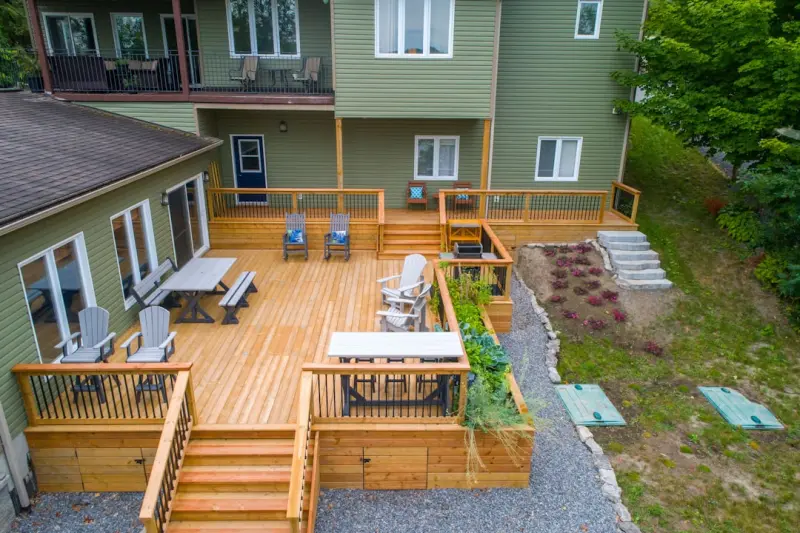
Future‑Ready Decks: Designing Low‑Maintenance, Climate‑Adaptive Outdoor Spaces
A fresh look at deck design that combines sustainable materials, modular layouts, smart sensors, and garden integration for a low‑maintenance, climate‑adapt...Read More
0 Comments
Post Comment
You will need to Login or Register to comment on this post!