
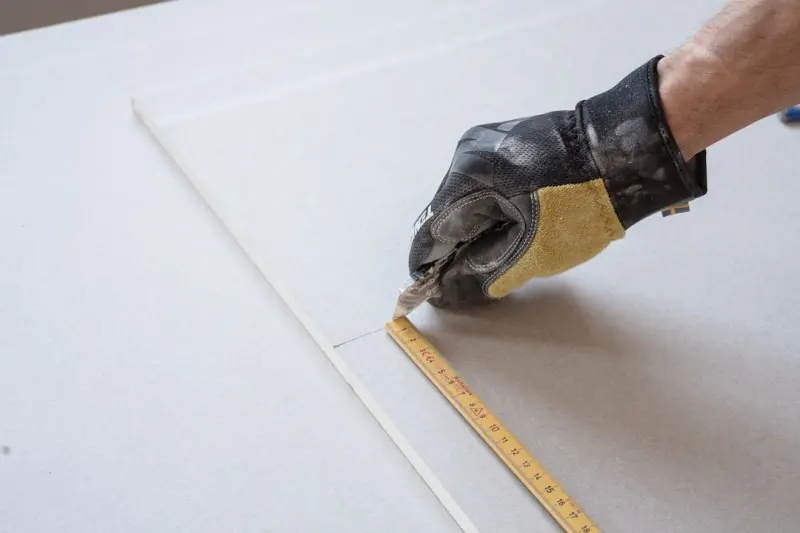
Reimagining Drywall: Modular Panels, Embedded Intelligence, and a Circular Mindset
When I first stepped onto a raw construction site three years ago, the sight of endless sheets of gypsum board stacked like a fortress of paper‑thin bricks reminded me of a blank canvas waiting for a story. Today, that same canvas can tell a far richer tale—one that weaves together rapid deployment, real‑time data, and a commitment to keep material cycles closed. This is the narrative I’m living out in my own workshop, and it’s a story I think every forward‑thinking contractor, facilities manager, and design‑builder should hear.
Why Traditional Drywall Is No Longer Sufficient
For decades, drywall has been the go‑to solution for interior partitions because it’s cheap, fire‑rated, and easy to finish. Yet the conventional approach—cutting, taping, mudding, sanding—carries hidden costs:
- Labor intensity. Skilled trades spend hours on each joint, and any mistake ripples into rework.
- Material waste. Off‑cuts and damaged sheets often end up in landfills despite being recyclable.
- Performance gaps. Standard boards provide little in the way of thermal regulation, acoustics, or data integration.
In a market that now demands speed, sustainability, and smart building capabilities, the old “one‑size‑fits‑all” drywall model is starting to feel, well, a little stale.
Enter Modular Drywall Panels
Modular drywall reimagines the board as a system rather than a single, monolithic slab. Think of it as LEGO for interior walls: pre‑engineered panels that arrive pre‑finished, pre‑drilled, and even pre‑wired. Here’s how this shift unlocks value:
1. Accelerated Installation
Because panels are fabricated off‑site to exact dimensions, the on‑site crew merely aligns and locks them together—much like fitting a puzzle. The result is a reduction in installation time of up to 40 % on typical office fit‑outs. Faster installs translate directly into lower labor bills and earlier occupancy.
2. Integrated Services
Modern panels can house conduits for power, low‑voltage data, and even AI‑driven design‑build synergy components. Imagine a wall that not only separates rooms but also powers IoT sensors, ambient lighting controls, and occupancy detectors without the need for additional trenching.
3. Performance‑Boosted Core
Beyond the traditional gypsum core, manufacturers are embedding high‑performance materials such as phase‑change waxes for thermal buffering or acoustic foams for sound attenuation. Some panels even incorporate vapor‑permeable masonry insights—a concept that inspired a hybrid core allowing walls to “breathe” while retaining fire resistance.
4. Predictable Quality
Factory‑controlled conditions mean each panel meets tight tolerances. This predictability reduces on‑site surprises and ensures that finishing coats are uniform, minimizing the need for multiple sanding passes.
Smart Drywall: Data at the Surface
Embedding intelligence into drywall may sound like science fiction, but the technology is already here. Tiny, low‑power sensors can be laminated between the board’s outer layer and its core during fabrication. These sensors capture:
- Temperature and humidity, helping building management systems prevent mold before it starts.
- Vibration and impact data, alerting facilities teams to potential structural issues.
- Air quality metrics, feeding data into HVAC controls to maintain optimal indoor environments.
Because the sensors are part of the wall itself, you avoid the messy job of retrofitting devices later. The data they generate can be visualized in a building’s digital twin, offering a living map of wall health that evolves with the space.
Designing for the Circular Economy
One of the biggest criticisms of the construction sector is its linear material flow—extract, use, discard. With drywall, the challenge is especially acute because the boards are often replaced wholesale when a single section is damaged. Modular drywall can help close the loop:
Take‑Back Programs
Because panels are standardized, manufacturers can offer take‑back services. When a building is decommissioned or renovated, the panels are collected, inspected, and either refurbished or shredded into raw gypsum powder for new panels. This reduces landfill waste and lowers the demand for virgin gypsum.
Design for Disassembly
By using mechanical fasteners instead of adhesives, panels can be unbolted and separated without damage. This approach aligns with the broader “design for disassembly” movement gaining traction in sustainable construction circles.
Recycled Core Materials
Some innovators are experimenting with reclaimed paper fibers, agricultural residues, or recycled plastic beads as core fillers, cutting the carbon footprint of each panel by up to 30 %.
Case Study: A Rapid‑Deploy Office in a Suburban Campus
To illustrate the impact, let’s walk through a recent project I consulted on. A tech firm needed 5,000 sq ft of new office space within a three‑month window. Traditional drywall would have taken at least six weeks just for installation, not counting the time to run electrical and data lines.
We opted for a modular system that included pre‑finished panels with built‑in power rails and environmental sensors. The timeline looked like this:
- Week 1‑2: Off‑site fabrication of 200 custom‑sized panels, each pre‑wired for the floor’s power grid.
- Week 3: Delivery and “lock‑in” installation—crew assembled walls in half the time of conventional methods.
- Week 4‑5: Calibration of embedded sensors and integration with the building management platform.
- Week 6: Punch‑list and handover. Occupancy began immediately.
The result? A 30 % reduction in labor costs, a 25 % improvement in indoor air quality (thanks to real‑time humidity monitoring), and a fully recyclable wall system that will be reclaimed when the company expands again in a decade.
Overcoming Common Hurdles
Switching to modular, smart drywall isn’t without its challenges. Here are three hurdles I’ve seen and how we can address them:
Cost Per Square Foot
Upfront, modular panels can be 10‑15 % pricier than standard sheets. However, when you factor in reduced labor, faster project close‑out, and the long‑term benefits of embedded sensors (lower HVAC energy use, early leak detection), the total cost of ownership often drops.
Supply Chain Familiarity
Many contractors are accustomed to ordering bulk gypsum boards from local distributors. Building relationships with panel manufacturers—who may operate on a made‑to‑order model—requires a shift in procurement strategy. The key is to start small: pilot a single floor or a demountable conference room to prove the concept.
Regulatory Acceptance
Fire ratings and acoustic performance must meet local codes. Reputable manufacturers certify their modular systems to the same standards as traditional drywall, and because the panels are pre‑tested, you actually get a clearer compliance picture early in the design phase.
Integrating Modular Drywall Into Your Workflow
Here’s a quick checklist for teams ready to adopt this technology:
- Assess Project Scope. Identify areas where speed and data are most valuable—e.g., labs, data centers, or collaborative spaces.
- Partner With a Manufacturer. Look for a provider that offers customization, sensor integration, and take‑back services.
- Collaborate Early With MEP Engineers. Because power and data routes are built into the panels, early coordination avoids clashes.
- Train Installation Crews. While the assembly is simpler, crews need to learn locking mechanisms and sensor calibration protocols.
- Plan for End‑of‑Life. Include a deconstruction plan that specifies panel removal, recycling, and reuse pathways.
Future Horizons: From Smart Walls to Adaptive Spaces
Modular drywall is the first step toward truly adaptive interiors. Imagine walls that can change their thermal conductivity on demand, or panels that self‑heal minor cracks using embedded micro‑capsules. As material science advances, the line between structural element and building service will blur even further.
In the meantime, the practical benefits—speed, data, sustainability—are already within reach. By treating drywall not as a passive backdrop but as a dynamic component of the built environment, we empower architects, engineers, and owners to create spaces that are healthier, more efficient, and ready for the next wave of digital transformation.
Take the Leap
If you’ve been relying on the same drywall routine for decades, it’s time to ask yourself: what would happen if you could install a wall in a day, monitor its health continuously, and guarantee that every square foot could be reclaimed at the end of its life? The answer is a future where construction is no longer a bottleneck but a catalyst for smarter, greener, and more resilient buildings.

Lifan Chen is a freelancer based in Toronto specializing in marketing. With expertise in crafting effective marketing strategies and campaigns, Lifan helps businesses grow their brand presence and reach target audiences. As a Toronto-based freelancer, Lifan combines local market insights with creative marketing skills to deliver tailored solutions for clients.
Related Posts
Beyond the Wall: Mastering Modern Drywall Techniques
A deep dive into contemporary drywall practices, covering eco‑friendly materials, acoustic solutio... Read More

Mastering Modern Drywall: From Sustainable Boards to Acoustic Perfection
Learn how to choose eco‑friendly drywall, integrate acoustic solutions, and future‑proof walls w... Read More

Drywalling Secrets: Sustainable Strategies Every Renovator Should Know
Learn how smart drywall choices, low‑VOC materials, and efficient installation techniques create s... Read More
Top Posts

The Next Frontier: Smart Windows & Doors as Building Interfaces
Smart windows and doors are evolving from passive barriers into active, data‑rich interfaces that boost energy efficiency, improve occupant wellness, and enab...Read More

From Pipes to Pixels: How IoT is Transforming Everyday Plumbing
Discover how integrating IoT sensors, smart valves, and predictive analytics into plumbing systems can prevent leaks, save water, and boost home efficiency, all...Read More

When Your Alarm Becomes a Home Assistant: Redefining Safety in the Connected Era
A deep dive into how edge AI, integrated smart devices, and community data sharing are transforming traditional home alarms into proactive, privacy‑first comp...Read More

A Sustainable Home Alarm System That Truly Works
I’ve spent years testing alarm tech, and I finally cracked the formula for a system that protects my family while honoring the planet—here’s how you can d...Read More
0 Comments
Post Comment
You will need to Login or Register to comment on this post!