
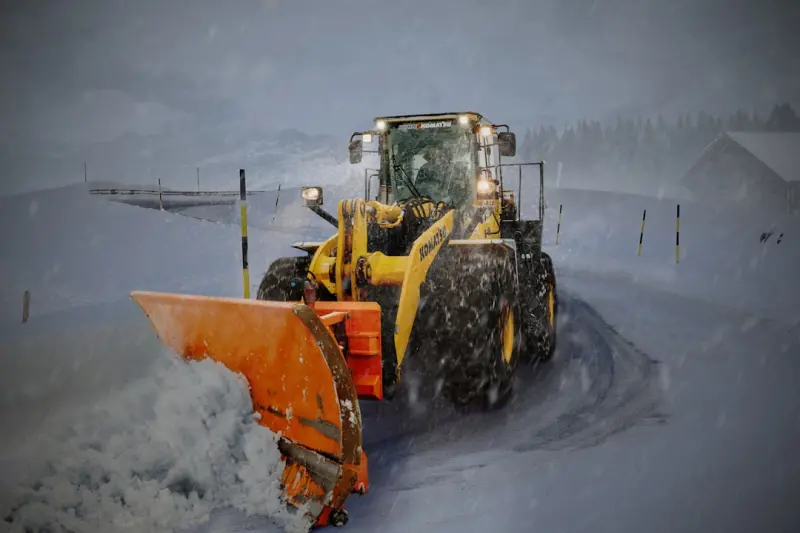
Why Snow Removal Needs a Tech Upgrade
When winter rolls in, the first thing most facility managers think about is how to keep driveways, loading bays, and pedestrian paths clear. The old playbook—contract a local crew, toss salt, hope for the best—still works, but it’s costly, reactive, and riddled with safety gaps. In an era where data fuels every other operation, snow removal is the last frontier that has lagged behind.
Enter Snow Removal 2.0: a blend of IoT sensors, AI‑driven dispatch, and autonomous equipment that turns a chaotic, weather‑driven nightmare into a predictable, measurable service. The payoff isn’t just a cleaner lot; it’s lower labor expenses, fewer liability claims, and a reputation for reliability that can become a competitive differentiator for any business that depends on uninterrupted access.
The Pillars of a Data‑Driven Snow Strategy
- Real‑time environmental sensing – Knowing exactly how much precipitation is falling, where it’s accumulating, and how fast it’s melting.
- Dynamic dispatch algorithms – Matching the right crew or machine to the right spot at the right time.
- Automation and robotics – Deploying driverless plows and snow‑blowers for high‑volume corridors.
- Integrated reporting – Turning every pass, every kilogram of salt, and every hour of downtime into actionable KPIs.
These pillars don’t exist in isolation; they feed each other in a feedback loop that continuously refines performance. Think of it as a living ecosystem where each sensor, each algorithm, and each vehicle communicates in a common language.
Sensors on the Ground: The Eyes and Ears of Winter
Modern smart sensor networks can be deployed in a matter of days and start delivering granular data within minutes. Here’s what a typical deployment looks like:
- Ultrasonic depth gauges embedded in sidewalks and loading docks to measure snow depth to the millimeter.
- Temperature and humidity probes that feed melt‑rate models.
- Road‑surface conductivity sensors that detect the presence of de‑icing chemicals and adjust dosing automatically.
- GPS‑enabled asset trackers on every plow, ensuring you know exactly where each piece of equipment is at any moment.
When you combine these data points with a real‑time digital twin of your campus, you get a living map that visualizes snow accumulation, predicts melt, and highlights high‑risk zones before a single shovel is raised.
AI‑Powered Dispatch and Route Optimization
Raw sensor data is only as valuable as the decisions it powers. This is where AI shines. By feeding depth, temperature, and traffic data into a routing engine, the system can:
- Prioritize high‑traffic corridors that impact customer access.
- Schedule low‑priority zones for off‑peak clearing, conserving fuel and labor.
- Adjust routes on the fly as new snowfall data arrives, ensuring crews never travel to a cleared lane.
Most commercial snow‑removal contracts still rely on static schedules—e.g., “clear the lot at 7 am every day.” A dynamic dispatch model reduces unnecessary passes by up to 30%, slashes fuel consumption, and improves overall response time.
Autonomous Snow‑Clearing Vehicles: From Concept to Site
Self‑driving plows are no longer science‑fiction. Several manufacturers now offer autonomous snow‑blowers that can be programmed via the same dispatch platform that controls human crews. Benefits include:
- 24/7 operation without overtime costs.
- Precision application of salt and sand, reducing chemical waste by up to 40%.
- Consistent clearing speed, which translates to predictable access windows for delivery trucks.
Deploying a fleet of autonomous machines doesn’t mean you abandon human crews. Instead, it creates a hybrid model where robots handle routine, high‑volume stretches while skilled operators focus on complex obstacles—like irregularly shaped loading docks or steep ramps.
Integrating Snow Management with Facility Operations
Snow removal is often siloed in the maintenance department, but its impact ripples across procurement, safety, and finance. A unified dashboard that pulls sensor data, vehicle telemetry, and cost metrics enables leadership to:
- Correlate snow‑related incidents with specific clearing delays.
- Allocate budgeting based on actual usage rather than flat‑rate contracts.
- Trigger automated compliance reports for occupational safety regulators.
When you pair this integration with a mobile workflow platform, field technicians can receive real‑time work orders, capture proof‑of‑completion photos, and log material usage—all from a rugged tablet. The result is a paper‑free, auditable trail that satisfies auditors and reduces administrative overhead.
Measuring Success: KPIs and Continuous Improvement
Transitioning to a data‑centric snow strategy requires a new set of performance indicators. Traditional metrics—“hours spent on site” or “tons of salt used”—are still useful, but they should be complemented with:
- Response Time (RT): Minutes between a sensor‑triggered alert and the first crew arrival.
- Clearance Efficiency (CE): Square meters cleared per vehicle‑hour.
- Safety Incident Rate (SIR): Number of slip‑and‑fall claims per 10,000 square meters of cleared surface.
- Environmental Impact Score (EIS): Ratio of salt applied to snow depth removed.
Tracking these KPIs over multiple seasons uncovers patterns—perhaps a particular zone consistently requires more passes, indicating a drainage issue that should be addressed upstream.
Future Trends: Predictive Snow Forecasting and Blockchain Contracts
Two emerging technologies promise to push Snow Removal 2.0 even further:
- Hyper‑local predictive analytics—Leveraging machine‑learning models that ingest radar, satellite, and on‑site sensor data to forecast snow accumulation at a resolution of 5‑meter squares. This enables pre‑emptive dispatch before the first flake lands.
- Smart contracts on blockchain—Automating payment triggers based on verified KPI outcomes. Imagine a contract that releases a portion of the fee only when the RT KPI falls below a predefined threshold, ensuring vendors are truly performance‑driven.
These trends reinforce the same core principle: turning what has traditionally been a reactive, labor‑intensive process into a proactive, data‑backed service.
Getting Started: A Practical Playbook
If the idea of overhauling your snow removal program feels daunting, break it down into three manageable phases.
Phase 1: Sensor Deployment & Data Collection (Weeks 1‑4)
- Identify critical zones—main entrances, loading docks, and high‑traffic walkways.
- Install depth gauges, temperature probes, and conductivity sensors in each zone.
- Integrate sensor feeds into your existing facilities management platform or a dedicated cloud dashboard.
Phase 2: Algorithmic Dispatch & Workforce Alignment (Weeks 5‑12)
- Partner with a vendor that offers AI routing software or develop an in‑house model using open‑source libraries.
- Map crew skill sets and vehicle capabilities to sensor‑driven priority levels.
- Run a pilot during a light snow event to calibrate thresholds and refine the routing engine.
Phase 3: Automation & Continuous Optimization (Months 3‑6)
- Introduce an autonomous plow on a single high‑volume corridor.
- Enable the mobile workflow platform for real‑time reporting and KPI capture.
- Schedule monthly review meetings to analyze KPIs, adjust sensor placement, and renegotiate vendor contracts based on performance data.
By the end of the first full winter season, you should see measurable reductions in labor cost, faster access restoration, and a clear, data‑driven narrative you can present to senior leadership.
Conclusion: Snow Removal as a Strategic Asset
Winter will always be unpredictable, but the way we respond doesn’t have to be. By embracing sensors, AI, and automation, businesses can transform a seasonal nuisance into a strategic asset—one that safeguards people, protects the bottom line, and showcases a commitment to modern, data‑first operations. The era of “just hope the snow clears” is over; it’s time to let data do the heavy lifting.

William Roy is a freelance writer originally from Montreal who moved to Ottawa with his wife of 50 years to be closer to their grandkids. Alongside his writing, William has a passion for fishing.
Related Posts
Snow Removal Reimagined: Harnessing Data and Digital Twins for Safer, Greener Winters
Discover how a data‑driven approach—using sensors, predictive analytics, and digital twins—can... Read More
The Snow Removal Revolution: A Sustainable Approach to Winter Maintenance
Learn how to make your snow removal more sustainable with eco-friendly methods, equipment, and prope... Read More
How IoT and AI Are Revolutionizing Snow Removal for the Modern Homeowner
Explore a data‑driven approach to snow removal, blending IoT sensors, AI forecasts, and automated ... Read More
Top Posts

Reinventing Sunrooms: Health‑Focused, Energy‑Smart Spaces for Modern Workplaces
Sunrooms are evolving from decorative add‑ons to high‑performance hubs that enhance employee health, cut energy use, and adapt to climate extremes, thanks t...Read More

Beyond Cracks: Leveraging Data to Future‑Proof Your Foundation
A data‑first approach to foundation repair uses sensors, AI analytics, and proactive maintenance to detect hidden movements early, reduce costly emergency fix...Read More

The Evolution of Garage Doors: A Comprehensive Guide to Modern Solutions
Garage doors have undergone significant transformations over the years. Learn about the evolution of garage doors, from traditional wooden doors to modern, high...Read More

Building a Subscription Model for the Modern Handyman
A deep dive into why handymen should adopt subscription plans, covering tier design, pricing, tech tools, marketing, scaling, and metrics for sustainable growth...Read More
0 Comments
Post Comment
You will need to Login or Register to comment on this post!