
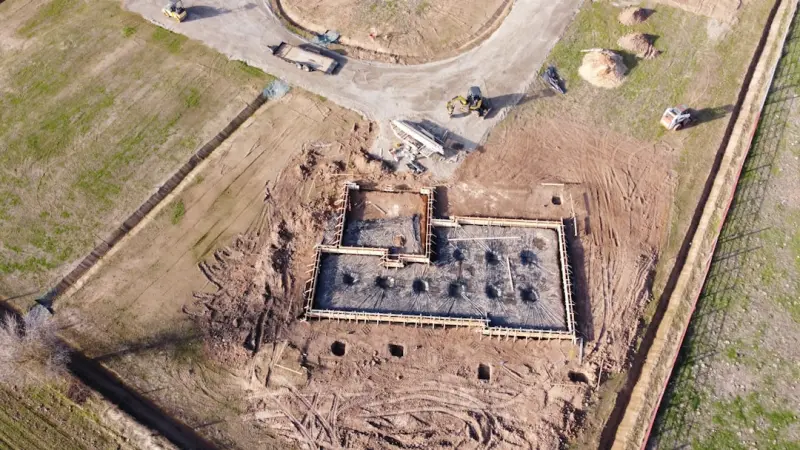
Why Foundations Are No Longer Just Concrete Boxes
When I first stepped onto a construction site fresh out of university, the foundation looked to me like a static, monolithic slab—nothing more than a necessary evil to keep the walls upright. Fast‑forward a decade, and I’ve watched foundations evolve from passive footings into dynamic, data‑rich platforms that can predict settlement, integrate with site energy systems, and even adapt to changing loads. In this post, I’m pulling back the curtain on the trends that are turning the very ground we build on into a strategic asset.
The Rise of Adaptive Foundation Systems
Traditional foundations are designed once, built once, and then left to age. Adaptive foundations, however, are engineered with modular components that can be reconfigured on‑site. Think of a LEGO set for the ground: pre‑cast footings, interchangeable tie‑down plates, and adjustable steel sleeves that let you shift load paths without tearing up the slab.
Why does this matter? Urban infill projects often encounter unpredictable subsurface conditions. A modular approach lets engineers respond in real time—adding a supplementary micro‑pier here, swapping a slab panel there—without the massive schedule delays that come with conventional redesigns. The result is a faster time‑to‑occupancy and a lower risk of costly rework.
Embedding Sensors: From Concrete to Insight
Embedding sensors in concrete isn’t new, but the way we’re using that data is a game‑changer. Small, low‑power strain gauges, humidity probes, and temperature nodes are now being placed not only in the concrete slab but throughout the footing network. These devices feed into a cloud‑based analytics platform that can flag abnormal settlement, moisture ingress, or temperature gradients that could compromise structural integrity.
Imagine a dashboard that alerts the site manager the moment a footing begins to settle beyond the design tolerance. Early warnings like these enable targeted remediation—injecting grout, adding shims, or adjusting loads—before the problem escalates into a costly repair. This predictive maintenance mindset mirrors what we see in facility management where waterproofing as a competitive edge is leveraged to protect assets and improve bottom lines.
AI‑Powered Geotechnical Modeling
Geotechnical data has traditionally been a static collection of borehole logs and lab tests. Today, AI algorithms can ingest decades of regional soil data, real‑time sensor feeds, and even satellite‑derived subsidence measurements to generate a living model of the subsurface.
This model continuously updates as new data streams in, offering engineers a probability‑based view of foundation performance. For example, an AI model might predict a 15% chance of differential settlement under a particular load condition, prompting the design team to incorporate a load‑distribution slab or a supplemental micro‑pile in that area.
The benefit is two‑fold: designers get a more accurate risk profile, and owners gain confidence that the foundation will perform as expected over its entire service life.
Energy Integration: Foundations as Power Assets
One of the most exciting frontiers is treating foundations as part of the building’s energy ecosystem. By embedding flexible photovoltaic (PV) films beneath raised footings or integrating geothermal loops directly into the footing trenches, we can turn the foundation into an energy‑generating or energy‑storing component.
These approaches dovetail nicely with broader site strategies—like the concepts explored in solar energy as a strategic infrastructure layer—where the goal is to make every piece of the built environment contribute to net‑zero objectives. A foundation that can harvest solar, capture waste heat, or act as a thermal sink for HVAC systems adds measurable value to the overall project.
Resilience Through Redundancy
Climate change is forcing us to think beyond the 100‑year design life. Flooding, seismic events, and extreme temperature swings can all compromise a foundation. Redundancy—both structural and functional—helps mitigate these risks.
Structural redundancy might involve designing a dual‑layer footing system: a primary concrete mat complemented by a secondary steel grid that can bear loads if the concrete cracks. Functional redundancy could mean pairing a traditional drainage system with a smart pump that activates based on real‑time groundwater levels, ensuring that water never accumulates around the foundation footings.
Lifecycle Cost Accounting (LCCA) for Foundations
Historically, foundation costs are viewed as an upfront expense with little attention paid to the long‑term financial implications. LCCA flips this narrative by evaluating the total cost of ownership over 30, 50, or even 100 years.
Factors considered include initial material and labor costs, expected maintenance (like grout injections or waterproofing renewals), energy generation potential, and even the resale value of the site. When you factor in the savings from early settlement detection and energy integration, a modest increase in upfront investment often pays for itself within a few years.
Case Study: Adaptive Foundations in a Mixed‑Use Redevelopment
Last year, my team was tasked with retrofitting a historic warehouse into a mixed‑use complex. The original footings were shallow, uneven, and not designed for the new vertical loads. Instead of demolishing and rebuilding, we implemented an adaptive foundation system:
- Modular micro‑piles: Pre‑cast steel‑capped piles were driven to the required depth and connected via a steel mesh that distributed loads evenly.
- Embedded sensor network: Strain and moisture sensors were placed at critical junctions, feeding data to our cloud platform.
- Energy loop integration: Geothermal loops were installed within the footing trenches, providing heating and cooling for the building.
Within six months, the project was 20% ahead of schedule, the client saw a 12% reduction in projected HVAC energy costs, and the sensor data identified a potential settlement issue early, allowing us to intervene before any cracking occurred.
Future Outlook: Foundations as Service Platforms
Looking ahead, I see a shift toward “Foundation‑as‑a‑Service” (FaaS). In this model, owners lease foundation capacity from specialist providers who handle installation, monitoring, and maintenance. The provider continuously gathers performance data, offers predictive insights, and can even upgrade the foundation with new energy or sensor modules as technology evolves.
This service‑based approach reduces capital expenditure for developers and aligns with the broader trend of moving from product ownership to subscription‑based models across the construction industry.
Practical Steps to Get Started
If you’re intrigued by these possibilities, here’s a quick roadmap to begin integrating advanced foundation strategies into your next project:
- Assess Site Data: Gather existing geotechnical reports and augment them with drone‑derived topography and ground‑penetrating radar scans.
- Define Performance Metrics: Determine what success looks like—settlement thresholds, energy generation targets, or maintenance intervals.
- Select a Modular System: Partner with manufacturers that offer pre‑cast, interchangeable footing components.
- Implement Sensor Architecture: Choose low‑power, wireless sensors that can be easily retrofitted into existing concrete.
- Integrate with Energy Systems: Explore options for embedding PV films or geothermal loops during the foundation phase.
- Leverage AI Platforms: Use cloud‑based analytics to turn raw sensor data into actionable insights.
- Plan for Redundancy: Design both structural and functional backup systems to enhance resilience.
- Adopt Lifecycle Costing: Run LCCA models to justify the upfront investment and forecast long‑term ROI.
By following this framework, you can transform a foundation from a hidden, static element into a visible, strategic asset that drives operational efficiency, sustainability, and resilience.
Conclusion: The Foundation of the Future
Foundations have always been the unseen heroes of the built environment. Today, they’re stepping into the spotlight as intelligent, adaptable, and energy‑active platforms. By embracing modular designs, sensor‑driven monitoring, AI‑enhanced modeling, and integrated energy solutions, we can unlock new levels of performance and value.
In my experience, the projects that adopt these forward‑thinking approaches not only finish on time and under budget but also set a new benchmark for what a building can achieve throughout its lifespan. The ground beneath us is no longer just a passive support—it’s a living, learning, and earning part of the building ecosystem.

Lifan Chen is a freelancer based in Toronto specializing in marketing. With expertise in crafting effective marketing strategies and campaigns, Lifan helps businesses grow their brand presence and reach target audiences. As a Toronto-based freelancer, Lifan combines local market insights with creative marketing skills to deliver tailored solutions for clients.
Related Posts
The Foundation of Sustainability: How Eco-Friendly Construction is Revolutionizing the Industry
The construction industry is undergoing a significant transformation. Eco-friendly construction prac... Read More

Foundations for the Future: How Smart Materials and Data Are Redefining the Groundwork
A modern foundation can be more than concrete—it can be a carbon‑reduced, sensor‑enabled, modu... Read More

Foundations That Think: Building Smarter From the Ground Up
A deep dive into responsive foundations—how embedded sensors, modular design, and low‑carbon con... Read More
Top Posts

Transform Your Kitchen: Sustainable Renovation Secrets from a Pro
David MacKinnon shares insider tips on planning, materials, appliances, and waste management for a sustainable kitchen renovation that saves money and the plane...Read More

Sunroom Design Trends: Blending Style and Sustainability
Create a stunning and sustainable sunroom that brings in natural light and connects you with nature. Learn the latest design trends and tips for a beautiful and...Read More

Drone‑Enabled Home Inspections: The Future is Now
A deep dive into how drones, AI, and thermal imaging are reshaping home inspections, offering faster, safer, and more data‑driven assessments that benefit bot...Read More

Why Smart Gutters Are the Unsung Heroes of Sustainable Buildings
Smart gutters are evolving from passive rain chutes into intelligent, data‑driven assets that reduce water damage, lower utility bills, and even generate micr...Read More
0 Comments
Post Comment
You will need to Login or Register to comment on this post!