
Why AI Is Changing How We Design Our Homes
When I first walked into a showroom three years ago, the design consultants were armed with fabric swatches, mood boards, and an endless supply of intuition. Today, that same space is buzzing with screens that can generate a full‑room render in seconds, recommend finishes based on a client’s lifestyle data, and even predict how a color will age under a specific light. This shift isn’t a gimmick; it’s a fundamental re‑thinking of how interior design is conceived, communicated, and executed.
The Personalization Paradox
Clients have always wanted spaces that feel uniquely theirs, yet the design process traditionally relies on a handful of meetings, static sketches, and a lot of guesswork. The paradox lies in the tension between personalization and scalability—how can a designer deliver a truly custom experience without the project ballooning in time and cost? AI bridges that gap by turning subjective preferences into objective parameters that can be iterated at lightning speed.
From Preference Profiles to Design Grammars
Imagine a client who loves “cozy evenings” but also values “clean, minimalist aesthetics.” An AI system can ask a short questionnaire, analyze the answers, and translate them into a preference profile. That profile is then mapped onto a design grammar—a set of rules that define how textures, colors, and forms relate to each other. The result is a series of instantly generated concepts that already respect the client’s wishes, allowing the designer to focus on refining rather than starting from scratch.
Immersive Visualization: Beyond 2‑D Renderings
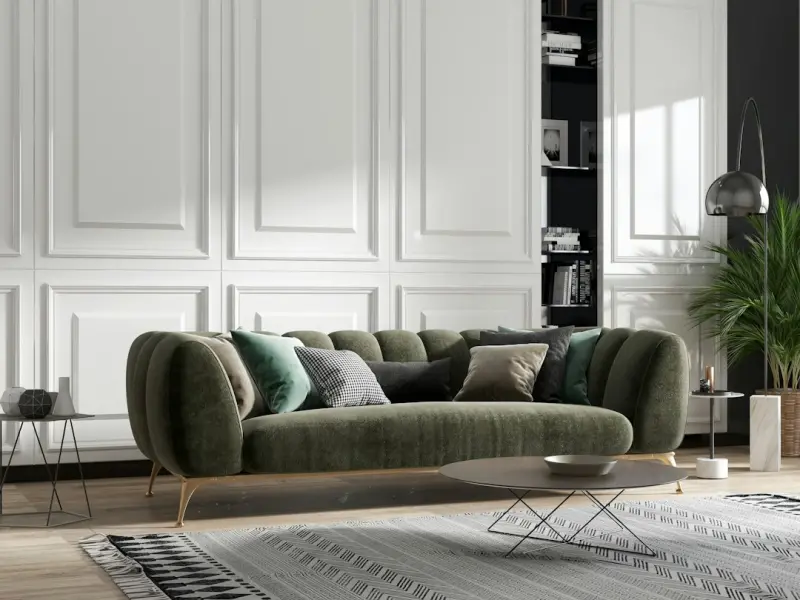
Traditional renderings are static, limiting a client’s ability to truly “feel” a space. AI‑enhanced visualization tools now create dynamic, photorealistic walkthroughs that adapt to real‑time lighting changes, weather conditions, and even the time of day. A homeowner can see how a deep teal sofa looks when morning light streams through the windows versus the soft glow of an evening lamp. These immersive experiences dramatically reduce decision fatigue and the number of revision cycles.
Material Intelligence and Sustainable Choices
One of the most exciting applications of AI is its capacity to evaluate material sustainability at the point of selection. By integrating life‑cycle databases, the system can rank options based on carbon footprint, durability, and local availability. Designers can instantly see the trade‑offs between a reclaimed wood flooring and a high‑performance synthetic alternative, allowing them to make choices that align with both aesthetic goals and environmental responsibility.
Integrating Smart Architecture Without the “Smart” Buzzword
While many articles focus on the novelty of Smart Glazing & Doors, the real value lies in how these technologies can be woven seamlessly into the design narrative. AI can recommend where electrochromic glass will have the greatest impact on comfort and energy use, or suggest door hardware that balances accessibility with visual harmony. The technology becomes invisible—an integral part of the design rather than a standalone feature.
The Role of Augmented Reality in the Showroom
Augmented reality (AR) is no longer a futuristic afterthought. By pairing AI‑generated concepts with AR headsets, designers can walk clients through a virtual version of their future home while standing in the actual space. This overlay allows immediate feedback: “What if we moved the reading nook to the opposite wall?” The client can see the adjustment in real time, and the designer can instantly update the AI model to reflect the change.
Data‑Driven Yet Human‑Centric
It’s easy to get lost in the allure of algorithms, but the heart of interior design remains deeply human. AI should be viewed as a collaborator that amplifies empathy—not a replacement for it. By handling the heavy lifting of data analysis and iteration, designers can spend more time listening, storytelling, and crafting experiences that resonate on an emotional level.
Case Study: A Home Office That Grows With You
One recent project involved a remote‑work professional who wanted a home office that could evolve as his career progressed. After inputting his workflow, preferred work‑hours, and ergonomic needs, the AI proposed a modular layout with adjustable desk heights, movable acoustic panels, and a lighting scheme that shifts based on his circadian rhythm. Over the next twelve months, the client added a collaborative table for occasional video calls and a small library nook. Each addition was seamlessly integrated because the underlying AI framework had already mapped out expansion pathways.
Overcoming Common Concerns
- “AI will make design impersonal.” The technology is only as good as the data you feed it. By prioritizing qualitative inputs—like memories associated with a particular shade or cultural design motifs—you preserve the personal touch.
- “It’s too expensive.” Many AI platforms operate on a subscription model, which spreads costs and often proves cheaper than traditional design cycles that involve multiple revisions and physical mock‑ups.
- “I’m not tech‑savvy.” User‑friendly interfaces are now the norm. Most platforms require only a few clicks to generate a concept, and the learning curve is comparable to mastering a new design software suite.
Future Outlook: The Convergence of AI and Human Craft
Looking ahead, the most compelling designs will emerge from a partnership where AI provides the analytical backbone and designers infuse the narrative soul. We’ll see more digital twin integrations that simulate not just energy performance but also acoustics, airflow, and occupant sentiment. The interior design profession is poised to become a hybrid of creativity, technology, and sustainability.
Getting Started: A Practical Checklist
- Define Your Goals. Clarify whether you’re optimizing for aesthetics, function, sustainability, or a blend of all three.
- Choose the Right AI Tool. Look for platforms that offer preference profiling, material intelligence, and AR visualization.
- Gather Qualitative Data. Conduct brief interviews or surveys to capture the emotional drivers behind design choices.
- Iterate Rapidly. Use AI‑generated concepts as a springboard—don’t treat them as final solutions.
- Validate with Real‑World Tests. Build small physical mock‑ups or use AR to confirm how textures and lighting feel in situ.
Conclusion: Embrace the Evolution, Not the Revolution
Artificial intelligence is not a disruptive force that will upend interior design; it’s a catalyst that accelerates the journey from inspiration to realization. By embracing AI as a partner, designers can deliver hyper‑personalized, sustainable, and adaptable interiors faster than ever before—while still preserving the human connection that makes a space truly feel like home.

William Roy is a freelance writer originally from Montreal who moved to Ottawa with his wife of 50 years to be closer to their grandkids. Alongside his writing, William has a passion for fishing.
Related Posts

When Walls Whisper: Crafting a Narrative with Color and Texture
Discover the art of interior storytelling through thoughtful color palettes, layered textures, acous... Read More
Designing Spaces That Listen: The Quiet Revolution in Interior Design
A deep dive into how acoustic treatments, biophilic touches, adaptive lighting, and modular furnitur... Read More

Revamping Your Home's Aesthetic: A Comprehensive Guide to Interior Design
Discover the art of interior design and learn how to revamp your home's aesthetic with our expert gu... Read More
Top Posts

Self‑Healing Concrete: The Next Frontier in Resilient Infrastructure
A deep dive into groundbreaking concrete technologies—self‑healing mixes, carbon capture, 3D printing, and smart sensors—showcasing how they’re redefini...Read More

Lighting as Narrative: Crafting Mood with Layered Light
Explore the power of layered lighting—ambient, task, and accent—to create mood, support function, and add sustainable elegance to any interior space....Read More

Beyond Leisure: Turning Your Deck into a Year‑Round Productivity Hub
A deck can be more than a summer retreat. Learn how to upgrade it into a flexible, year‑round productivity zone that supports remote work, collaboration, and ...Read More

Voice‑Activated Home Alarms: A Hands‑Free Revolution for Every Household
Explore the rise of voice‑controlled home alarm hubs, their seamless smart‑home integration, privacy safeguards, and DIY options for renters—all designed ...Read More
0 Comments
Post Comment
You will need to Login or Register to comment on this post!