
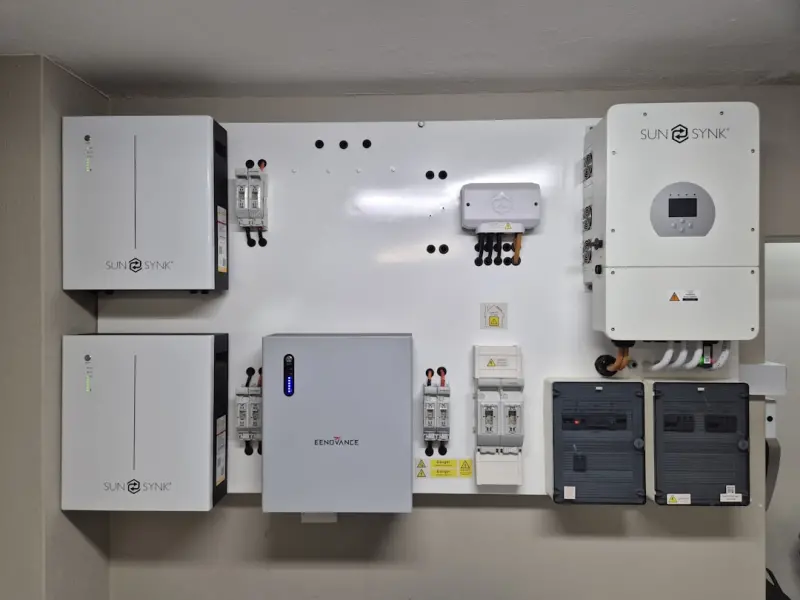
Why AI‑Powered Smart Electrical Panels Are the Quiet Revolution Your Workspace Needs
When I first walked into a newly renovated office and saw a sleek, glass‑covered panel humming softly in the corner, I thought I’d stumbled onto a piece of futuristic art. Little did I know I was witnessing the birth of a technology that’s set to change how we think about electricity in the modern workplace.
Smart electrical panels, once the domain of data centers and industrial facilities, are now finding a home in open‑plan offices, coworking hubs, and even boutique studios. These panels aren’t just about flipping a switch; they’re about real‑time energy orchestration, predictive maintenance, and turning every kilowatt‑hour into a strategic advantage.
From Passive Switches to Active Energy Conductors
Traditional breaker boxes are essentially passive safety devices. They trip when something goes wrong, but they don’t talk to you, learn from your patterns, or suggest improvements. The new generation of AI‑powered panels does all that and more. By integrating high‑resolution sensors, edge computing, and cloud‑based analytics, they become an active conductor of your building’s power ecosystem.
- Continuous Load Monitoring: Every circuit is tracked in real time, providing granular data on usage spikes, idle periods, and inefficiencies.
- Predictive Fault Detection: Machine‑learning models spot anomalies before a breaker trips, allowing facilities teams to intervene proactively.
- Dynamic Load Balancing: The panel can shift non‑critical loads to off‑peak times, smoothing demand curves and lowering utility bills.
- Integration with Building Automation: Seamlessly syncs with HVAC, lighting, and even adaptive window treatments to create a holistic energy strategy.
How AI Learns Your Office’s Power Personality
At first glance, “AI” can feel like a buzzword, but the reality is delightfully practical. The panel’s firmware captures a constant stream of voltage, current, and frequency data. This data is then fed into a lightweight neural network that runs on the device itself—no need for a massive server farm.
Over days and weeks, the system builds a “power personality” profile:
- Baseline Consumption: What does a typical workday look like for each zone?
- Peak Activity Windows: When do conference rooms, labs, or collaborative areas draw the most power?
- Device‑Specific Signatures: Which equipment is a power hog, and which ones are efficient?
- Seasonal Adjustments: How does heating, cooling, or daylight affect load patterns?
Once the model understands these patterns, it can make intelligent recommendations—like suggesting that a server rack be shifted to a cooler aisle during summer, or nudging employees to plug chargers into low‑traffic outlets after hours.
Real‑World Benefits You Can Measure Today
It’s easy to get lost in the tech jargon, so let’s break down the tangible outcomes:
- Energy Savings: Companies report 10‑15% reductions in electricity costs within the first six months of deployment.
- Extended Equipment Lifespan: By smoothing out voltage fluctuations, sensitive electronics experience less wear and tear.
- Reduced Downtime: Predictive alerts mean maintenance teams can replace a failing breaker before it causes an outage.
- Compliance Made Simple: Automated reporting aligns with ESG and sustainability reporting standards.
In a recent case study, a mid‑size tech firm integrated smart panels across three campuses and saw a cumulative $250,000 in energy cost avoidance in just one fiscal year. That’s the kind of ROI that turns a tech enthusiast’s hobby into a boardroom conversation.
The Symbiosis Between Smart Panels and Renewable Energy
One of the most exciting intersections is the partnership between AI‑driven panels and on‑site renewable generation—think solar arrays, wind turbines, or even kinetic floor tiles. When paired with solar‑powered edge computing, the panel can prioritize clean energy consumption, store excess in batteries, and even feed surplus back to the grid.
Imagine a scenario where your office’s rooftop solar produces more power than the building needs at noon. The smart panel detects this surplus, routes it to an on‑site battery bank, and then automatically draws from that stored energy during the evening peak. The result? A smoother demand curve, lower demand charges, and a tangible reduction in carbon footprint.
Security: The Unsung Hero of Smart Electrical Infrastructure
With great connectivity comes great responsibility. Smart panels communicate over encrypted protocols, but they also add a new surface for potential cyber threats. Vendors are responding by embedding hardware‑level security chips, conducting regular OTA (over‑the‑air) firmware updates, and integrating with zero‑trust network architectures.
From a practical standpoint, this means facilities teams should:
- Maintain an inventory of all smart devices and their firmware versions.
- Enforce multi‑factor authentication for any remote access.
- Schedule quarterly security audits, just as you would for your IT infrastructure.
Implementation: A Step‑by‑Step Playbook
Adopting AI‑powered panels doesn’t have to be a massive, disruptive project. Here’s a pragmatic roadmap that I’ve used with several clients:
1. Conduct a Baseline Energy Audit
Before you install anything, understand your current consumption patterns. Use sub‑metering or a temporary data logger for at least two weeks to capture peak and off‑peak usage.
2. Identify High‑Impact Zones
Focus on areas with the highest energy draw—server rooms, conference centers, or labs. These are the spots where smart panels will deliver the quickest ROI.
3. Choose a Scalable Vendor
Look for platforms that support modular expansion. You should be able to start with a single panel and grow to a networked system without re‑architecting the entire electrical backbone.
4. Integrate with Existing BMS (Building Management System)
Most modern BMS platforms have open APIs. Align your panel’s data streams with the BMS to unlock cross‑functional insights—like coordinating HVAC adjustments based on real‑time load.
5. Train Your Facilities Team
Even the smartest panel is only as good as the people interpreting its data. Run workshops that cover dashboard navigation, alert handling, and basic troubleshooting.
6. Roll Out a Pilot
Deploy in a single floor or department. Measure key metrics (energy cost, outage incidents, maintenance tickets) over a 90‑day period. Use the data to refine your rollout plan.
7. Scale and Optimize
After a successful pilot, expand to other zones, fine‑tune AI models, and start leveraging advanced features like demand‑response participation with utility providers.
Future‑Proofing: Why Smart Panels Are Not Just a Trend
The electrical landscape is evolving rapidly. As electric vehicle (EV) charging stations become commonplace in office parking lots, and as workplaces adopt more IoT devices, the load on building electrical systems will become increasingly volatile.
Smart panels act as the traffic controllers of this new electric highway. They can prioritize critical loads, defer non‑essential charging to off‑peak periods, and even negotiate demand‑response incentives with utilities. In essence, they future‑proof your infrastructure against the inevitable rise in electricity‑intensive technologies.
Conclusion: Empowering the Modern Workplace One Circuit at a Time
Electricity has always been the invisible backbone of the workplace, but it’s finally stepping into the spotlight. AI‑powered smart electrical panels transform a static, safety‑first device into a dynamic, data‑rich platform that drives cost savings, sustainability, and operational excellence.
If you’re a facilities manager, an office‑design strategist, or a CFO looking for the next lever to pull on the bottom line, consider the humble electrical panel as your next big opportunity. The technology is mature, the ROI is clear, and the benefits ripple across every corner of the modern workspace—from the server rack to the coffee machine.
Ready to take the plunge? Start with a simple audit, partner with a vendor that embraces security, and let the data guide you. In the words of an old electrician I once met, “You can’t fix what you don’t see.” Smart panels give you that sight—now you just have to use it.

Kelly Reynolds is a dynamic freelance writer hailing from the picturesque landscapes of Alberta. A master of the written word, she juggles her passion for storytelling with the exhilarating chaos of being a mother to five spirited children. With an impressive portfolio that spans various genres, Kelly captivates readers through her engaging blog posts and thought-provoking articles.
Related Posts

Electrifying the Future: Edge AI’s Role in Smarter Power Management
Edge AI is reshaping electrical design and operations, offering real‑time power quality monitoring... Read More

Digital Twins Transform Building Electrical Systems
Digital twins turn static electrical schematics into live, data‑rich replicas that predict failure... Read More
Powering the Future: How EV Charging Hubs Transform Commercial Buildings
A deep dive into why electric‑vehicle charging hubs are more than an amenity—showcasing the fina... Read More
Top Posts

Radiant Floor Heating: The Hidden Health and Sustainability Edge
Radiant floor heating delivers gentle, even warmth that boosts circulation, improves air quality, and supports better sleep, all while pairing seamlessly with r...Read More

Solar‑Powered Microgrids: A New Frontier for Commercial Real Estate
Discover the practical steps, financial incentives, and real‑world results of integrating solar energy into microgrids for commercial real estate, and learn h...Read More

Microclimate Mastery: Designing Gardens That Thrive in Every Season
Discover the step‑by‑step process for turning any yard into a series of tailored microclimates, enabling resilient planting, smarter watering, and comfortab...Read More

Mold Removal Reimagined: Turning Data Into Prevention
A data‑first approach to mold removal can slash remediation costs, protect tenant health, and boost property value. Learn how IoT sensors, AI‑driven alerts,...Read More
0 Comments
Post Comment
You will need to Login or Register to comment on this post!