

Why Floor Heating Deserves a Seat at the Executive Table
When executives talk about the next wave of building performance, the conversation often lands on IoT sensors, net‑zero targets, and flexible workspaces. What rarely makes the agenda is the humble radiant floor heating system. Yet, beneath the polished concrete or engineered wood, a quiet revolution is taking place—one that can simultaneously lower energy bills, improve occupant health, and future‑proof a facility’s climate control strategy.
The Hidden Economics of Radiant Comfort
Traditional forced‑air HVAC is a blunt instrument. It blasts hot or cold air into a space, creating drafts, uneven temperatures, and a constant need for re‑balancing. In contrast, floor heating delivers distributed thermal energy directly where people stand, sit, or walk. The result is a more uniform temperature gradient that reduces the thermostat setpoint by 1‑2 °F without sacrificing comfort. That modest reduction translates into real savings: every degree lowered can shave 3‑5 % off heating energy consumption.
But the financial story doesn’t stop at the utility meter. By lowering peak heating loads, floor heating eases strain on chillers, boilers, and the building’s electrical infrastructure. This can defer costly upgrades to plant equipment and even shrink the size of the main service entrance—a hidden capital expense that many facility managers overlook.
Well‑Being Benefits That Pay Dividends
Human‑centric design isn’t just a buzzword; it’s a measurable driver of productivity. Studies from the International WELL Building Institute show that thermal comfort directly correlates with cognitive performance. Employees who feel “just right” report fewer distractions, higher satisfaction, and lower absenteeism.
Radiant heating also eliminates the dry air problem common with forced‑air systems. By keeping humidity levels more stable, floor heating reduces the prevalence of skin irritation, respiratory issues, and static electricity—factors that subtly erode employee wellness over time.
Smart Integration: From Sensors to Predictive Controls
What makes floor heating truly “smart” is its ability to interface with modern building automation platforms. Advanced thermostats now come with real‑time energy inspection capabilities, allowing operators to see the exact kilowatt‑hours consumed by each heating zone. This granularity opens the door to demand‑response participation, where a building can shave load during peak utility events and earn incentives.
Beyond simple scheduling, machine‑learning algorithms can predict occupancy patterns and pre‑condition spaces just before people arrive. By learning from badge‑in data, calendar integrations, and even Wi‑Fi device counts, the system can “anticipate” the next 30 minutes of foot traffic and adjust heating output accordingly. The net effect is a building that feels warm exactly when it’s needed—no more, no less.
Retrofitting Historic Structures Without Compromise
One of the most compelling use‑cases for radiant floor heating is in heritage or adaptive‑reuse projects. Traditional retrofits often involve invasive ductwork, unsightly grilles, and a visual disconnect from the original architecture. Floor heating, by contrast, can be installed beneath existing flooring finishes—be it reclaimed wood, stone tiles, or polished concrete—preserving the aesthetic integrity of the space.
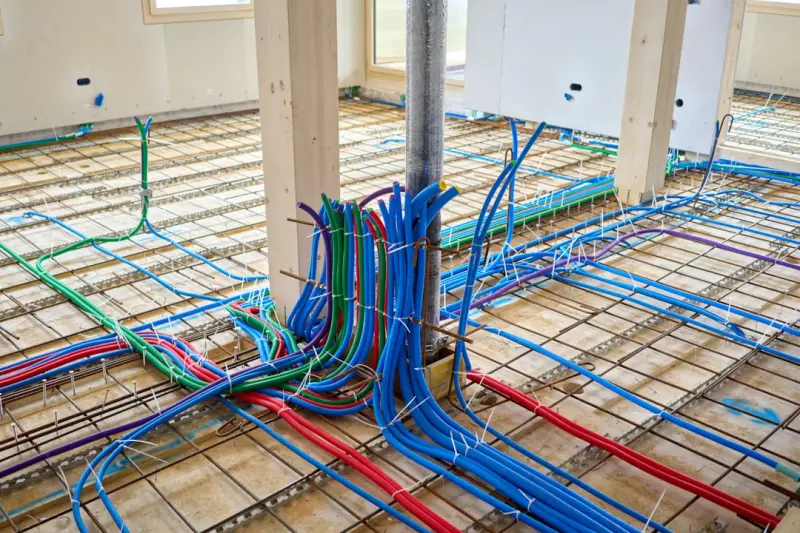
Key to a successful retrofit is a layered approach: a thin, flexible electric heating mat for low‑rise applications, or a low‑temperature hydronic loop for larger floor areas. Both systems can be installed over an insulated sub‑layer to minimize heat loss into the slab below, ensuring efficiency even in older buildings with poor envelope performance.
Designing for Flexibility: Zones, Sensors, and Z‑Values
Floor heating is not a monolith; it can be as granular as the design demands. By dividing a floor plan into thermal zones, each with its own thermostat and sensor suite, facilities can tailor heating profiles to distinct functions—conference rooms, open workspaces, break areas, and server rooms each have unique heat loads.
Modern controllers use the concept of a “Z‑value” (zone thermal coefficient) to balance heat output against ambient temperature, floor insulation, and occupancy. When combined with occupancy sensors, the system can automatically reduce output in unoccupied zones while maintaining a comfortable “standby” temperature that prevents cold spots.
Energy Sources: Electricity, Natural Gas, and Renewable Integration
Electric radiant heating mats are ideal for smaller footprints and quick installations. Their high conversion efficiency (near 100 %) means virtually all the electricity drawn becomes usable heat. However, for larger footprints or when operating costs are a concern, low‑temperature hydronic systems—water heated by a boiler, heat pump, or solar thermal collector—offer a more scalable solution.
Pairing hydronic floor heating with a ground‑source heat pump creates a virtuous cycle: the heat pump extracts low‑grade thermal energy from the earth, which is then distributed through the radiant floor. The system can also be integrated with predictive foundation repair platforms that monitor slab health, ensuring that the heating loops remain efficient over the building’s life.
Maintenance Made Simple
One of the biggest misconceptions about floor heating is that it requires intensive maintenance. In reality, the system’s moving parts are minimal. Electric mats have no mechanical components, while hydronic loops are sealed and can be flushed during routine boiler servicing. The real maintenance work lies in the building’s automation layer—software updates, sensor calibrations, and periodic performance audits.
Because the heating elements are hidden, they do not suffer from dust buildup or filter changes, unlike forced‑air ducts. This translates to lower lifecycle costs and a smaller carbon footprint associated with maintenance logistics.
Future‑Proofing with Data‑Driven Insights
Every floor heating installation now generates a wealth of data: temperature curves, energy consumption per zone, occupancy trends, and even slab temperature differentials. When this data is fed into a central analytics platform, facility managers can identify under‑performing zones, predict wear on the heating elements, and optimize setpoints for seasonal variations.
Looking ahead, the integration of floor heating with emerging technologies—such as digital twins, augmented reality maintenance overlays, and blockchain‑based energy trading—will transform heating from a passive service to an active, revenue‑generating asset.
Choosing the Right Vendor: Questions to Ask
- Scalability: Can the system grow with my building’s footprint or be adapted for future space reconfiguration?
- Integration: Does the control platform support open protocols (BACnet, Modbus, MQTT) for seamless integration with existing BMS?
- Warranty & Support: What is the length of the product warranty, and does the vendor offer on‑site commissioning services?
- Energy Modeling: Will the vendor provide a pre‑installation simulation to forecast energy savings and ROI?
- Compliance: Does the solution meet local building codes, fire safety standards, and accessibility regulations?
Conclusion: From Luxury to Necessity
Floor heating is shedding its “luxury amenity” label and stepping into the realm of essential building infrastructure. With the convergence of smart controls, data analytics, and sustainable energy sources, radiant heating can become a cornerstone of any modern commercial space—delivering comfort, health, and measurable financial returns.

Paul Gray is a dynamic blogger based in Brampton, where he shares his life with his amazing wife, Sarah. Known for his engaging writing style and relatable insights, Paul has carved out a niche in the blogging world that resonates with readers from all walks of life. When he's not crafting captivating posts, you can find him savoring a cold beer or indulging in the latest blockbuster movie. With a friendly demeanor and a passion for storytelling, Paul brings a unique perspective to his work, making him not just a blogger, but a voice for those who appreciate the simple joys of life.
Related Posts

Radiant Floor Heating: The Unsung Building Hero
Radiant floor heating offers consistent warmth, better indoor air quality, and data‑driven efficie... Read More

Warm Floors, Warm Minds: How Modern Radiant Heating Drives Business Performance
Radiant floor heating quietly transforms workspaces by improving comfort, reducing energy use, and s... Read More
The Untapped Power of Radiant Floor Heating: Health, Efficiency, and Smart Integration
Radiant floor heating is evolving from a comfort feature to a strategic asset, delivering health ben... Read More
Top Posts

Why Digital Twins Are the Secret Weapon in Commercial Renovations
Digital twins are reshaping commercial renovations by providing real‑time, data‑rich virtual replicas that streamline design, enhance sustainability, and un...Read More

Smart Plumbing: Turning Pipes into Proactive Assets for Modern Buildings
Learn how integrating sensors, analytics, and AI into plumbing systems turns traditional pipes into proactive assets, delivering leak prevention, water‑qualit...Read More

Cultivating Resilient Urban Canopies: A Hands‑On Guide to Tree Stewardship
A comprehensive, hands‑on guide outlines how to map root zones, improve soil health, prune strategically, and implement integrated pest management, turning tr...Read More

Reinventing Window Treatments: The New Frontier of Wellness and Productivity
Explore how adaptive window treatments transform indoor environments by enhancing health, reducing noise, conserving energy, and reinforcing brand identity, all...Read More
0 Comments
Post Comment
You will need to Login or Register to comment on this post!