
Rethinking the Bedrock: A Path to Carbon‑Neutral Foundations
When I first stepped onto a construction site as a junior engineer, the first thing that hit me was the sheer weight of the concrete slabs being poured. It was a reminder that the groundwork of any building carries not just structural loads, but also a massive environmental imprint. Decades later, that memory still fuels my obsession with finding ways to lay foundations without adding to the climate crisis.
Why Foundations Matter in the Carbon Equation
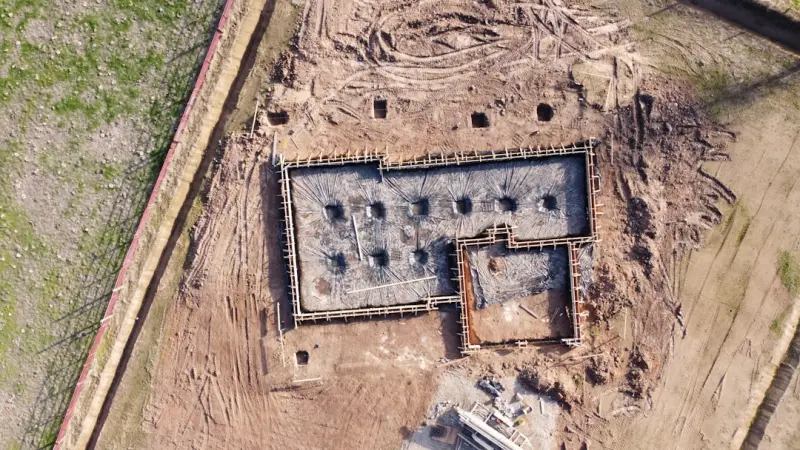
Foundations are often the unsung heroes of a project’s carbon story. While architects and developers proudly showcase green roofs or solar façades, the concrete footings below ground can account for up to 30% of a building’s embodied carbon. The reason? Traditional Portland cement production releases roughly one ton of CO₂ for every ton of cement produced. Multiply that by the thousands of tons needed for a mid‑rise, and you’re looking at a sizable carbon bill.
Moreover, excavation, transport of heavy aggregates, and on‑site energy use all pile onto the emissions stack. If we want truly sustainable construction, we must start digging deeper—literally and figuratively—into the ways we design, source, and install foundations.
Geopolymer Concrete: The Game‑Changing Alternative
Enter geopolymer concrete, a material that swaps out a portion of Portland cement for industrial by‑products like fly ash, slag, or even calcined kaolin. The chemistry behind geopolymerization creates a binder that sets faster and captures carbon rather than emitting it. Several pilot projects have demonstrated that a geopolymer mix can slash embodied carbon by 40‑70% compared to conventional concrete, while maintaining comparable compressive strength.
- Low‑temperature curing: Reduces on‑site energy demand.
- Waste‑upcycling: Turns what would be landfill material into a valuable construction resource.
- Durability: Enhanced resistance to sulfate attack and chloride penetration extends the foundation’s service life.
While the technology is still maturing, many forward‑thinking firms are already specifying geopolymer mixes for footings, piles, and mat foundations. The key is collaborating early with the concrete supplier to ensure mix design aligns with site‑specific load requirements.
Reclaimed Aggregates: Giving Old Concrete a Second Life
Another lever for carbon reduction is the use of reclaimed aggregate. Instead of quarrying fresh rock, contractors can crush demolished concrete on‑site and recycle it as a base material. This approach not only cuts down on virgin material extraction but also reduces transportation emissions.
When paired with geopolymer binders, reclaimed aggregate becomes a powerhouse for low‑carbon foundations. The Concrete Revolution article highlighted how waste concrete can be turned into wealth; the same principle applies beneath the slab, where reclaimed crushed concrete can serve as sub‑base or even be blended directly into the footing mix.
Designing for Material Efficiency
Beyond the choice of material, the design itself can dramatically influence carbon performance. Traditional foundations often adopt a “one‑size‑fits‑all” approach, over‑engineering footings to accommodate worst‑case scenarios. By employing advanced geotechnical analysis—such as finite element modeling of soil‑structure interaction—engineers can optimize footing size, depth, and reinforcement, thereby reducing material usage without compromising safety.
Key strategies include:
- Stepped footings that follow natural grade changes, minimizing excavation.
- Hybrid pile‑cap systems that combine shallow and deep elements only where needed.
- Optimized reinforcement layouts that leverage high‑strength steel to achieve the same structural capacity with less metal.
Carbon Offsetting Through On‑Site Renewable Integration
Even with low‑carbon materials, some emissions are inevitable. One pragmatic solution is to offset those residual emissions on‑site. For example, integrating ground‑source heat pump loops within the foundation slab can provide renewable heating and cooling for the building’s life cycle, effectively “paying back” the carbon spent during construction.
Similarly, embedding thin‑film solar panels into exposed concrete edges or using photocatalytic concrete that captures CO₂ from the atmosphere can turn the foundation into a modest carbon sink. While these technologies are still emerging, early adopters report net‑positive carbon balances over a 30‑year building lifespan.
Regulatory Incentives: Turning Permits into Green Light
Many municipalities are now rewarding projects that meet carbon‑neutral or carbon‑negative criteria with expedited permitting, reduced fees, or tax incentives. Understanding these programs can be a game‑changer for developers looking to stay competitive.
The Turning Red Tape into Green Light piece explored how the permitting landscape is shifting. In the context of foundations, you’ll often find that jurisdictions offering “low‑carbon” fast‑track approvals require detailed material documentation—something that geopolymer and reclaimed‑aggregate mixes can readily provide.
Case Study: A Mid‑Rise Office Building’s Carbon‑Neutral Footprint
To illustrate these concepts, let’s walk through a recent project in the Pacific Northwest. The client demanded a net‑zero carbon target for the entire building, including the foundation. Here’s how the team delivered:
- Geotechnical Survey: Soil tests revealed a high clay content, allowing for a shallow spread footing system with minimal excavation.
- Material Selection: A 60% fly‑ash geopolymer mix was specified, supplemented with 30% reclaimed aggregate sourced from a nearby demolition site.
- Design Optimization: Using 3‑D modeling, engineers reduced footing volume by 15% compared to conventional designs.
- Renewable Integration: Ground‑source heat pump loops were installed within the slab, and a small array of solar‑integrated concrete panels was placed on the south‑facing retaining wall.
- Carbon Accounting: An independent third‑party verified that the foundation’s embodied carbon was 45% lower than baseline, with the renewable systems offsetting the remaining emissions over 25 years.
The result? The building achieved a net‑zero carbon status three years ahead of schedule, and the developer secured a fast‑track permit, saving roughly two months of project time.
Practical Tips for Contractors Ready to Go Carbon‑Neutral
If you’re a contractor or site manager looking to dip your toe into carbon‑neutral foundations, start with these actionable steps:
- Audit Your Current Mix: Gather data on cement content, aggregate sources, and transport distances.
- Engage Suppliers Early: Discuss geopolymer options and reclaimed aggregate availability during the bidding phase.
- Leverage Software Tools: Use LCA (Life Cycle Assessment) platforms to quantify carbon savings and identify hotspots.
- Document for Permits: Prepare a carbon‑reduction plan to present to local authorities; many jurisdictions now ask for this as part of the application.
- Train Your Crew: Ensure workers understand the handling differences of geopolymer mixes, which can set faster and require different curing practices.
Looking Ahead: The Role of Digital Fabrication in Foundation Work
While we’ve focused on material innovation, the next frontier lies in digital fabrication. 3‑D printed formwork and robotic placement of reinforcement can dramatically reduce waste and improve precision. Imagine a future where a building’s foundation is printed on‑site from a low‑carbon binder, layer by layer, eliminating traditional formwork entirely. This synergy between digital tech and sustainable materials could push carbon‑neutral foundations from niche to norm within the next decade.
Conclusion: Digging Deep for a Greener Tomorrow
Achieving carbon‑neutral foundations is not a single‑step miracle; it’s a mosaic of material science, design efficiency, regulatory navigation, and forward‑thinking construction practices. By embracing geopolymer concrete, reclaimed aggregates, optimized designs, and on‑site renewables, we can transform the very soil beneath our buildings from a source of emissions into a platform for sustainability.
As the industry continues to grapple with climate imperatives, the foundation is where the battle begins. Let’s lay the groundwork for a future where every slab we pour carries a promise—not just of structural integrity, but of planetary stewardship.

Tom Ferguson is a Canadian freelance writer with a passion for storytelling, current events, and thoughtful commentary. Drawing on years of writing experience, he shares engaging insights on a wide range of topics, bringing a uniquely Canadian perspective to his work.
Related Posts
Building a Climate‑Smart Foundation: Resilience, Sustainability, and Future‑Proof Design
Learn why a climate‑first foundation strategy, smart sensors, and regenerative landscaping are ess... Read More

Building a Future‑Proof Foundation: Science, Materials, and Smart Monitoring
A seasoned contractor shares cutting‑edge strategies—soil testing, green materials, and sensor t... Read More
Building a Rock‑Solid, Sustainable Foundation: Lessons from the Trenches
A veteran contractor shares his hands‑on guide to creating durable, sustainable foundations—cove... Read More
Top Posts

Layered Light: How to Light Your Home Smarter, Safer, and More Stylish
Learn how to create a three‑layer lighting system—ambient, task, and accent—that improves mood, saves energy, and integrates with smart home safety, using...Read More

The Untold Economics of Ignoring Appliance Repairs
Skipping appliance repairs may seem harmless, but it leads to higher energy bills, food waste, and unexpected damage. This post reveals the hidden costs and off...Read More
Parametric Design‑Build: Speed, Sustainability, Collaboration
Parametric design injects data‑driven agility into design‑build, letting teams iterate faster, cut carbon, and collaborate in real time. This post outlines ...Read More

Beyond Aesthetic: How Next‑Gen Windows & Doors Elevate Building Performance
A deep dive into how modern windows and doors, with dynamic glazing, smart security, acoustic mastery, and sustainable sourcing, are becoming strategic assets t...Read More
0 Comments
Post Comment
You will need to Login or Register to comment on this post!