
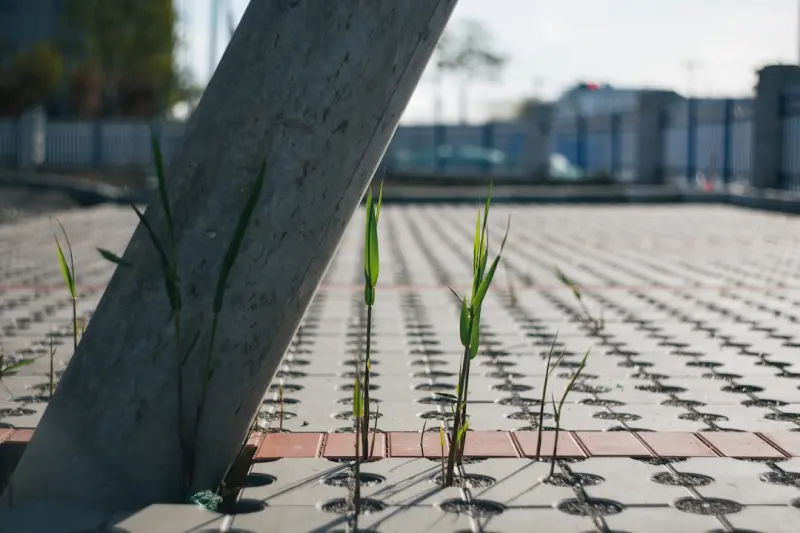
Concrete’s Second Act: Green, Resilient, and Ready for Tomorrow
When most people think of concrete, the image that pops up is a bland, gray slab that never changes. It’s the material that holds our sidewalks, foundations, and high‑rise towers together, yet it rarely gets the spotlight. That’s about to change. In the past decade, the industry has been quietly undergoing a transformation—one that flips the script on concrete’s reputation and positions it as a cornerstone of sustainable, high‑performance construction.
In this deep‑dive, I’ll explore how the humble mix of cement, water, and aggregates is evolving into a smart, low‑carbon, and even self‑healing material. I’ll also walk you through the practical steps you can take today to make your next concrete project greener without compromising on strength or cost.
1. The Carbon Conundrum: Why Concrete Needs a Makeover
Concrete is the world’s most widely used construction material, accounting for roughly 30% of global CO₂ emissions. The primary culprit is Portland cement, the binding agent that releases carbon during its high‑temperature manufacturing process. While the durability of concrete is unmatched, the environmental cost has forced engineers, architects, and owners to ask: Can we keep building with concrete and still meet climate goals?
Answer: Absolutely—if we adopt a multi‑pronged strategy that tackles both the material’s carbon footprint and its lifecycle performance.
2. Low‑Carbon Cements: The New Kids on the Block
Replacing a portion of Portland cement with supplementary cementitious materials (SCMs) is one of the fastest routes to lower emissions. Common SCMs include:
- Fly ash – a by‑product of coal combustion that can replace up to 30% of cement in many mixes.
- Ground granulated blast‑furnace slag (GGBS) – derived from steel production, offering excellent durability and reduced heat of hydration.
- Silica fume – a high‑silica by‑product of silicon metal production, boosting strength and reducing permeability.
When these materials are blended intelligently, you can achieve carbon reductions of 20‑40% per cubic meter while often enhancing the concrete’s long‑term performance.
3. Carbon Capture & Utilization (CCU) in Cement Production
Beyond swapping out cement, innovators are now capturing CO₂ directly from the kiln and embedding it into the concrete itself. The process, known as carbon mineralization, transforms captured CO₂ into stable calcium carbonate crystals that become part of the hardened matrix. This not only locks away emissions but also improves compressive strength.
Early pilots have demonstrated up to a 10% strength gain with a concurrent 10‑15% CO₂ reduction. As the technology scales, we’ll likely see commercial plants offering “carbon‑negative” concrete mixes as a standard product line.
4. 3D‑Printed Concrete: From Formwork to Freedom
One of the most exciting developments is the rise of 3D‑printed concrete. By extruding a specially engineered mix layer‑by‑layer, contractors can create complex geometries that would be impossible—or prohibitively expensive—with traditional formwork.
Key advantages include:
- Material efficiency – precise deposition reduces waste by up to 30%.
- Speed – large sections can be printed in hours instead of days.
- Design freedom – organic shapes, integrated channels for utilities, and built‑in insulation layers become part of the structural element.
For developers looking to differentiate a project, a 3D‑printed façade can serve as both a branding statement and a performance upgrade.
5. Recycled Aggregates: Turning Construction Waste into Valuable Resource
Every year, millions of tons of demolished concrete end up in landfills. Instead of treating this material as waste, modern plants are crushing it into recycled concrete aggregate (RCA) for use in new mixes. When paired with low‑carbon cements, RCA can achieve:
- Reduced demand for virgin aggregates, preserving natural resources.
- Lower transportation emissions, especially when the recycling facility is located near the construction site.
- Comparable strength for non‑structural applications such as sidewalks, curb & gutter, and landscape base.
Regulatory bodies in several regions now provide incentives for projects that achieve a certain percentage of recycled content, making RCA an economically attractive option.
6. Ultra‑High Performance Concrete (UHPC) and Its Role in Sustainability
UHPC may sound like a niche product reserved for avant‑garde architecture, but its properties make it a sustainability champion:
- Exceptional strength (often >150 MPa) allows for slimmer sections, reducing material volume.
- Superior durability—resistance to chloride penetration, freeze‑thaw cycles, and abrasion—extends service life far beyond conventional concrete.
- Design flexibility—the ability to cast thin, cantilevered elements can eliminate the need for secondary support structures.
When the long‑term maintenance and replacement costs are factored in, UHPC can deliver a lower total carbon impact despite its higher upfront embodied energy.
7. Self‑Healing Concrete: The Future of Low‑Maintenance Infrastructure
Imagine a concrete slab that “repairs” its own cracks after a rainfall. Researchers have developed mixes that embed micro‑capsules of healing agents—such as sodium silicate or bacteria‑produced limestone—into the matrix. When a crack forms, the capsules rupture, releasing the agent, which reacts with water to fill the void.
Benefits include:
- Reduced water infiltration—minimizing corrosion of embedded steel.
- Extended service life—delaying costly repairs and replacements.
- Lower lifecycle emissions—fewer repair cycles mean less embodied carbon over the structure’s life.
While still emerging, self‑healing concrete is already being tested in bridge decks and parking structures where crack control is critical.
8. Sensor‑Embedded Concrete Without Compromising Simplicity
Embedding sensors in concrete is no longer the exclusive domain of high‑tech research labs. IoT‑enabled monitoring devices can now be mixed directly into the concrete or attached to reinforcement bars. These sensors provide real‑time data on:
- Temperature and humidity during curing.
- Strain and load distribution over the structure’s life.
- Early detection of moisture ingress or carbonation.
The key is to choose low‑profile, battery‑free options that harvest energy from the concrete’s own moisture or from ambient vibrations. This ensures the system remains “invisible” while delivering valuable insights for facility managers.
9. Economic Drivers: Why Going Green Makes Financial Sense
Beyond the environmental imperative, there are concrete (pun intended) financial incentives:
- Regulatory credits – Many municipalities award LEED, BREEAM, or local green‑building points for low‑carbon concrete, which can translate into faster permitting or tax incentives.
- Lifecycle cost savings – Durable mixes reduce the frequency of repairs, extending the amortization period of the initial investment.
- Market differentiation – Clients increasingly demand sustainable credentials; a “green concrete” claim can be a decisive factor in bid competitions.
When you crunch the numbers, the payback period for many low‑carbon strategies falls well within the typical project horizon.
10. A Practical Checklist for Specifying Next‑Gen Concrete
To help you transition from theory to practice, here’s a concise checklist you can hand off to your design‑build team:
- Set a carbon target – Define a maximum kg CO₂‑eq per cubic meter for the mix.
- Choose SCMs wisely – Match fly ash, slag, or silica fume to local availability and required performance.
- Consider recycled aggregate content – Aim for at least 20% RCA in non‑structural elements.
- Evaluate UHPC or high‑performance options – For critical load‑bearing components where reduced section size yields cost savings.
- Explore self‑healing additives – Especially for bridges, tunnels, or parking decks.
- Integrate sensors early – Specify compatible sensor types during mix design to avoid retrofits.
- Partner with a carbon‑capture supplier – If carbon mineralization is a goal, select a mix vendor that offers that service.
- Document performance metrics – Track compressive strength, permeability, and CO₂‑reduction data for post‑occupancy reporting.
By embedding these considerations into the early stages of design, you’ll ensure the final concrete not only meets structural requirements but also aligns with sustainability objectives.
11. Real‑World Success Stories
Several flagship projects have already demonstrated the tangible benefits of these innovations:
- Eco‑Bridge in the Pacific Northwest – Utilized 40% slag cement and self‑healing micro‑capsules, resulting in a 30% reduction in maintenance costs over ten years.
- Urban Mixed‑Use Tower in downtown Chicago – Adopted 3D‑printed concrete façade panels with integrated insulation, cutting façade material usage by 25% and achieving a LEED Gold rating.
- Smart Parking Garage in Austin – Embedded low‑power strain sensors that feed data into the building management system, enabling predictive maintenance and extending the pavement’s service life.
These examples illustrate that the “second act” of concrete is already playing out across the globe, and the momentum is only accelerating.
12. Looking Ahead: What’s Next for Concrete?
In the coming years, we can expect three major trends to converge:
- Digital Twin Integration – Combining sensor data with AI‑driven models to predict degradation patterns before they manifest.
- Hybrid Materials – Blending concrete with bio‑based fibers, phase‑change materials, or even recycled plastics to create multi‑functional composites.
- Policy‑Driven Mandates – As governments tighten carbon caps, low‑carbon concrete will shift from “nice‑to‑have” to “must‑have” for most public projects.
For contractors, architects, and owners, the message is clear: embrace the new concrete toolkit now, or risk falling behind the industry’s sustainability curve.
Concrete is no longer just the silent workhorse of construction; it’s evolving into a dynamic, eco‑centric, and data‑rich material** that can help us meet the climate challenge without sacrificing safety or performance. The question isn’t whether concrete can be greener—it’s how fast you can make that transformation a reality on your next project.

Tom Ferguson is a Canadian freelance writer with a passion for storytelling, current events, and thoughtful commentary. Drawing on years of writing experience, he shares engaging insights on a wide range of topics, bringing a uniquely Canadian perspective to his work.
Related Posts
Concrete Reimagined: From Brutalism to Biophilic Brilliance
Concrete is evolving beyond its traditional role, offering ultra‑high‑performance strength, 3Dâ€... Read More
Concrete Innovations That Are Reshaping Modern Construction
Explore the latest concrete breakthroughs—from ultra‑high‑performance mixes to 3D printing and... Read More
Carbon‑Negative Concrete: How the Industry Is Rewriting Its Green Playbook
Concrete is undergoing a climate makeover. By swapping traditional cement for low‑carbon binders, ... Read More
Top Posts
Cultivating a Sensory Garden: A Personal Journey to a Living Sanctuary
Explore a personal guide to building a sensory garden that blends fragrance, texture, edible plants, and sustainable design, turning any backyard into a living ...Read More
Why Variable Refrigerant Flow Is the Game‑Changer for Modern HVAC
Variable Refrigerant Flow (VRF) systems provide precise temperature control, heat‑recovery capability, and seamless integration with renewable energy, offerin...Read More

The Hidden Benefits of Sustainable Appliance Repair
Learn why repairing appliances sustainably cuts costs, improves performance, and protects the environment—all from the perspective of a veteran repair profess...Read More

Self‑Healing Concrete: The Next Frontier in Resilient Infrastructure
A deep dive into groundbreaking concrete technologies—self‑healing mixes, carbon capture, 3D printing, and smart sensors—showcasing how they’re redefini...Read More
0 Comments
Post Comment
You will need to Login or Register to comment on this post!