
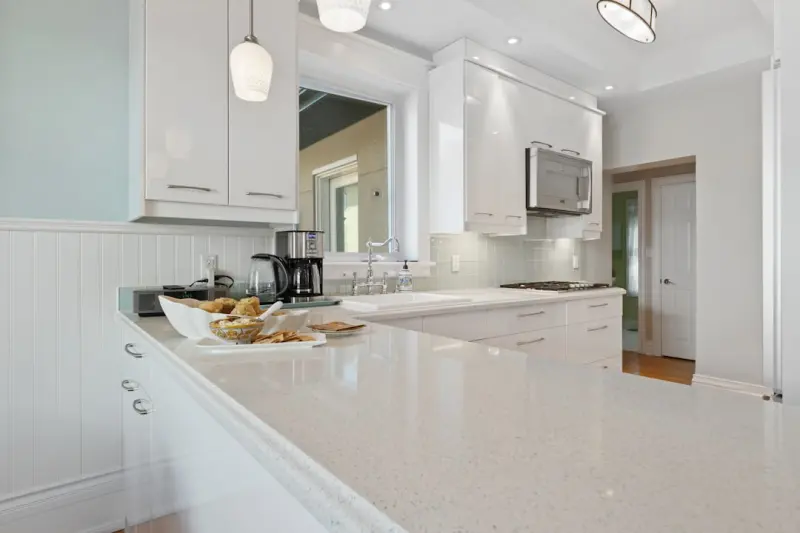
When I first stepped into a high‑traffic commercial kitchen, the clatter of pots and the scent of simmering sauce were unmistakable—but what really caught my eye was the countertop. It wasn’t just a slab of stone; it was a silent data collector, a sustainability showcase, and a design statement all rolled into one. Today, countertops are undergoing a quiet revolution powered by artificial intelligence, circular‑economy thinking, and embedded sensors. If you’re still treating your work surface as a static backdrop, you’re missing out on a strategic advantage that can cut costs, boost health compliance, and even enhance brand storytelling.
From Passive Slab to Active Platform
Traditional countertops have always been judged on three criteria: durability, aesthetics, and cost. The modern decision matrix adds two more critical dimensions: environmental impact and intelligence. Thanks to advances in material science, manufacturers can now embed nano‑coatings that repel bacteria, integrate conductive pathways for IoT devices, and use waste streams—like recycled glass or reclaimed wood—to create high‑performance composites.
Imagine a countertop that knows when it’s reached its heat tolerance, alerts staff to spills before they become slip hazards, and logs cleaning cycles to satisfy health inspectors. That’s no longer a futuristic concept; it’s an emerging reality that early adopters are already leveraging to differentiate their spaces.
AI‑Guided Material Selection
The first step in this evolution is choosing the right material. Historically, architects and designers relied on intuition and past experience. Today, generative AI algorithms crunch thousands of data points—ranging from lifecycle assessments to local climate data—to recommend the optimal mix of strength, thermal conductivity, and carbon footprint. The result is a custom formulation that meets performance targets while staying under budget.
For instance, an AI model might suggest a hybrid quartz‑glass composite for a bakery where heat resistance is paramount, while recommending a reclaimed wood‑resin blend for a boutique coffee shop that values a warm, tactile feel. These recommendations are backed by predictive simulations that forecast wear patterns over five, ten, or even twenty years.
Embedded Sensors: Turning Countertops into Data Hubs
One of the most exciting developments is the integration of low‑power sensors directly into the countertop surface. These sensors can monitor:
- Surface temperature in real time
- Moisture levels that could signal leaks or condensation
- Impact forces that reveal heavy equipment usage
- Airborne contaminants near food prep zones
All this data streams to a central dashboard, where facility managers can spot trends, schedule preventative maintenance, and even automate cleaning protocols. If you’re curious about how surfaces elsewhere are becoming data‑rich environments, check out smart flooring that talks for a parallel example in the flooring world.
Health & Safety: The Antimicrobial Edge
Foodservice regulations have tightened globally, demanding higher standards for hygiene. Modern countertops now come pre‑treated with silver‑ion or copper‑based nano‑coatings that continuously kill bacteria and fungi without the need for harsh chemicals. Some solutions even incorporate UV‑LED strips beneath a translucent top layer, providing on‑demand sterilization at the push of a button.
Beyond compliance, these features are powerful marketing tools. Patrons increasingly choose venues that can demonstrate tangible health safeguards. A visible, tech‑enhanced countertop sends a clear signal that the establishment is serious about safety.
Circular Economy: Upcycling Waste Into Premium Surfaces
Waste diversion is no longer a niche concern; it’s a core business metric. Countertop manufacturers are tapping into construction and industrial waste streams—think crushed concrete, post‑consumer glass, or even spent coffee grounds—to create composites that rival traditional stone in strength and visual appeal.
These upcycled materials not only reduce landfill pressure but also lower the embodied carbon of the finished product. For companies tracking their Scope 3 emissions, this can translate into measurable ESG gains. Moreover, the story of a countertop built from reclaimed city waste resonates with consumers who value transparent, responsible sourcing.
Digital Twins: Simulating Countertop Performance Before Installation
Before the first slab is cut, designers can now build a digital twin of the countertop within the broader building model. This virtual replica simulates thermal loads, cleaning cycles, and even foot traffic patterns. By running these scenarios, teams can identify potential failure points—such as heat concentration zones that might cause cracking—long before a single inch of material is fabricated.
Integrating the countertop twin with the building’s overall digital twin enables cross‑disciplinary insights. For example, you might discover that a nearby HVAC vent is over‑cooling a portion of the work surface, prompting a minor duct adjustment that improves both energy efficiency and surface longevity. For a deeper dive into how digital twins are reshaping other building systems, see the new frontier for electrical infrastructure.
Supply Chain Transparency and On‑Demand Fabrication
Traditional countertop procurement can be a logistical nightmare, involving long lead times, multiple freight hops, and opaque sourcing. The rise of on‑demand CNC machining coupled with AI‑optimized material mixes is changing that landscape. Orders are now placed digitally, materials are sourced from verified green suppliers, and the final slab is machined locally just in time for installation.
This model reduces inventory waste, shortens delivery windows, and gives project managers greater control over quality. It also opens the door to hyper‑customization—unique edge profiles, integrated branding logos, or even embedded NFC tags that provide product provenance when scanned.
Economic Benefits: ROI Beyond the Surface
Investing in an intelligent, sustainable countertop might seem premium, but the return on investment is multifaceted:
- Reduced cleaning costs: Antimicrobial surfaces require fewer chemical treatments and less labor.
- Lower warranty claims: AI‑guided material selection minimizes premature wear.
- Energy savings: Integrated heating/cooling pathways can replace inefficient under‑counter appliances.
- Brand premium: Eco‑focused patrons are willing to pay more for establishments that showcase responsible design.
When you aggregate these savings over a typical 7‑10‑year lifecycle, the payback period can be as short as three years—a compelling case for finance teams looking to justify capital expenditures.
Implementation Checklist for Forward‑Thinking Facilities
Ready to upgrade your countertops? Here’s a concise roadmap to keep the project on track:
- Define performance goals: durability, temperature tolerance, antimicrobial level, carbon footprint.
- Leverage AI tools: feed your criteria into a material recommendation engine.
- Select a supplier with proven upcycling credentials: ask for lifecycle assessment reports.
- Plan for sensor integration: decide on data points and choose a compatible platform.
- Build a digital twin: simulate usage scenarios and adjust design before fabrication.
- Coordinate on‑demand machining: align delivery schedules with construction milestones.
- Train staff on new maintenance protocols: ensure cleaning crews understand the technology.
- Monitor and iterate: use sensor data to fine‑tune cleaning cycles and replace components proactively.
Following this checklist not only streamlines the installation but also maximizes the strategic benefits of a next‑gen countertop.
Looking Ahead: The Next Wave of Countertop Innovation
The convergence of AI, IoT, and circular design is just the beginning. Emerging research points to self‑healing composites that seal micro‑cracks autonomously, and bio‑engineered surfaces that can degrade organic waste on contact, turning it into harmless by‑products. As these technologies mature, the countertop will evolve from a passive work surface into an active participant in building performance, sustainability, and user experience.
For businesses willing to experiment, the payoff is clear: a differentiated space that tells a story of innovation, responsibility, and forward thinking. In a market where every touchpoint influences perception, the countertop is the perfect canvas for showcasing the future of built environments.

Tom Ferguson is a Canadian freelance writer with a passion for storytelling, current events, and thoughtful commentary. Drawing on years of writing experience, he shares engaging insights on a wide range of topics, bringing a uniquely Canadian perspective to his work.
Related Posts
Rethinking Countertops: Smart, Sustainable Surfaces for Modern Spaces
Countertops are evolving from static finishes to intelligent, sustainable surfaces. This post uncove... Read More
The Rise of Intelligent Countertops: Where Function Meets Future
Countertops are evolving beyond static surfaces into data‑rich, health‑centric, and eco‑friend... Read More

The Sustainable Countertop Revolution: A Greener Future for Your Home
As homeowners become increasingly environmentally conscious, the demand for sustainable countertops ... Read More
Top Posts

Rethinking Home Security: A Human‑Centric, Smart Alarm Blueprint
A fresh look at home alarms: integrating smart tech, privacy safeguards, and family‑focused routines to turn protection into a seamless, everyday experience....Read More

Transform Your Home Office into a Productivity Power‑Hub
A step‑by‑step guide to turning any space into a high‑performance home office, covering lighting, air quality, ergonomics, sound management, and routine m...Read More

Creative Drywall Finishes: Turning Plain Walls into Personalized Spaces
Explore how to upgrade drywall from a simple partition to a design asset with creative finishes, sound solutions, and green materials....Read More

Embracing Sustainable Electrical Solutions for a Greener Future
Sustainable electrical solutions are critical for creating a greener future. Learn about the benefits of renewable energy sources, energy-efficient appliances, ...Read More
0 Comments
Post Comment
You will need to Login or Register to comment on this post!