
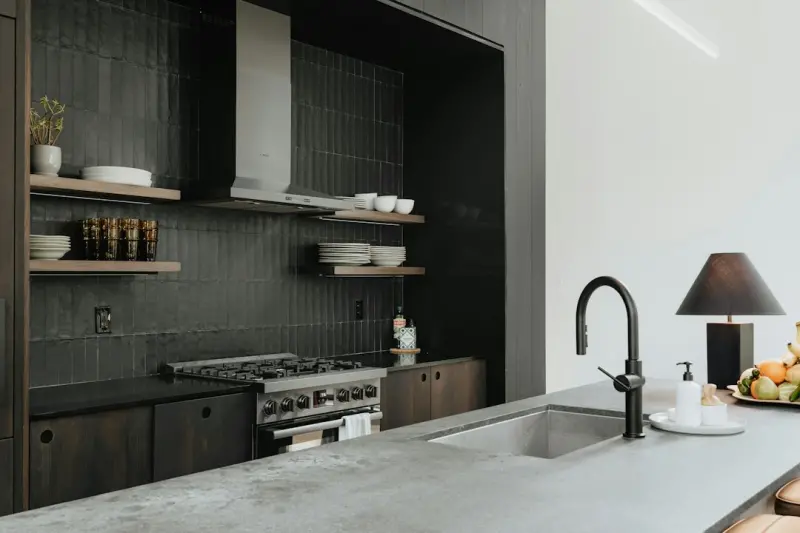
Why Countertops Are Becoming the Smartest Part of the Kitchen
When I first stepped into a showroom three years ago, my eye was drawn to a sleek slab of quartz that seemed to glow under the lights. It was beautiful, yes, but I was already asking the next question: what else can this surface do? Over the past months, I’ve watched a quiet revolution unfold—countertops are no longer passive workspaces. They are evolving into data‑rich, health‑centric, and environmentally responsible platforms that can anticipate the needs of both the chef and the homeowner.
The Data Layer Beneath the Stone
Imagine a countertop that knows when you’re preparing a hot pot, a delicate sauce, or a quick snack. Embedded temperature sensors can relay real‑time heat maps to your phone, warning you if a pot is about to boil over or if a cutting board is staying too warm for raw fish. Coupled with weight sensors, the surface can detect the presence of a bowl or pan, automatically adjusting the integrated induction zone to the optimal power level. This isn’t science fiction; it’s the next logical step after the smart paint that already monitors indoor air quality.
Data isn’t just for safety. By tracking usage patterns, a countertop can suggest workflow improvements. If you often reach across the sink to the stove, the system can recommend a layout tweak in the AI‑driven spatial planning model you’ve set up for your kitchen. Over time, these insights become a personal kitchen coach, nudging you toward ergonomics that reduce strain and speed up prep.
Health‑First Surfaces: Antimicrobial and Self‑Cleaning
Kitchen hygiene has always been a top priority, but traditional surfaces rely heavily on manual cleaning. New countertop technologies incorporate nanostructured antimicrobial coatings that actively destroy bacteria, viruses, and mold on contact. These coatings are engineered at the molecular level to create a surface that’s inhospitable to microbes yet safe for food preparation.
Beyond antimicrobial layers, some manufacturers are embedding photo‑catalytic particles that harness ambient light to break down organic residues. The result? A surface that continually self‑cleans while you cook. This aligns perfectly with the growing consumer demand for “clean‑tech” home products, where health is baked in rather than bolted on after the fact.
Sustainability at the Core
While quartz and granite still dominate the market, there’s a surge of interest in eco‑friendly countertop materials that reduce carbon footprints. Recycled glass countertops, for instance, repurpose post‑consumer bottles into a dense, visually striking slab. Bamboo composites blend fast‑growing, renewable fibers with bio‑resins, delivering a lightweight yet durable alternative.
One of the most exciting developments is the rise of bio‑composite countertops made from agricultural waste—think oat husks, corn stover, or even mycelium. These materials not only divert waste from landfills but also sequester carbon during their growth phase. When paired with a sustainable design mindset, they become a cornerstone of a truly green kitchen.
Design Flexibility Without Compromise
Historically, choosing a countertop meant committing to a single color and texture for years. Modern fabrication technologies, such as digital printing on composite panels, break that mold. Designers can now produce custom patterns that mimic marble veins, wood grain, or even abstract art, all while maintaining the structural integrity required for heavy use.
Moreover, modular countertop sections are gaining traction. These interlocking units make it simple to replace a damaged piece without discarding the entire slab. They also enable “future‑proofing”—as new technologies become available, you can swap in a new module (say, a built‑in charging pad or a wireless speaker) without a full remodel.
Integration with the Connected Kitchen Ecosystem
Smart countertops don’t exist in isolation. They speak the same language as your refrigerator, oven, and voice assistants. Through standardized IoT protocols, a countertop can trigger your oven to pre‑heat when you place a baking tray on a designated zone, or it can pull recipes from a cloud service and display step‑by‑step instructions on an embedded touch surface.
Voice control adds another layer of convenience. A simple “Hey kitchen, set the induction zone to medium‑high” can be recognized by the countertop’s embedded microphones, eliminating the need to fumble with knobs while your hands are messy. Integration also extends to energy management; the countertop can coordinate with your home’s smart meter to schedule high‑energy tasks during off‑peak hours, lowering utility costs.
The Business Case for Builders and Developers
From a commercial perspective, installing intelligent countertops adds tangible value to residential and hospitality projects. Tenants are increasingly willing to pay a premium for homes that promise convenience, health, and sustainability. For developers, the modular nature of these surfaces reduces long‑term maintenance costs and aligns with warranty requirements that focus on performance rather than just aesthetics.
Furthermore, data generated by these surfaces can be anonymized and aggregated to provide insights into how occupants use kitchen spaces. This feedback loop informs future design decisions, allowing developers to refine layouts that maximize efficiency and satisfaction—much like the way construction permits are being leveraged as project accelerators in the industry.
Challenges and the Path Forward
Despite the promise, there are hurdles to widespread adoption. The cost of embedding sensors and connectivity can be higher than traditional slabs. However, economies of scale are kicking in as more manufacturers adopt standardized sensor packages. Another concern is data privacy; homeowners must have control over what data is collected and how it’s used. Transparent privacy policies and on‑device processing can mitigate these worries.
Durability remains a core requirement. Countertops endure cuts, spills, heat, and heavy impacts. New materials are undergoing rigorous testing to ensure that the integration of electronics does not compromise structural resilience. Advances in encapsulation technologies—where sensors are sealed within a protective polymer matrix—are proving effective at protecting components without affecting the surface’s look and feel.
Looking Ahead: The Kitchen of Tomorrow
In the next decade, I envision countertops that are not just smart but also self‑learning. Leveraging machine learning, they will adapt to individual cooking habits, predict ingredient needs, and even suggest meal plans based on nutritional goals. Imagine a countertop that recognizes you’re low on basil, orders a fresh bunch from a local supplier, and adjusts the cooking temperature for a perfect pesto sauce—all before you finish chopping the garlic.
Such a future hinges on collaboration across disciplines—materials science, software engineering, and culinary arts. The convergence of these fields is already evident, and as we continue to push the boundaries, countertops will become the central hub of a truly intelligent home.
Takeaway: Your Countertop Can Be More Than a Surface
Whether you’re a homeowner seeking a healthier, more efficient cooking experience, or a developer aiming to differentiate your projects, the new generation of countertops offers a compelling blend of technology, sustainability, and design flexibility. By embracing these innovations, we can transform the kitchen from a static work area into a dynamic, responsive partner in daily life.

Lifan Chen is a freelancer based in Toronto specializing in marketing. With expertise in crafting effective marketing strategies and campaigns, Lifan helps businesses grow their brand presence and reach target audiences. As a Toronto-based freelancer, Lifan combines local market insights with creative marketing skills to deliver tailored solutions for clients.
Related Posts

The Triple‑S Guide to Countertop Design: Sensory, Sustainable, and Spatial Excellence
Discover how the Triple‑S Framework—Sensory, Sustainable, and Spatial—redefines countertop cho... Read More
Countertops Reimagined: From Passive Slabs to Smart, Sustainable Kitchen Hubs
Modern countertops are evolving from static work surfaces into dynamic, health‑centric, and energy... Read More
Why Your Countertop Edge Matters More Than You Think
Explore the hidden benefits of countertop edge designs, from ergonomic comfort and hidden storage to... Read More
Top Posts

Breathe New Life into Old Furniture: The Sustainable Approach to Restoration
Breathe new life into old furniture with sustainable restoration practices. Learn how to reduce waste, conserve resources, and preserve unique pieces....Read More

Electrify Your Home: Sustainable Upgrades That Cut Bills and Carbon
Explore the latest sustainable electrical upgrades—from smart lighting to renewable integration— that lower costs, boost safety, and future‑proof your hom...Read More

The Benefits of Sustainable Landscaping: A Path to Environmental Stewardship
Sustainable landscaping is more than just a trend; it's a critical approach to maintaining a healthy and thriving outdoor space. Learn how to create an eco-frie...Read More

Securing Your Sanctuary: How Home Alarm Systems Fit into Sustainable Living
Explore the intersection of home alarm systems and sustainable living. Learn how modern security solutions can enhance home safety while promoting eco-friendly ...Read More
0 Comments
Post Comment
You will need to Login or Register to comment on this post!