
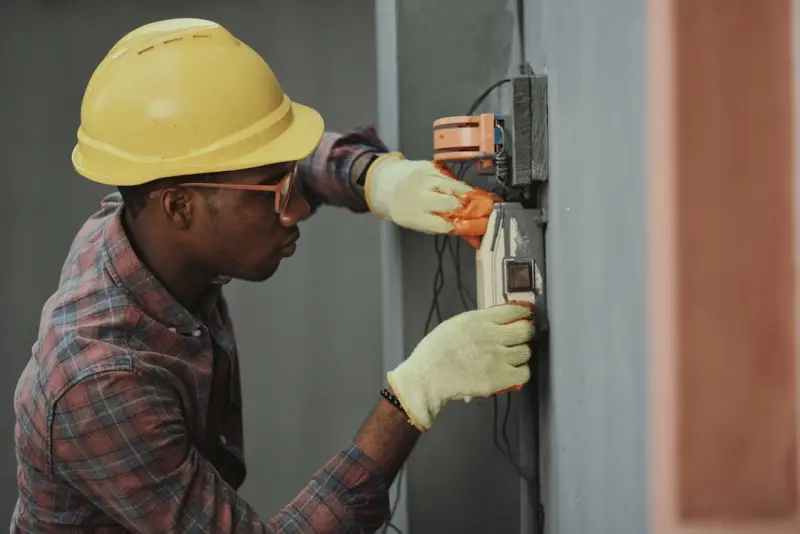
When I first walked the floor of a legacy manufacturing plant, the humming of massive transformers and the steady click of relay panels felt like a living organism—steady, predictable, but also stubbornly opaque. Over the past decade, the electrical world has been quietly undergoing a transformation that rivals the shift from analog to digital in computing. The catalyst? Modular Electrical Distribution gave us flexibility, and real‑time monitoring tools (Beyond the Meter) handed us visibility. What we’re now seeing is the convergence of those capabilities into a single, powerful concept: the digital twin for electrical infrastructure.
What Is a Digital Twin, Really?
In simple terms, a digital twin is a dynamic, virtual replica of a physical asset, system, or process. Think of it as a high‑fidelity simulation that updates in real time, reflecting the exact state of its physical counterpart. In the realm of electrical engineering, that means a living model of your switchgear, busbars, cable routes, and protective devices that can be interrogated, stress‑tested, and optimized without ever touching the hardware.
Why does this matter? Because electrical systems have historically been the “black box” of building operations. You design, you install, you maintain, and you hope the next load surge doesn’t trip a breaker you can’t locate in time. Digital twins flip that script: they turn the black box into a transparent sandbox where you can predict failures, validate upgrades, and even train new technicians—all in a risk‑free environment.
The Three Pillars That Make Digital Twins Viable
- Data Fidelity – Sensors, IoT gateways, and advanced metering infrastructure (AMI) feed a constant stream of voltage, current, temperature, and harmonic data into the twin. The richer the data, the more accurate the model.
- Computational Power – Cloud‑native platforms and edge computing allow massive simulations to run in near‑real time. This is where AI and machine learning enter the picture, spotting patterns that even seasoned engineers might miss.
- Integration Frameworks – Open APIs and standards (like IEC 61850 for substation automation) make it possible to stitch the twin into existing Building Management Systems (BMS), Enterprise Asset Management (EAM) tools, and even BIM models.
From Reactive to Proactive: The Business Case
Historically, electrical maintenance has been reactive: a fault occurs, an electrician is dispatched, the system is brought back online, and the cycle repeats. Digital twins usher in a proactive paradigm.
Imagine a scenario where your twin predicts a hot‑spot developing on a feeder due to an unexpected load increase from a new piece of equipment. The model flags the issue, suggests a load‑balancing solution, and schedules a maintenance window before any real‑world overheating occurs. The result? Reduced downtime, lower maintenance costs, and an extended equipment lifespan.
In a recent study of Fortune‑500 facilities, companies that deployed digital twins for electrical assets reported a 30% reduction in unplanned outages and a 20% decrease in energy waste within the first year. Those numbers translate directly into bottom‑line savings and, more importantly, a stronger reputation for reliability among tenants and partners.
Key Use Cases You Can Deploy Today
- Load Forecasting & Capacity Planning – Simulate future load scenarios—whether you’re adding a data center, expanding office space, or integrating renewable generation. The twin tells you whether your existing panels can handle the load or if you need to upgrade.
- Fault Isolation & Root Cause Analysis – When a breaker trips, the twin can trace the event through the network, pinpointing the exact cause and the most efficient corrective action.
- Energy Efficiency Optimization – By modeling voltage profiles and power factor across the network, the twin identifies opportunities for capacitor bank placement or transformer re‑rating, shaving kilowatts off the bill.
- Regulatory Compliance & Reporting – Generate audit‑ready reports on system health, safety standards, and carbon emissions with a click—no manual data gathering required.
- Training & Skill Development – New technicians can practice troubleshooting on a virtual panel that mirrors the real world, reducing on‑site mistakes and speeding up onboarding.
Integrating Digital Twins with Existing Strategies
Many facilities have already embraced modular distribution and real‑time monitoring. The digital twin is the next logical layer, weaving those threads into a cohesive narrative. Here’s how you can layer it in without a massive overhaul:
- Start with a Pilot – Choose a critical sub‑system—perhaps a high‑value transformer bank or a data‑center UPS cluster. Map its physical components into a 3‑D model and connect existing sensors.
- Leverage Existing Data Platforms – If you’re already using a cloud‑based energy analytics platform, plug the twin’s API into that ecosystem. This avoids data silos and maximizes ROI on existing investments.
- Adopt Open Standards – Use IEC 61850, OPC-UA, or MQTT for communication. This ensures future scalability and eases integration with new vendors.
- Iterate and Expand – As confidence grows, expand the twin to cover entire campuses, multi‑building campuses, or even city‑wide microgrids.
Security Concerns: Safeguarding Your Virtual Twin
With great connectivity comes great responsibility. A digital twin, by its nature, aggregates sensitive operational data—voltage levels, load patterns, even employee access logs. Cybersecurity must be baked in from day one.
Key steps include:
- Implementing zero‑trust network architecture.
- Encrypting data both at rest and in transit.
- Regularly patching the twin’s underlying software stack.
- Conducting penetration tests focused on the twin’s API endpoints.
By treating the twin as an extension of your critical control system, you can protect it with the same rigor you apply to physical breakers and relays.
Future Horizons: AI‑Driven Self‑Optimizing Grids
Today’s twin is a mirror; tomorrow’s twin could become a mind. By feeding the twin’s simulation data into machine‑learning models, you can create a self‑optimizing electrical network that automatically reconfigures itself in response to load fluctuations, equipment degradation, or even external events like weather spikes.
Picture a scenario where a sudden heatwave drives HVAC loads up by 15%. The AI‑powered twin recalculates optimal tap settings on transformers, temporarily shifts non‑essential loads to backup generators, and informs facility managers of the adjustments—all before the system feels the strain.
Real‑World Success Story: A Retail Campus Turns the Tide
One of our clients, a national retail chain with over 300 locations, faced chronic transformer failures in high‑traffic stores. By deploying digital twins for each store’s electrical distribution, they achieved:
- Predictive alerts for transformer temperature trends, reducing emergency calls by 70%.
- Optimized load balancing that cut peak demand charges by 12%.
- Streamlined compliance reporting, slashing audit preparation time from weeks to hours.
The project began with a modest pilot in ten stores, leveraged existing sensor data, and expanded to the entire portfolio within eighteen months. The ROI was realized in the first fiscal year after full rollout.
Getting Started: A Checklist for Electrical Leaders
To demystify the journey, here’s a concise checklist you can use to gauge readiness and plan deployment:
- Assess Sensor Coverage – Do you have voltage, current, temperature, and harmonic sensors on critical assets? If not, prioritize installations.
- Map Existing Data Flows – Document where data lives today—SCADA, BMS, EMS—and identify integration points.
- Select a Twin Platform – Look for solutions that support open APIs, edge compute, and AI modules.
- Define Success Metrics – Establish KPIs such as Mean Time Between Failures (MTBF), energy savings, and compliance turnaround.
- Pilot and Iterate – Choose a high‑impact asset, run the twin for three months, refine models, then scale.
Remember, the digital twin is not a one‑size‑fits‑all product; it’s a framework you tailor to your specific electrical topology and business objectives.
Conclusion: The Twin as a Strategic Asset
Electrical systems have always been the backbone of any modern facility, yet they’ve remained stubbornly behind the digital curve. By embracing digital twins, you transform that backbone into a living, breathing intelligence hub—one that anticipates problems, optimizes performance, and aligns with broader sustainability goals.
If you’ve already invested in modular distribution, real‑time monitoring, and smart controls, you’re sitting on a goldmine of data just waiting to be amplified. The next step is to give that data a purpose, a personality, and a voice—a digital twin that not only reflects reality but helps shape it.
In my experience, the facilities that adopt this technology first become the benchmark for reliability, efficiency, and agility in the industry. The question isn’t “if” you’ll implement a digital twin, but “when” and “how fast” you’ll do it.

William Roy is a freelance writer originally from Montreal who moved to Ottawa with his wife of 50 years to be closer to their grandkids. Alongside his writing, William has a passion for fishing.
Related Posts
Protect Your Home: The Ultimate Guide to Whole‑Home Surge Protection
Learn how a whole‑home surge protector shields every device, saves money, and fits into smart‑ho... Read More

Digital Twins Transform Building Electrical Systems
Digital twins turn static electrical schematics into live, data‑rich replicas that predict failure... Read More
Predictive Electrical Maintenance: How AI Is Quietly Transforming Facility Operations
Learn how AI-powered predictive electrical maintenance turns sensor data into actionable insights, r... Read More
Top Posts
AI‑Powered Command Centers: The New Backbone of General Contracting
General contractors can overcome labor gaps and schedule overruns by adopting AI‑powered command centers that provide real‑time tracking, predictive resourc...Read More
From Reactive Repairs to Proactive Peace: Crafting a Property Maintenance Playbook
Discover a step‑by‑step approach to building a property maintenance playbook that shifts focus from emergency fixes to strategic, data‑driven upkeep, impr...Read More
Waterproofing: The Quiet Engine of High‑Performance Buildings
A deep dive into why proactive, tech‑enabled waterproofing is a hidden profit driver, covering ROI, sustainable membranes, sensor data integration, and a prac...Read More

Seeing Beyond the Surface: A Home Inspector’s Guide to Insightful, Human‑Centric Reports
A home inspection isn’t just a checklist; it’s a narrative. Rose DesRochers shares how blending technology, clear communication, and a human‑focused roadm...Read More
0 Comments
Post Comment
You will need to Login or Register to comment on this post!