
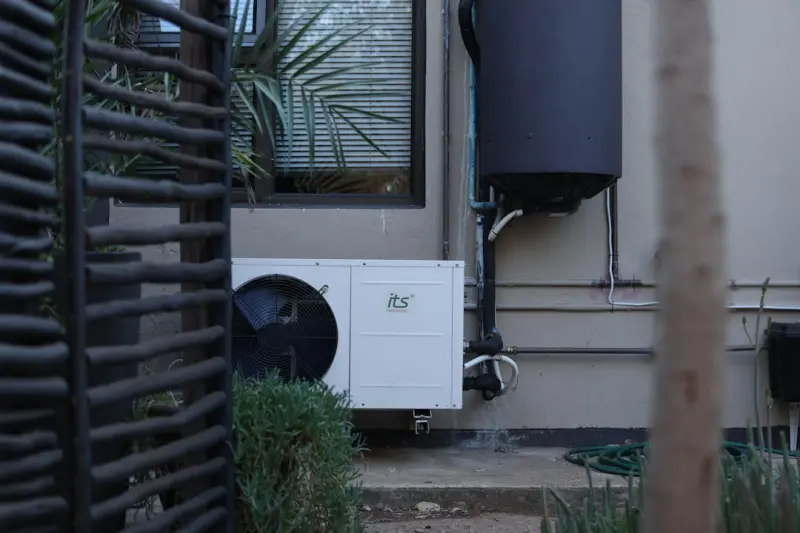
Why Edge AI Is the Game‑Changer Your HVAC System Has Been Waiting For
When I first walked onto a construction site fresh out of college, the HVAC units looked the same as they did a decade earlier: a steel box, a set of coils, and a thermostat that felt more like a relic from the analog era. Fast forward to today, and the same units are suddenly talking to our phones, learning our schedules, and even predicting when a filter will need swapping before the air gets stale. The catalyst? Variable Refrigerant Flow opened the door, but the real revolution is happening at the edge—right where the data is generated, not in a distant cloud.
Edge AI vs. Cloud AI: The Subtle but Powerful Difference
Most people think of AI as something that lives in massive data centers, crunching petabytes of information and spitting out recommendations. That model works well for large‑scale analytics, but it introduces latency, bandwidth costs, and privacy concerns for a system that needs to react in seconds. Edge AI brings the brain to the body:
- Speed: Decisions are made in milliseconds, keeping your home at the perfect temperature without the lag of a round‑trip to the cloud.
- Privacy: Sensitive usage patterns stay on‑site, reducing the risk of data leaks.
- Reliability: Even if your internet drops, the HVAC unit continues to operate intelligently.
In practical terms, an edge‑enabled thermostat learns your preferred temperature zones, detects occupancy through built‑in PIR sensors, and fine‑tunes compressor speed—all without shouting for permission from a remote server.
From Reactive to Proactive: Predictive Maintenance Gets a Boost
For years, “maintenance” meant a calendar reminder or a sigh when the homeowner noticed a strange hum. Edge AI flips that script. By continuously monitoring motor vibration, coil temperature differentials, and even the acoustic signature of the blower, the system builds a digital twin of the equipment. When the twin detects a deviation beyond the normal envelope, it triggers a maintenance alert.
Imagine a scenario where a compressor’s bearing is beginning to wear. Traditional systems would only notice a drop in efficiency after weeks of increased energy bills. An edge AI model, however, identifies the subtle change in vibration frequency and sends a “service soon” notification to your phone, complete with a suggested service window and a list of local certified technicians. This is not just convenience; it’s a measurable reduction in downtime and repair costs.
Energy Savings That Add Up—And How to Quantify Them
Energy efficiency has always been a buzzword in HVAC, but quantifying the savings can feel like chasing a mirage. Edge AI gives us the metrics we need:
- Dynamic Setpoint Adjustment: Instead of a static 72°F, the system learns when rooms are occupied and modulates the setpoint in real time, shaving off up to 15% of heating/cooling load.
- Smart Defrost Cycles: Traditional heat pumps run a fixed defrost schedule, often wasting energy. Edge AI detects the exact moment frost impacts airflow and initiates a targeted defrost, reducing unnecessary cycles.
- Load Forecasting: By integrating weather forecasts and occupancy trends, the system pre‑cools or pre‑heats during off‑peak hours, leveraging lower electricity rates.
When you stack these optimizations, the cumulative savings can be significant—often enough to cover the incremental cost of the edge hardware within a few years.
Seamless Integration with Existing Smart Home Ecosystems
One of the biggest hurdles for any new technology is compatibility. Edge AI doesn’t try to reinvent the wheel; it plugs into the same Zigbee, Thread, or Matter protocols that already power your lights, locks, and voice assistants. This means you can ask your favorite voice assistant to “set the living room to eco mode,” and the edge processor will interpret that command, adjusting fan speeds and coil operation in a way that balances comfort with efficiency.
Furthermore, edge devices can act as local hubs, aggregating data from multiple sensors—temperature, humidity, CO₂, and even indoor air quality monitors—creating a holistic view of indoor environmental health. The result is a truly integrated climate control strategy that goes beyond simple heating and cooling.
Human Insight Still Matters: Marrying Data with Experience
Automation isn’t a silver bullet. The most successful deployments combine edge AI’s raw analytical power with the seasoned intuition of HVAC professionals. This synergy is highlighted in the concept of human‑centered energy insights, where technicians use AI‑generated alerts as a starting point, then apply their on‑site expertise to confirm diagnoses and prioritize interventions.
In practice, a field engineer receives an alert that a coil temperature variance exceeds the normal range. Instead of blindly replacing parts, they inspect the unit, discover a partially clogged condensate drain, and fix the root cause. The AI learns from this interaction, refining its future alerts. It’s a feedback loop that elevates both technology and trade skill.
Case Study: A Multi‑Family Building That Went From “Always Hot” to “Always Comfortable”
Last winter, a 30‑unit apartment complex in the Pacific Northwest partnered with a forward‑thinking property manager to pilot edge AI on their existing rooftop units. Here’s what happened:
- Baseline: Residents complained of temperature swings, and utility bills were 12% higher than comparable properties.
- Implementation: Edge modules were installed on each rooftop unit, linked to room‑level thermostats, and calibrated over a two‑week learning period.
- Results (6 months):
- Temperature variance dropped from ±4°F to ±1.5°F.
- Energy consumption fell by 18%.
- Maintenance calls decreased by 35% thanks to early fault detection.
Beyond the numbers, resident satisfaction scores rose dramatically. The property manager reported that the “smart” reputation helped attract higher‑quality tenants, creating a virtuous cycle of occupancy and revenue.
Designing for the Edge: What Builders and Retro‑Fitters Need to Know
If you’re a builder or a retro‑fit specialist, consider these three design pillars when integrating edge AI into HVAC:
- Modular Hardware Architecture: Choose edge modules that can be added or swapped without major system overhauls. This future‑proofs the installation against rapid sensor advancements.
- Robust Power Management: Edge devices should have backup power or low‑power sleep modes to ensure they stay online during short outages—a critical factor for continuous monitoring.
- Secure OTA (Over‑The‑Air) Updates: Security is non‑negotiable. Ensure the firmware can be patched remotely without compromising the system’s integrity.
By embedding these principles early, you’ll avoid costly re‑engineering down the line and ensure the system can evolve alongside emerging AI algorithms.
The Road Ahead: From Edge to Edge‑to‑Cloud Collaboration
While edge AI shines in real‑time decision making, the cloud still holds value for long‑term analytics, fleet‑wide performance benchmarking, and model training. The future isn’t “edge vs. cloud” but “edge‑to‑cloud collaboration.” Edge devices will handle immediate actions, while anonymized aggregates stream to the cloud for trend analysis, predictive modeling, and firmware improvements.
In this hybrid model, manufacturers can roll out a new heat‑pump efficiency algorithm to millions of units with a single OTA push, while each individual home continues to enjoy lightning‑fast, locally processed comfort adjustments.
Takeaway: Embrace the Edge, Keep the Human Touch
Edge AI is redefining residential HVAC performance in three tangible ways: speed, energy savings, and predictive maintenance. Yet the technology’s true power emerges when it works hand‑in‑hand with skilled technicians and informed homeowners. By marrying data‑driven insights with human experience, we’re not just making homes smarter—we’re making them healthier, more comfortable, and more cost‑effective.
If you’re a building manager, contractor, or homeowner curious about where to start, ask yourself:
- Do I have legacy HVAC hardware that can accept edge modules?
- Am I prepared to integrate the new data streams into my existing building management system?
- Do I have a partner who values both AI insight and on‑site expertise?
Answer “yes” to any of those, and you’re already on the path to a future where your heating and air conditioning system isn’t just a mechanical necessity—it’s an intelligent, adaptive ally.

William Roy is a freelance writer originally from Montreal who moved to Ottawa with his wife of 50 years to be closer to their grandkids. Alongside his writing, William has a passion for fishing.
Related Posts

Smart Multi‑Zone HVAC: Tailoring Comfort, Cutting Costs, and Future‑Proofing Your Home
Learn to design a smart, multi‑zone HVAC system that balances energy efficiency, indoor health, an... Read More
Why Variable Refrigerant Flow Is the Game‑Changer for Modern HVAC
Variable Refrigerant Flow (VRF) systems provide precise temperature control, heat‑recovery capabil... Read More
Staying Cozy: How Modern Insulation Materials Can Transform Your Home's Comfort
Insulation plays a critical role in keeping your home cozy and energy bills in check. Learn about th... Read More
Top Posts

Warmth Beneath the Past: Integrating Radiant Floor Heating into Historic Homes
A guide to seamlessly installing radiant floor heating in historic properties, balancing preservation with modern comfort, energy savings, and smart controls....Read More

Beyond the Board: Mastering Sustainable Drywall Techniques
Learn how to choose, install, and maintain sustainable drywall, integrating smart wiring and eco‑friendly finishes for healthier, long‑lasting interiors....Read More

Designing for Neurodiversity: Architectural Strategies That Support Different Minds
A fresh look at architecture that honors neurodiversity, offering practical design tactics to make spaces comfortable, adaptable, and inclusive for every mind....Read More

The Strategic Edge of Floor Heating in Modern Workspaces
Floor heating isn’t just a luxury—it’s a strategic asset that improves energy efficiency, employee comfort, and overall ROI. Learn how to integrate smart ...Read More
0 Comments
Post Comment
You will need to Login or Register to comment on this post!