
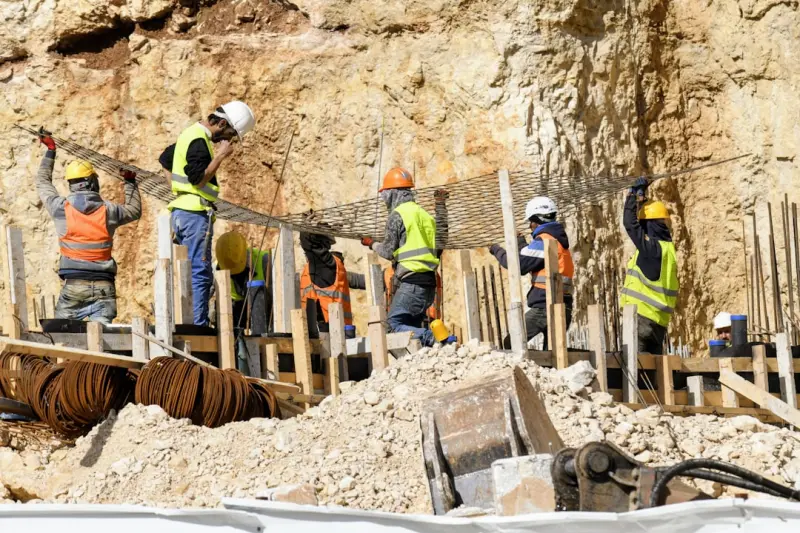
When I first stepped onto a construction site and saw a crack spider‑webbing across a concrete slab, my instinct was to call the crew in for an emergency fix. Years later, after countless late‑night calls, invoices, and temporary patches, I realized that the real problem wasn’t the crack itself—it was the reactive mindset that treats foundations like an afterthought. Today, I’m betting my next big project on a different philosophy: treating foundation health as a subscription service.
Why the Traditional Model Is Broken
Most owners still approach foundation repair the same way they would a leaky faucet—wait for the disaster, then scramble for a contractor. This “fix‑it‑when‑it‑breaks” approach has three glaring flaws:
- Cost volatility. Emergency repairs often come with premium labor rates, expedited material shipping, and the dreaded “unforeseen damage” line item.
- Operational disruption. A sudden foundation failure can halt production lines, force tenants out, or even trigger insurance battles that stall cash flow.
- Limited data. Without ongoing monitoring, owners are blind to the slow, insidious movements that precede a catastrophic failure.
In short, the old model turns a structural issue into a financial gamble.
Enter Foundation Care‑as‑a‑Service (FCaaS)
Imagine paying a fixed monthly fee for a suite of services that includes regular inspections, real‑time sensor data, minor adjustments, and, when needed, a full repair— all scheduled during low‑impact windows. That’s the promise of FCaaS, a model that mirrors the success of Subscription Plumbing in the building‑services world.
The core components are simple:
- Baseline assessment. A detailed, data‑rich survey of the foundation using laser scanning, ground‑penetrating radar, and IoT vibration sensors.
- Continuous monitoring. Sensors transmit micro‑movement, moisture, and temperature data to a cloud platform that applies machine‑learning algorithms to detect anomalies.
- Scheduled maintenance. Minor corrective actions—such as soil stabilization, waterproofing re‑coats, or tension‑rod adjustments—are performed on a predictable timetable.
- Full‑scale repair on demand. If the analytics flag a structural threshold breach, a pre‑approved repair plan is executed, funded by the subscription pool.
Benefits That Speak to Every Stakeholder
Cost Predictability
Instead of a $30,000 emergency invoice that pops up out of nowhere, owners budget a flat fee—often 30‑40% lower than the average emergency cost over a five‑year horizon. The subscription model spreads out capital expenditure, turning a capital‑intensive project into an operating expense that can be easily forecasted.
Proactive Maintenance Reduces Downtime
Because the system alerts you to movement trends before they become structural failures, maintenance crews can intervene during scheduled shutdowns or off‑peak hours. The result? Minimal disruption to tenants, production lines, or retail foot traffic.
Data‑Driven Decision Making
Just as Data‑Driven Commercial Renovations have turned guesswork into ROI‑backed strategy, FCaaS turns foundation health into a living dashboard. Owners can track KPIs such as “average settlement per month,” “soil moisture variance,” and “repair lead time.” This data can be leveraged for insurance discounts, ESG reporting, and even resale valuation.
Sustainability and Waste Reduction
Minor adjustments performed regularly consume far less material than a full slab replacement. By avoiding massive concrete pours, FCaaS reduces embodied carbon, aligns with green building certifications, and satisfies increasingly stringent municipal sustainability mandates.
Improved Asset Value
Properties with documented, continuously monitored foundations command a premium in the market. Buyers see a transparent maintenance record, reducing due‑diligence friction and enabling smoother financing.
Technology Enablers Making FCaaS Viable
Two breakthroughs have converged to make subscription‑style foundation care a realistic offering:
IoT Sensor Networks
Low‑power, battery‑free MEMS accelerometers can be embedded in concrete or attached to foundation walls. These devices capture millimeter‑scale movements and relay them via LoRaWAN or 5G to a central analytics hub.
AI‑Powered Predictive Analytics
Machine‑learning models trained on thousands of historical foundation data points can forecast settlement rates, predict soil liquefaction zones, and recommend the optimal timing for interventions. The models continuously self‑learn, improving accuracy with each data feed.
Drones and Automated Scanning
Periodic aerial photogrammetry, paired with terrestrial LiDAR, creates a high‑resolution 3D model of the building footprint. The model is automatically compared against the baseline to highlight new deformation patterns.
Case Study: A Mid‑Size Manufacturing Plant Turns the Corner
Acme Manufacturing, a 250,000‑sq‑ft facility located on a reclaimed industrial site, faced recurring foundation settlement that threatened production uptime. Their traditional approach cost them $75,000 in emergency repairs over three years and resulted in two weeks of unplanned shutdown.
Acme signed up for a three‑year FCaaS contract:
- Year 1: Baseline survey revealed uneven compaction in the southern quadrant. Sensors were installed, and soil injection was performed during a scheduled weekend.
- Year 2: Data indicated a gradual increase in moisture content during rainy seasons. The FCaaS provider deployed a supplemental drainage system, funded within the subscription budget.
- Year 3: Predictive analytics flagged a potential shear‑wall displacement. A pre‑approved repair plan—installing tension‑cable anchors—was executed in a single night, with no production loss.
Financial outcomes:
- Total spend: $45,000 (vs. $150,000 projected for traditional emergency repairs).
- Downtime: <1% of operational hours (vs. 5% under the old model).
- Carbon reduction: 2.3 t CO₂e saved by avoiding a full slab replacement.
Acme’s CFO now reports “foundation health” as a line item in the monthly operating dashboard, a level of visibility that was impossible under the old reactive model.
How to Get Started with FCaaS
If the idea of a subscription for your foundation resonates, follow these practical steps:
- Audit your current foundation health. Engage a qualified structural engineer to perform a comprehensive baseline assessment.
- Identify a service partner. Look for providers that combine sensor hardware, data analytics, and a clear service‑level agreement (SLA) for repairs.
- Define KPI thresholds. Work with the provider to set alert levels that trigger maintenance actions—e.g., settlement >2 mm/month.
- Integrate with existing BMS. Ensure the foundation data streams into your building management system for unified monitoring.
- Pilot the model. Start with a single wing or building, evaluate cost savings and data quality, then scale across the portfolio.
Frequently Asked Questions
- Is FCaaS only for new buildings? No. Retrofitting sensors into existing foundations is often as simple as surface‑mounted accelerometers or shallow‑drill probes.
- What happens if the subscription ends? All sensor hardware and data ownership transfer to the building owner. You can renew the service or switch providers.
- Can insurance premiums be reduced? Many carriers offer discounts for documented, continuously monitored foundations, reflecting the reduced risk.
- How does FCaaS address extreme weather events? The sensor network captures rapid moisture spikes and settlement acceleration, prompting pre‑emptive drainage or shoring before a storm causes irreversible damage.
Looking Ahead: The Future of Structural Health
The subscription model is just the first step. As cities adopt smart‑infrastructure frameworks, foundations will become part of a larger ecosystem that includes energy grids, water management, and even pedestrian traffic analytics. Imagine a city‑wide dashboard where every building’s structural health contributes to a collective resilience score—helping municipalities prioritize public‑safety investments.
In that future, foundation repair will no longer be a “when it breaks” story. It will be a continuous, data‑rich narrative where owners, insurers, and regulators speak the same language.
Take the Leap
Foundations are the literal bedrock of every building’s value proposition. Treating them as a predictable, service‑driven asset not only safeguards your capital but also aligns you with the broader shift toward outcome‑based building management. The subscription model is still nascent, but the technology, economics, and environmental incentives are all pointing in the same direction.
Ready to transform your foundation from a hidden liability into a transparent, revenue‑protecting asset? Start the conversation with a trusted provider, run a pilot, and let the data tell the story.

Paul Gray is a dynamic blogger based in Brampton, where he shares his life with his amazing wife, Sarah. Known for his engaging writing style and relatable insights, Paul has carved out a niche in the blogging world that resonates with readers from all walks of life. When he's not crafting captivating posts, you can find him savoring a cold beer or indulging in the latest blockbuster movie. With a friendly demeanor and a passion for storytelling, Paul brings a unique perspective to his work, making him not just a blogger, but a voice for those who appreciate the simple joys of life.
Related Posts

Foundation Health: Turning Hidden Risks Into Strategic Assets
A deep dive into proactive foundation repair, from early warning signs to data‑driven monitoring, ... Read More
The Intersection of Foundation Repair and Sustainable Home Design
Learn how foundation repair and sustainable home design come together to create a more sustainable a... Read More
Strategic Foundation Repair for Long-Term Asset Value
A data‑driven, sustainable approach to foundation repair transforms a hidden liability into a stra... Read More
Top Posts

AI‑Powered Personalization: The Next Wave in Interior Design
AI is reshaping interior design by turning client preferences into actionable data, enabling rapid, immersive visualizations and sustainable material choices, a...Read More
Resilient Roofing: Smart Materials, Sensors, and Sustainable Designs
Explore cutting‑edge roofing solutions—from impact‑resistant shingles to smart sensors and green roofs—that boost durability, lower energy costs, and fu...Read More
The Foundation of Sustainable Construction: Why Energy Inspections Matter
Energy inspections play a vital role in sustainable construction, identifying areas of energy inefficiency and optimizing energy consumption. Learn why they're ...Read More
Predictive Property Maintenance: Turning Data Into Dollars
Predictive maintenance transforms property upkeep from a cost center into a profit driver. Learn practical steps, real‑world case studies, and future trends t...Read More
0 Comments
Post Comment
You will need to Login or Register to comment on this post!