
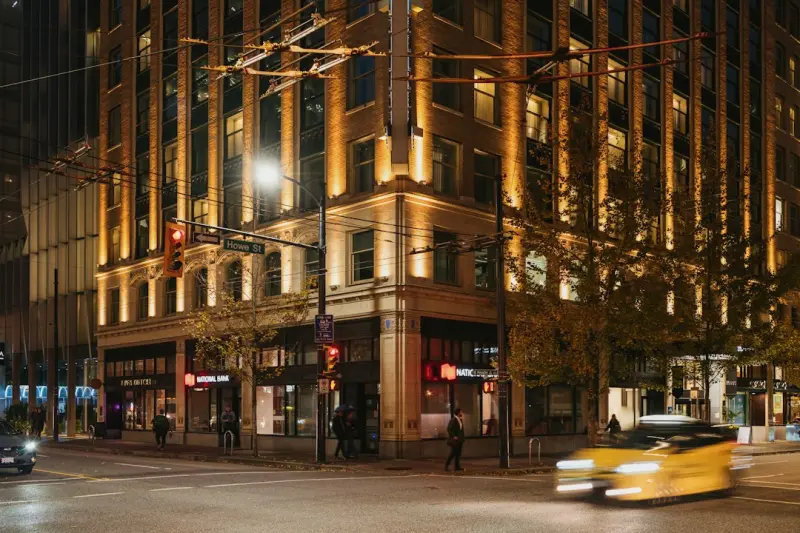
How Kinetic Awnings Are Redefining Commercial Facades
When I first stepped onto a downtown café with a living awning that folded, unfolded, and even changed color with the passing clouds, I knew I’d witnessed a subtle but powerful shift in the way we think about the exterior envelope of a building. Awnings have long been relegated to the background—functional, sometimes decorative, but rarely strategic. Today, they’re evolving into kinetic, data‑rich interfaces that do far more than keep rain off a patio. They’re becoming the first point of interaction between a brand and its audience, a climate‑control system that talks to building management software, and a canvas for real‑time storytelling.
In this post I’ll unpack three intertwined dimensions of this evolution:
- Adaptive shading that works with, not against, climate data.
- Brand‑centric design that turns an awning into a moving billboard.
- IoT integration that turns shade into actionable insight.
All of this is happening under the broader umbrella of “smart architecture,” but the awning is the unsung hero that can deliver immediate ROI, enhance employee wellbeing, and reinforce brand identity—all without the massive capital outlay of a full façade retrofit.
The Climate‑Smart Angle: From Passive Shade to Active Climate Management
Traditional awnings are static: you pick a fabric, a size, maybe a motorized tilt, and you’re done. The problem with that approach is that weather is dynamic. A static awning either blocks too much sun on a crisp morning (wasting daylight) or fails to provide enough shade on a scorching afternoon (raising cooling loads).
Enter kinetic awnings—systems that read temperature, solar irradiance, wind speed, and even occupancy levels to adjust their geometry in real time. Imagine a storefront awning that:
- Reveals more of the interior during a bright, cool morning, letting natural light boost employee mood and reduce artificial lighting.
- Gradually folds down as the sun climbs, curbing solar heat gain and shaving off precious BTUs from the HVAC system.
- Closes completely when a sudden thunderstorm rolls in, protecting outdoor seating and preventing water damage.
What makes this possible isn’t magic; it’s a blend of off‑the‑shelf sensors, cloud‑based algorithms, and motorized louver systems. The beauty is that the hardware can be retrofitted onto existing structures, meaning you don’t need to gut the building envelope to start seeing benefits.
For facilities managers who have been hunting for low‑cost, high‑impact sustainability levers, kinetic awnings are a sweet spot. They can be calibrated to align with a digital twin of the building, feeding shade performance data back into a simulation model. The result? A constantly updated heat‑gain map that informs HVAC setpoints, lighting schedules, and even demand‑response strategies.
Brand Storytelling on the Edge of the Roof
Let’s be honest: a well‑designed awning can be a brand’s first visual handshake. Think of the iconic striped awning of a classic ice‑cream parlor or the sleek, matte‑black canopy of a tech start‑up. The kinetic wave adds a new layer of narrative potential.
Consider three real‑world use cases:
- Seasonal campaigns: An awning that unfurls a subtle gradient from cool blues in winter to warm oranges in summer, echoing the brand’s seasonal product lines.
- Event alerts: During a product launch, the awning could flash a soft pulse synchronized with the interior lighting, creating a coordinated “wow” moment for pedestrians.
- Community engagement: Local artists could program the awning to display abstract patterns that change based on foot traffic data, turning the façade into a living art installation.
Because the awning is visible from both street level and the interior, it serves as a two‑way communication channel. Employees walking out the back door see the same dynamic expression that customers see on the sidewalk, reinforcing a unified brand story.
And here’s a strategic twist: you can embed QR codes or NFC tags within the awning’s fabric that activate when the awning is in a specific configuration. A coffee shop could offer a “sun‑shade discount” when the awning is fully deployed, driving foot traffic during hotter afternoons.
IoT and Data: Turning Shade into Insight
Every movement of a kinetic awning generates data. That data, when properly harnessed, can become a powerful performance indicator for facilities teams.
Key metrics include:
- Shade utilization rate: Percentage of time the awning is fully deployed versus partially or fully retracted.
- Energy offset: Estimated reduction in cooling load attributable to shade, calculated by correlating awning position with indoor temperature spikes.
- Occupancy correlation: How many patrons or employees are present when the awning is at a certain angle, informing future staffing or service decisions.
All of these data points can be visualized on a dashboard that sits alongside your building’s energy management platform. The deck article showed how outdoor spaces can become data assets; awnings are the next logical step.
One compelling pilot I consulted on involved a regional bank with a network of 20 branches. By installing kinetic awnings equipped with solar irradiance sensors, they were able to:
- Reduce HVAC electricity consumption by an average of 5% per branch during peak summer months.
- Increase outdoor seating revenue by 12% because patrons felt more comfortable under the dynamically adjusting shade.
- Collect anonymized foot‑traffic data that fed into the corporate marketing team’s “heat map” of community engagement.
The ROI was realized in under 18 months—a timeline that would make any CFO smile.
Design Considerations: Balancing Form, Function, and Future‑Proofing
Before you order a kinetic awning off the shelf, ask yourself three design questions:
- What is the primary performance goal? If you’re chasing energy savings, prioritize high‑precision sensors and integration with your BMS. If branding is the goal, focus on fabric choice, color‑changing LED strips, and programmable motion patterns.
- How will the awning interact with existing façade elements? You don’t want a kinetic system that clashes with a historic brick wall or a glass curtain wall. A thoughtful design will treat the awning as an extension of the building’s language.
- What’s the maintenance plan? Motors and sensors need periodic checks. Choose a vendor that offers remote diagnostics and a clear service SLA to keep the system humming.
In my experience, the most successful deployments treat the awning as a system component, not an afterthought. That means involving architects, brand managers, and facilities teams from day one.
Regulatory and Safety Aspects You Can’t Ignore
Even the most cutting‑edge awning must comply with local building codes, wind load requirements, and accessibility standards. In many jurisdictions, kinetic awnings are classified as “mechanical systems” and thus require a permit. It’s wise to work with a contractor who is familiar with these nuances to avoid costly retrofits later.
Safety sensors are a must. If wind speed exceeds a pre‑set threshold, the awning should automatically retract to prevent damage. Likewise, obstacle detection (think of a cyclist or a delivery cart) can trigger an emergency stop, ensuring that the moving parts never become a hazard.
Future Trends: Beyond Shade to Energy Generation
While the current generation of kinetic awnings focuses on shading and data, the next wave promises to blend in photovoltaic fabric. Imagine an awning that not only reduces cooling loads but also feeds solar electricity back into the building’s grid. Early prototypes are already showing 10–15% efficiency on flexible solar textiles, and when combined with motion‑control, you could have a façade that optimizes its own energy harvest in real time.
Another frontier is augmented reality (AR). By pairing an AR app with awning motion data, users could point their phones at a building and see a live overlay of energy savings, brand messages, or even weather forecasts—turning a simple canopy into an interactive digital experience.
Getting Started: A Practical Checklist
If you’re intrigued and ready to explore kinetic awnings for your own commercial space, here’s a quick starter checklist:
- Audit your current façade: Identify mounting points, load capacities, and aesthetic constraints.
- Define KPIs: Energy savings, foot traffic, brand engagement, or a combination.
- Select a vendor: Look for proven installations, robust warranty, and a clear API for data integration.
- Pilot a single location: Gather baseline data, test algorithms, and refine motion patterns.
- Scale thoughtfully: Use insights from the pilot to adjust budgets, design specs, and integration points for a broader rollout.
Remember, the goal isn’t just to add a “cool” tech feature—it’s to embed shade, data, and branding into a single, harmonious system that works for the building, the people inside, and the people passing by.
Conclusion: Awnings as the New Front‑Line of Smart Buildings
We’ve come a long way from the simple canvas canopies that kept rain off market stalls. Today’s kinetic awnings are at the intersection of climate responsiveness, brand expression, and data‑driven operations. By treating the awning as an active, connected element of the building envelope, you unlock a trifecta of benefits: lower energy bills, enhanced customer experience, and a fresh platform for storytelling.
As we continue to blur the lines between architecture, technology, and marketing, I suspect the next headline you’ll see isn’t about “smart doors” or “digital twins” but about “the awning that knows when to shade you and when to shine a spotlight on your brand.” The future is already unfolding—literally—above our heads.

Kelly Reynolds is a dynamic freelance writer hailing from the picturesque landscapes of Alberta. A master of the written word, she juggles her passion for storytelling with the exhilarating chaos of being a mother to five spirited children. With an impressive portfolio that spans various genres, Kelly captivates readers through her engaging blog posts and thought-provoking articles.
Related Posts

Awning Strategies for Urban Climate Resilience and Brand Growth
Awnings are more than shade—they’re a low‑cost, high‑impact tool for cooling urban spaces, r... Read More

How Awnings Shape Customer Mood and Bottom Line
A well‑designed awning does more than shade a storefront—it influences shopper psychology, reinf... Read More
The Sustainable Awning Revolution: A Game-Changer for Eco-Friendly Homes
The sustainable awning revolution is a game-changer for eco-friendly homes. Learn about the environm... Read More
Top Posts
Sustainable Kitchen Renovations: A Guide to Eco-Friendly Cooking Spaces
Learn how to create a sustainable kitchen with eco-friendly materials, energy-efficient appliances, and innovative design strategies that reduce waste and conse...Read More

The Sustainable Carpet Cleaning Playbook: Tips, Tricks, and Green Solutions
Learn how to clean carpets sustainably with green products, DIY hacks, and professional tips that extend carpet life while safeguarding indoor air quality....Read More

Breathing New Life into Historic Windows: A Restoration Guide
Discover a step‑by‑step approach to restoring historic windows, combining authentic craftsmanship with modern efficiency and discreet smart‑home integrati...Read More

The Green Renaissance of Plaster: Turning Walls into Climate Allies
Plaster, often overlooked, offers low‑impact materials, natural thermal mass, moisture regulation, and fire resistance. Learn how contemporary mixes and smart...Read More
0 Comments
Post Comment
You will need to Login or Register to comment on this post!