
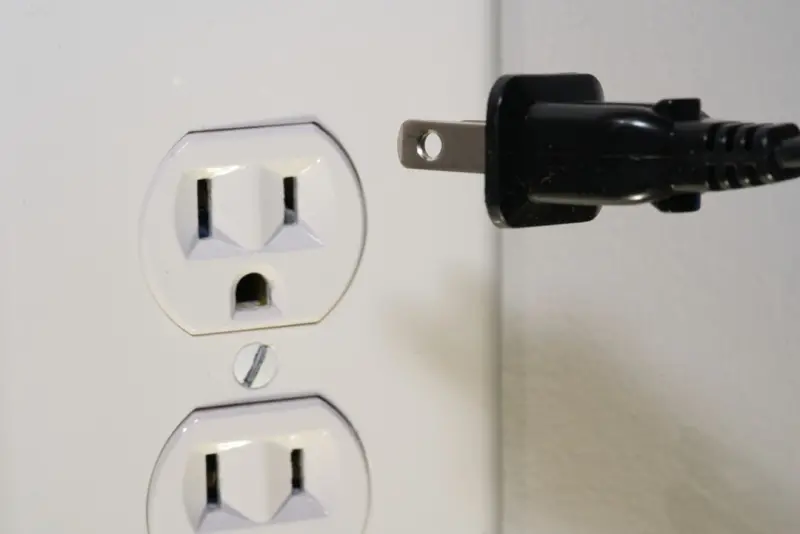
Why Power Quality Isn’t Just a Technical Term—It’s the Lifeblood of Modern Business
When I first walked into my grandfather’s workshop, the hum of a well‑tuned motor was as comforting as a morning coffee. Decades later, that same hum has been replaced by a chorus of inverters, variable‑frequency drives, and cloud‑connected breakers. As an electrician who’s spent the better part of twenty‑five years troubleshooting everything from flickering fluorescents to data‑center outages, I’ve learned that the phrase power quality isn’t just jargon for “clean electricity.” It’s the silent guardian that keeps production lines humming, servers breathing, and employees productive.
The Hidden Costs of Ignoring Power Quality
Most facility managers focus on the obvious: voltage magnitude (are we at 120 V or 240 V?) and capacity (do we have enough amps?). But beneath those headline numbers lie subtler villains—harmonics, voltage sags, transients, and flicker—that can erode equipment lifespan and inflate operational expenses.
- Harmonics—Distortions caused by non‑linear loads (think LED drivers or variable‑frequency drives). Over time, they heat transformers and reduce efficiency.
- Voltage sags—Brief drops in voltage that can crash sensitive electronics, especially in manufacturing automation.
- Transients—Spikes usually triggered by lightning or switching events that can fry semiconductor components.
- Flicker—Rapid, minor voltage fluctuations that may not damage hardware but can cause user discomfort and affect lighting quality.
When these issues go unmonitored, the hidden costs manifest as premature equipment failure, unexpected downtime, and skyrocketing maintenance bills. In a world where every minute of downtime can cost thousands, overlooking power quality is a luxury no business can afford.
From Reactive Repairs to Proactive Intelligence
For years, my toolbox was filled with oscilloscopes, clamp meters, and a good dose of intuition. I’d arrive on a site, connect a probe, and listen to the “signature” of a faulty circuit. While that approach still has value, the industry is undergoing a paradigm shift from reactive troubleshooting to predictive intelligence.
Enter the new breed of Power Quality Monitoring (PQM) platforms. These devices sit at strategic points in a building’s electrical distribution system, continuously sampling voltage, current, and frequency. With edge‑processing capabilities, they translate raw waveforms into actionable insights—identifying a harmonic buildup before it overheats a transformer or flagging a recurring sag that could jeopardize a CNC machine.
What makes this transformation truly exciting is the convergence of three trends:
- Edge AI—Algorithms that run locally on the monitor can detect anomalies in milliseconds, reducing reliance on cloud latency.
- Open‑protocol communication—Standards like OPC UA and MQTT make it easy to feed data into existing Building Management Systems (BMS) or Industrial IoT platforms.
- Modular hardware—Plug‑and‑play sensor kits mean you can scale monitoring from a single panel to an entire campus without a massive retrofit.
Case Study: A Mid‑Size Manufacturer’s Journey From Chaos to Control
Consider a mid‑size metal‑fabrication shop that was plagued by unplanned shutdowns. Their production line ran 24/7, and every time a motor tripped, the ripple effect cost them roughly $12,000 in lost output. The root cause? A combination of harmonic distortion from their new VFD‑driven spindle and frequent voltage sags caused by nearby construction.
After installing a smart, AI‑driven power quality monitor at the main distribution board, the team could see, in real‑time, the harmonic index climbing to dangerous levels. The system automatically sent a notification to the maintenance manager’s phone, suggesting a filter upgrade before the next scheduled maintenance.
Within three months, the shop reported a 30% reduction in unplanned downtime and a noticeable dip in energy consumption—thanks to the monitor’s ability to recommend load‑balancing adjustments during peak demand periods. The ROI calculation showed a payback period of just under six months, a compelling argument for any CFO.
Choosing the Right Power Quality Solution
Not all monitors are created equal. When evaluating options, keep these criteria in mind:
- Sampling Rate—At least 10 kS/s is advisable for accurate harmonic analysis.
- Data Retention—Look for devices that can store at least 30 days of high‑resolution data locally, ensuring you have a historical baseline even if the network drops.
- Integration Flexibility—If you already use a BMS, verify that the monitor speaks the same language (BACnet, Modbus, or REST APIs).
- Scalability—Can the system grow with you? Modular designs let you add more monitoring points without overhauling the entire network.
Beyond Monitoring: The Rise of Solid‑State Circuit Breakers
While monitoring tells you what’s happening, the next frontier is acting on that information without human intervention. Solid‑state circuit breakers (SSCBs) are emerging as the logical complement to PQM platforms. Unlike traditional electromechanical breakers, SSCBs use semiconductor switches (typically MOSFETs or IGBTs) to trip in microseconds, offering precise control over fault currents.
Benefits include:
- Selective Tripping—Only the affected branch disconnects, preserving downstream loads.
- Reduced Arc Flash Risk—No moving contacts means fewer arc flash incidents, a major safety win.
- Remote Operability—Combine with a PQM system, and you can automatically isolate a problematic circuit before it propagates a fault.
Pairing an SSCB with a predictive analytics engine creates a feedback loop: the monitor detects a surge, the breaker isolates the offending feeder, and the system logs the event for future trend analysis.
Integrating Power Quality With the Broader Smart Building Ecosystem
Power quality isn’t an isolated concern. In the modern smart building, electrical health interacts with HVAC, lighting, and even security systems. For example, a voltage sag that trips a server could also cause a door access controller to malfunction, creating a security loophole.
By feeding power‑quality metrics into a unified dashboard—perhaps the same one that tracks smart floor occupancy data—facility managers gain a holistic view of building performance. Correlating a spike in harmonic distortion with increased HVAC energy usage, for instance, may reveal that a particular pump is running off‑spec and needs retrofitting.
Future‑Proofing Your Electrical Infrastructure
As renewable energy sources become more prevalent—solar arrays, battery storage, and even on‑site hydrogen fuel cells—the electrical grid becomes more dynamic and less predictable. Power quality monitoring will be the glue that holds these disparate sources together, ensuring that the influx of clean energy doesn’t introduce new disturbances.
Looking ahead, I foresee three developments shaping the next decade:
- AI‑Driven Predictive Maintenance—Algorithms will not only flag anomalies but also predict component wear based on voltage stress patterns.
- Edge‑to‑Cloud Symbiosis—Hybrid models where edge devices handle real‑time protection while the cloud aggregates long‑term trends for strategic planning.
- Standardized Power‑Quality APIs—Industry consortiums will define common data schemas, making it easier for vendors to interoperate and for building owners to avoid vendor lock‑in.
Getting Started: A Practical Checklist
If you’re ready to elevate your electrical strategy, here’s a quick action plan:
- Audit Existing Equipment—Identify critical loads (servers, CNC machines, HVAC compressors) that cannot tolerate power disturbances.
- Map the Distribution Network—Locate main panels, sub‑panels, and any existing protective devices.
- Select a Pilot Monitoring Point—Install a high‑resolution PQM device at the main service entrance.
- Set Thresholds—Define acceptable limits for THD (Total Harmonic Distortion), voltage sag duration, and transient magnitude.
- Integrate with Existing Systems—Leverage open protocols to push alerts to your BMS, ticketing system, or mobile app.
- Plan for Scale—Identify additional panels where future monitors will be added as the program proves ROI.
- Consider Protective Upgrades—Based on the data, evaluate whether solid‑state breakers or harmonic filters are warranted.
Conclusion: Turning Power Quality From a Silent Threat Into a Strategic Advantage
Power quality is the quiet, invisible force that can either empower or cripple a modern enterprise. By embracing real‑time monitoring, AI‑driven analytics, and next‑generation protective devices, you transform a traditionally reactive discipline into a proactive, strategic pillar of your operation. The payoff isn’t just fewer broken machines—it’s a measurable boost to productivity, safety, and bottom‑line profitability.
So the next time you hear that reassuring hum of a well‑balanced load, remember: it’s not just electricity flowing through wires. It’s the pulse of a resilient, future‑ready business.

William Roy is a freelance writer originally from Montreal who moved to Ottawa with his wife of 50 years to be closer to their grandkids. Alongside his writing, William has a passion for fishing.
Related Posts

Powering the Modern Home Office: A Practical Guide to Electrical Upgrades
Discover a step‑by‑step plan to upgrade your home office electrical system, from load audits to ... Read More

Electrifying the Future: How Dynamic Power Distribution Is Redefining Modern Workspaces
Dynamic power distribution replaces static circuits with modular, AI‑driven hubs, delivering realâ... Read More

Digital Twins Transform Building Electrical Systems
Digital twins turn static electrical schematics into live, data‑rich replicas that predict failure... Read More
Top Posts

Smart Snow Removal: Budget‑Friendly Strategies for a Stress‑Free Winter
Learn how to budget for snow removal, choose the right tools, and turn a chilly chore into a community‑building, eco‑friendly experience....Read More
Autonomous Lawns: How Smart Mowers, Solar Power, and Data Are Redefining Grass Care
Explore the rise of autonomous lawn care, from AI‑driven mowers and solar docks to integrated IoT irrigation, and learn how these technologies create greener,...Read More

Plastering: The Unsung Hero of Modern Interiors
Plastering isn’t just a finish—it’s a design tool. I share how to choose the right mix, master the technique, and turn ordinary walls into statement surfa...Read More

Modular Garage Doors: Turning Overhead Openings into Adaptive Assets
Discover why modular garage doors are the strategic upgrade facilities need—offering interchangeable panels, real‑time data, and seamless integration with s...Read More
0 Comments
Post Comment
You will need to Login or Register to comment on this post!