
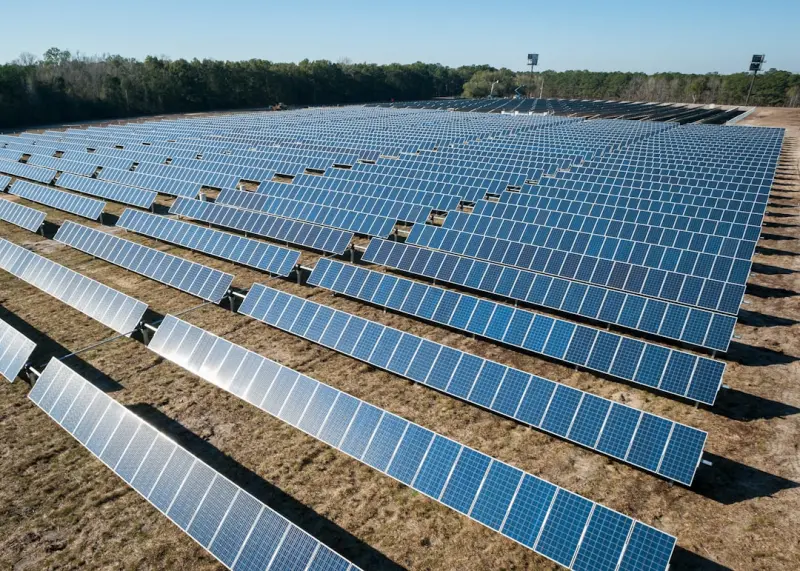
Why Solar Energy Needs a Community Lens
When I first started installing panels on my own roof, the excitement was palpable: clean electricity, lower bills, and a tangible contribution to climate goals. But after the first year of watching the inverter numbers dance, a realization settled in—solar’s true potential isn’t unlocked at the single‑house level. It blossoms when neighborhoods treat sunlight as a shared utility, not just a personal perk.
Most residential solar narratives focus on “how many kilowatt‑hours will I save?” or “what’s the payback period for my roof?” Those questions matter, but they miss the broader canvas: the way distributed generation can reshape grid dynamics, democratize energy ownership, and create a resilient safety net when storms knock out centralized power. In a world where extreme weather events are becoming the norm, a community‑first solar strategy can be the difference between a blackout and a bright morning.
From Rooftops to Microgrids: A New Distribution Model
Traditional utilities have built their business around one‑way flow: large power plants → transmission lines → your home. Solar flips that script by turning roofs into tiny generators. Yet, when each roof feeds its excess back into the grid independently, the system still feels fragmented. The next evolution is the neighborhood microgrid—a localized network that aggregates rooftop output, stores surplus, and redistributes it on demand.
Imagine a block of homes where every panel, every battery, and every electric vehicle becomes a node in a coordinated web. When a storm drops the main line, the microgrid isolates itself, seamlessly supplying power from the collective pool. When the sun shines bright, excess energy is stored or exported to the broader grid at premium rates, creating a revenue stream that benefits every participant.
Building such a network doesn’t require a brand‑new infrastructure; it leverages assets already on the street. For example, the concepts explored in Rooftop Gardens demonstrate how rooftops can host both food production and solar arrays without compromising aesthetics or structural integrity. By pairing green roofs with panels, developers can maximize the real estate value of each square foot while maintaining a cohesive visual language for the community.
Blockchain and Peer‑to‑Peer Solar Trading
One of the biggest hurdles to community solar is the accounting: who generated how much, who consumed what, and how should the financials be settled? Enter blockchain. A distributed ledger provides a transparent, tamper‑proof record of energy transactions in real time. Homeowners can sell surplus kilowatt‑hours directly to neighbors, bypassing the utility’s wholesale rates and keeping the value local.
Early pilots in Europe and North America have shown that peer‑to‑peer (P2P) trading platforms can reduce overall electricity costs by 5‑10 % while encouraging more households to adopt solar. The technology also empowers renters and apartment dwellers—traditionally excluded from rooftop ownership—to buy “solar credits” from nearby producers, effectively turning the whole block into a shared power plant.
Beyond economics, P2P trading fuels community engagement. When you see a live dashboard of how much energy your neighbor contributed, it sparks conversation, friendly competition, and a sense of collective stewardship. This social layer is often the missing piece that turns a technical solution into a cultural shift.
Designing Solar‑Ready Neighborhoods with Data‑Driven Planning
Integrating solar at the neighborhood scale isn’t just about wiring; it’s about urban design. The placement of panels, the orientation of streets, the shading from trees, and even the color of building façades affect how much sunlight reaches each roof. Leveraging data‑rich simulation tools can guide planners to optimize every variable.
For instance, the methodologies outlined in AI‑Driven Architecture allow designers to generate thousands of layout permutations in minutes, balancing solar exposure with daylighting, wind comfort, and aesthetic goals. By feeding real‑world solar irradiance data into these models, planners can pinpoint the sweet spots for panel placement, recommend tree pruning schedules that preserve shade without sacrificing sun, and even suggest roof‑color palettes that reduce heat gain while maintaining high panel efficiency.
The result is a “solar‑first” master plan that feels organic rather than forced—where streetscapes, parks, and building façades all work in harmony to capture the sun’s bounty. When developers adopt this approach early, the cost of retrofitting later drops dramatically, and the community enjoys a cohesive visual identity anchored by sustainable performance.
Beyond Panels: Integrating Solar with Storage, EVs, and Adaptive Loads
Solar generation is inherently intermittent; clouds, time of day, and seasonal angles dictate output. To smooth those fluctuations, storage becomes essential. Home battery systems, community‑scale lithium‑iron‑phosphate banks, and even vehicle‑to‑grid (V2G) technology can act as buffers, storing excess sunlight for night‑time use or for peak‑price periods.
Electric vehicles (EVs) are especially compelling in a microgrid context. An EV’s battery holds far more energy than a typical home battery, and with smart charge‑discharge algorithms, it can serve as a mobile storage unit that feeds the neighborhood when needed. This creates a virtuous loop: solar powers the EV, the EV stores energy, and the EV returns power to the grid during outages or high‑price windows.
While we’re on the topic of intelligent loads, the concept of Thermostat Optimization offers a low‑cost, high‑impact lever. By aligning heating and cooling schedules with solar production peaks, households can shift demand to periods when clean energy is abundant, flattening the microgrid’s load curve and reducing reliance on diesel‑backed generators.
When storage, EVs, and adaptive loads are orchestrated through a community energy management system, the microgrid becomes more than a sum of its parts—it morphs into an autonomous, resilient organism that can operate independently for days if the main grid is down.
Policy Levers That Enable Solar Communities
Technology alone won’t bring community solar to the mainstream; supportive policies are the catalyst. Key levers include:
- Net‑metering reforms: Allowing excess solar to be credited at true market value, not at a discounted utility rate, makes peer‑to‑peer trading financially viable.
- Incentives for shared storage: Grants or tax credits aimed at community battery installations lower the barrier for neighborhoods to adopt collective storage.
- Zoning flexibility: Updating local codes to permit multi‑family solar installations, shared arrays on parking structures, and solar‑ready building envelopes encourages developers to embed these systems from the outset.
- Data accessibility: Requiring utilities to share real‑time grid data with third‑party platforms empowers innovators to build transparent trading and balancing services.
When municipalities adopt a holistic package of these measures, the economic case for solar communities strengthens dramatically, and the social momentum accelerates.
Action Steps for Homeowners, Developers, and Planners
Homeowners: Conduct a solar audit that goes beyond your roof—look at your whole property for shading issues, storage space, and EV charging potential. Join or start a neighborhood energy coalition to explore bulk purchasing or shared storage options.
Developers: Integrate solar‑ready design principles early. Use parametric tools to model solar exposure, and allocate dedicated roof space for community arrays. Pair new builds with a baseline storage package to future‑proof the project.
Urban planners: Embed solar potential into zoning maps. Offer incentives for mixed‑use developments that combine parking structures with shared solar canopies. Facilitate pilot microgrid projects by partnering with local utilities and technology providers.
By aligning individual ambition with collective infrastructure, we can transform sunlight from a decorative roof accessory into a robust, neighborhood‑wide resource that powers homes, fuels mobility, and safeguards against grid failures.
Looking Ahead: A Sun‑Powered Social Contract
The narrative of solar energy is evolving from “my panels, my savings” to “our sun, our resilience.” When communities adopt microgrids, peer‑to‑peer trading, and data‑driven design, they create a social contract that distributes risk, reward, and responsibility across every participant.
This shift isn’t just technical; it’s cultural. It redefines ownership, encourages collaboration, and builds a shared identity around a common, renewable resource. The next decade could see neighborhoods that not only generate their own power but also trade, store, and manage it together—turning the sun from a distant, untouchable force into a local, democratic utility.

Tom Ferguson is a Canadian freelance writer with a passion for storytelling, current events, and thoughtful commentary. Drawing on years of writing experience, he shares engaging insights on a wide range of topics, bringing a uniquely Canadian perspective to his work.
Related Posts

Solar‑as‑a‑Service: Turning Sunlight into Predictable Revenue
Solar‑as‑a‑service lets building owners lease PV systems, turning sunlight into a reliable rev... Read More
Harnessing Sunlight: My Journey to a Solar-Powered Home
I share the highs and challenges of going solar, from panel placement to pairing with smart home tec... Read More

Solar Energy as a Strategic Business Asset: From Grid Dependency to Autonomous Innovation
Solar is no longer just an ESG checkbox; it’s a powerful business engine. This post explores how c... Read More
Top Posts

Beyond the Look: Turning Your Kitchen Renovation into a Wellness Powerhouse
A kitchen remodel isn’t just about style—it’s a chance to create a wellness engine. This guide explores air quality, smart waste, AI‑driven storage, aco...Read More

Designing a Year‑Round Backyard Oasis: Sheds and Gazebos That Work With Nature
Tom Ferguson shows how to turn a simple shed or gazebo into a weather‑proof backyard hub, using sustainable materials, passive solar tricks, and smart shading...Read More

Building a Sustainable Foundation: Strategies Every Contractor Should Know
Explore how smart soil assessment, low‑carbon concrete, and integrated insulation transform foundations into sustainable, long‑lasting building platforms....Read More

Smart Tree Care: Turning Canopies into Data‑Driven Assets
Learn how integrating smart sensors, predictive analytics, and maintenance dashboards turns tree care from a reactive task into a data‑driven strategy that sa...Read More
0 Comments
Post Comment
You will need to Login or Register to comment on this post!