
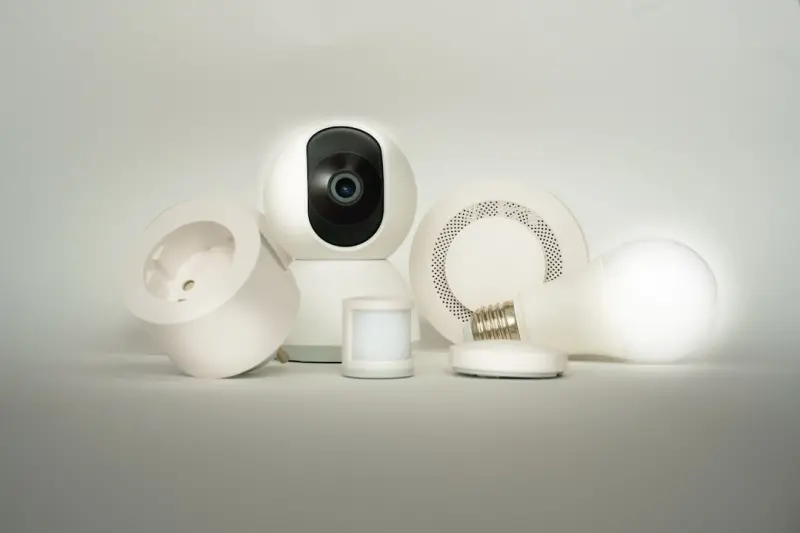
Reimagining Home Alarm Systems as Living, Learning Guardians
When I first installed a conventional alarm panel in my apartment, I was satisfied with the simple promise: a loud siren and a call to the police when a door or window opened unexpectedly. Six months later, the same system felt clunky, intrusive, and—frankly—out of step with the rest of my connected home. That experience sparked a deeper question that has guided my thinking ever since: what if a home alarm could think, adapt, and cooperate rather than merely react?
The Quiet Revolt of Passive Monitoring
Most alarm manufacturers still lean on a binary model—armed or disarmed. In practice, this forces homeowners to remember to toggle a switch, and it creates a false sense of security that can crumble the moment a sensor glitches or a battery dies. The real revolution begins when the system shifts from being a static sentinel to a passive monitor that continuously learns the rhythm of the household.
Imagine a device that knows the usual cadence of your family’s comings and goings, the typical temperature fluctuations, and even the acoustic signatures of everyday life (the clatter of dishes, the hum of a blender, a dog’s bark). By establishing a baseline, the alarm can spot anomalies without waiting for a door to swing open. This behavior‑based detection reduces false alarms, which have long been the bane of both residents and first responders.
AI at the Core: From Alerts to Insight
Artificial intelligence is not just a buzzword; it is the engine that can transform raw sensor data into actionable insight. A modern alarm system equipped with edge‑AI can perform on‑device inference, meaning it processes data locally rather than sending every snippet to the cloud. This approach offers three key advantages:
- Speed: Threats are identified in milliseconds, giving occupants precious time to react.
- Privacy: Sensitive audio or video streams never leave the home, protecting against unintended data leakage.
- Reliability: The system remains functional even if internet connectivity falters, because critical decisions happen on the device itself.
From an engineering standpoint, the challenge lies in balancing computational heft with power consumption. Recent advances in low‑power neural processors—originally designed for wearables—have made it feasible to embed sophisticated models within a compact alarm hub. The result is a device that can differentiate a genuine break‑in from, say, a raccoon rummaging through the attic.
Privacy‑First Design: The New Trust Paradigm
One of the biggest barriers to adopting smarter alarm solutions is the lingering fear of surveillance. Homeowners worry that an “always‑on” camera or microphone could become a backdoor for hackers or an unwanted data collector. To address this, manufacturers must adopt a privacy‑first architecture:
- End‑to‑end encryption for any data that does leave the premises.
- On‑device anonymization that strips personally identifiable information before any transmission.
- Transparent consent flows that let users choose exactly what data they share and when.
When users see that their alarm respects their privacy, they are more likely to enable advanced features—like facial recognition for trusted visitors or acoustic pattern analysis for glass break detection—without feeling exposed.
Community‑Powered Safety Networks
Beyond the walls of a single home, there’s untapped potential in connecting alarms across neighborhoods. A distributed safety mesh can share anonymized alerts in real time, creating a collective early‑warning system. If a motion sensor on one street detects a suspicious pattern, neighboring alarms can temporarily heighten their sensitivity, offering a broader shield without compromising individual privacy.
This model mirrors the way modern fire alarm systems already operate, where a single sensor can trigger alarms throughout a building. Scaling that concept to whole communities—while preserving data anonymity—could dramatically reduce response times for emergency services and empower residents to look out for one another.
Integrating with Existing Smart Home Ecosystems
For many of us, the alarm system is just another node in a larger smart home network that includes lighting, thermostats, voice assistants, and security cameras. Seamless integration is essential, but it also presents an opportunity to create synergistic workflows:
- When the alarm detects a potential intrusion, the system can automatically dim lights, lock smart locks, and activate a “safe room” mode that disables voice assistants to prevent accidental commands.
- Conversely, if a fire alarm triggers, the thermostat can shut off to prevent fuel‑fed flames, and smart vents can open to aid evacuation.
- Routine events—like a family member arriving home—can pre‑arm the perimeter while simultaneously adjusting the HVAC for comfort.
These choreographed responses elevate the alarm from a reactive device to an orchestrator of home safety.
Energy Efficiency: The Green Side of Security
Security often gets framed as a binary cost: you either invest heavily or you accept risk. However, a well‑designed AI‑enabled alarm can actually reduce energy usage. By learning occupancy patterns, the system can intelligently power down certain sensors when they’re unlikely to be needed, and ramp them up during high‑risk periods (late night, vacations). This dynamic power management not only extends battery life but also trims the overall household energy footprint.
DIY Maintenance: Empowering Homeowners
Even the smartest alarm needs periodic care—batteries replace, sensors clean, firmware updates apply. Traditionally, this has been a chore that many homeowners either neglect or outsource at a cost. By providing an intuitive mobile dashboard that offers invisible wins—tiny, low‑effort tasks with high payoff—users can keep their system humming without professional intervention.
The dashboard can highlight things like:
- When a battery’s voltage drops below a threshold, prompting a quick swap.
- Dust accumulation on a motion sensor that may cause missed detections.
- Firmware versions and a one‑click “apply now” button that schedules updates during low‑usage windows.
Empowering residents to perform these micro‑maintenance tasks not only extends device lifespan but also deepens their connection to the system, fostering a sense of ownership rather than passive reliance.
Learning from Other Domains: Sensor Fusion
The home alarm landscape can borrow heavily from sectors like industrial IoT, where sensor tech for proactive care is already a mature practice. In factories, multiple sensor modalities—vibration, temperature, acoustic emissions—are fused to detect early signs of equipment failure. Applying a similar multi‑sensor fusion approach to residential security can yield richer context:
- Combining door contact sensors with acoustic signatures of glass shattering.
- Cross‑referencing motion data with ambient light levels to reduce false positives during twilight.
- Integrating Wi‑Fi signal mapping to detect the presence of unfamiliar devices within range.
Such holistic perception equips the alarm to make more nuanced decisions, akin to a human guard who evaluates multiple cues before raising an alarm.
The Human Factor: Reducing Alarm Fatigue
Alarm fatigue—where occupants become desensitized to frequent false alerts—is a well‑documented phenomenon in hospitals and industrial settings. In the residential realm, it can lead to dangerous complacency. AI‑driven confidence scoring can help mitigate this by assigning a probability to each event and only escalating when a threshold is crossed.
Additionally, customizable notification channels—push, SMS, in‑home voice alerts—allow users to tailor the urgency level. A low‑confidence event might simply log to a mobile app for later review, while a high‑confidence breach triggers a loud siren and an immediate emergency dispatch.
Future Outlook: From Guard to Companion
Looking ahead, the line between security and lifestyle assistance will blur. A future alarm system could:
- Offer contextual reminders (“Your front door has been left open for 5 minutes”).
- Provide peace‑of‑mind analytics (“Your home has been unoccupied for the past 12 hours, all systems normal”).
- Collaborate with health monitors to detect falls or medical emergencies, automatically alerting caregivers.
In this vision, the alarm is no longer a solitary watchdog but a collaborative companion that contributes to safety, convenience, and well‑being.
Conclusion: A Call to Rethink Security
Home alarm systems have lingered in a state of incremental improvement for decades, but the convergence of AI, edge computing, and privacy‑centric design offers a genuine opportunity for a paradigm shift. By treating the alarm as a learning, community‑aware, energy‑smart entity, we can move beyond the archaic “arm or disarm” mindset and embrace a holistic safety ecosystem that respects privacy, empowers users, and adapts to the ever‑changing dynamics of modern life.

Lifan Chen is a freelancer based in Toronto specializing in marketing. With expertise in crafting effective marketing strategies and campaigns, Lifan helps businesses grow their brand presence and reach target audiences. As a Toronto-based freelancer, Lifan combines local market insights with creative marketing skills to deliver tailored solutions for clients.
Related Posts

Securing Your Home: Why a Modern Alarm System is a Must-Have
A modern home alarm system is a must-have for any homeowner. Learn why and how to choose the right s... Read More

The Critical Role of Home Alarm Systems in Enhancing Home Security
Home alarm systems play a critical role in enhancing home security and providing homeowners with pea... Read More
Why Your Home Alarm System Deserves a Sustainable Upgrade
Explore the shift to sustainable home alarm systems, from low‑power panels and solar batteries to ... Read More
Top Posts

Concrete as a Creative Canvas: DIY Artistic Projects for Modern Homes
Explore innovative ways to use concrete as a creative, eco‑friendly material—mix, color, texture, and finish projects that blend durability with stunning de...Read More

Passive Solar Shading: The Smart Homeowner’s Blueprint for Weather Proofing
A practical guide to leveraging passive solar shading—dynamic window films, exterior louvers, and reclaimed materials—to create a smarter, more energy‑eff...Read More

DIY Home Repairs: A Beginner's Guide to Getting Started
Get started with DIY home repairs and develop the skills and confidence you need to tackle more complex projects. Learn the basics, safety precautions, and tips...Read More

Solar Energy as a Strategic Business Asset: From Grid Dependency to Autonomous Innovation
Solar is no longer just an ESG checkbox; it’s a powerful business engine. This post explores how companies can leverage solar generation, storage, and AI fore...Read More
0 Comments
Post Comment
You will need to Login or Register to comment on this post!