
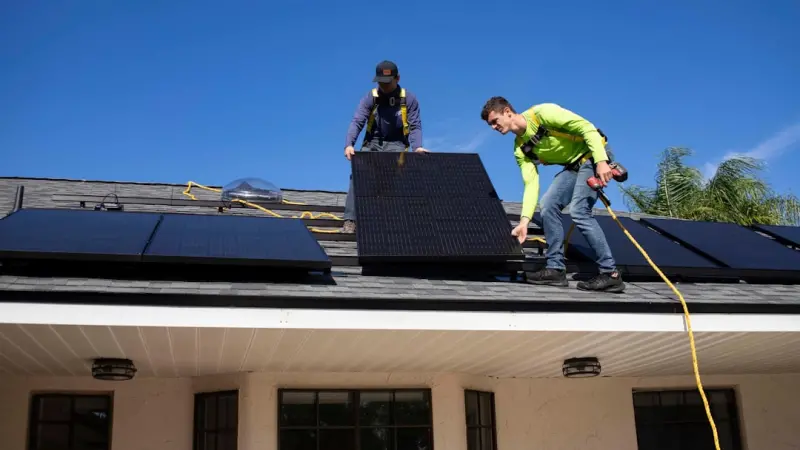
Why Solar Is No Longer a Niche
What used to be a hobbyist’s experiment has become a mainstream strategy for homeowners seeking both financial relief and energy independence, and the data backs it up: residential solar installations have surged dramatically over the past decade, slashing utility bills for millions of families while reducing carbon footprints on a scale that traditional efficiency upgrades simply cannot match. Today’s solar panels deliver more than three times the power per square foot they did a few years ago, and the drop in balance‑of‑system costs—mounting hardware, inverters, and wiring—means that even modest rooftops can generate enough electricity to cover a sizable portion of a household’s consumption. As a result, the conversation has shifted from “if you can afford solar” to “how quickly can you lock in the savings before incentives phase out”.
The Economics of Going Solar
When you crunch the numbers, the return on investment for a typical 6‑kilowatt system now lands in the 5‑ to 7‑year range, a timeline that comfortably fits within most home‑ownership periods and outpaces many traditional home‑improvement projects such as kitchen remodels or HVAC upgrades. Moreover, the combination of federal tax credits, state rebates, and net‑metering arrangements creates a layered incentive structure that effectively lowers the upfront cost, turning solar from a large capital expense into a manageable monthly payment that is often less than the utility bill it replaces. Because the savings are realized month after month, homeowners not only recoup their investment but also build a hedge against future rate hikes, turning an energy bill from a liability into a predictable, even profitable, line item on the household budget.
Designing a Solar‑Ready Home
Before you even order the panels, a strategic design review can make the difference between a modest 10‑percent offset and a full‑house renewable energy solution, and that review starts with the roof’s orientation, pitch, and shading profile. Shade‑Smart Awnings can be incorporated not only for comfort but also to reduce heat gain, which in turn lowers the size of the solar array needed to meet cooling loads, while a well‑planned roof layout minimizes the need for costly micro‑inverters or power optimizers. Additionally, integrating solar‑ready conduit pathways during the construction phase ensures that future expansions—whether adding battery storage or a secondary array—can be completed with minimal disruption, preserving the aesthetic integrity of the home while keeping the electrical footprint clean and organized.
Beyond Panels: Solar Thermal and Power‑to‑Heat Solutions
While photovoltaic panels dominate headlines, the untapped potential of solar thermal collectors and power‑to‑heat systems offers a complementary pathway to slash energy use, especially for water heating and space heating in colder climates. A well‑designed solar thermal loop can pre‑heat domestic water up to 80 °F, reducing the burden on electric or gas water heaters by half, and when paired with a heat‑pump, the system can serve as a low‑cost backup during overcast days, maintaining comfort without spiking electricity demand. By diversifying the solar portfolio, homeowners create a resilient, multi‑vector energy ecosystem that maximizes the sun’s utility across lighting, appliances, and temperature regulation, turning a single roof into a versatile power plant.
Microgrid Magic: Sharing Solar with Neighbors
One of the most exciting developments in residential renewable energy is the emergence of community microgrids, where clustered homes pool their solar generation and storage assets to collectively balance supply and demand, effectively creating a localized energy market that can operate independently of the larger utility grid when needed. In a microgrid, excess generation from a neighbor’s rooftop during a sunny afternoon can be dispatched to another home whose panels are shaded, smoothing out intermittency and ensuring that every kilowatt‑hour produced is put to work rather than sent to waste. This collaborative model not only improves overall system efficiency but also opens the door to shared financing options, making larger battery installations affordable for households that might otherwise be priced out.
Smart Integration: How Solar Talks to Your Home Systems
Modern home automation platforms now speak the language of solar in ways that were unimaginable a few years ago, allowing real‑time data from inverters to inform thermostat setpoints, appliance schedules, and even lighting scenes, thereby optimizing consumption to match generation. By linking your solar array to an AI‑Powered HVAC Zoning system, you can automatically shift heating and cooling loads to the coolest parts of the house during peak solar output, flattening demand curves and reducing reliance on battery storage. When solar and smart home tech converge, the result is a self‑regulating ecosystem that not only maximizes cost savings but also extends the life of major appliances through smoother operation cycles.
Financing Options That Actually Work
Traditional loans, power purchase agreements (PPAs), and emerging solar‑as‑a‑service models each offer distinct pathways to ownership, and the key is to match the financing structure to your personal cash flow and long‑term goals. A zero‑down lease can be attractive for those who want immediate bill reductions without a large upfront outlay, while a low‑interest solar loan preserves the tax credit benefits and ensures that the homeowner reaps the full financial upside of the system’s production. In addition, many utilities now partner with local banks to offer green mortgages that bundle the solar installation cost into the property loan, effectively spreading the expense over the life of the home and turning the solar investment into a value‑adding asset on the resale market.
Overcoming Common Myths
Despite the surge in adoption, several persistent myths still deter homeowners: the belief that solar only works in hot, sunny regions, the fear that panels will damage a roof, and the notion that maintenance is a nightmare. In reality, modern panels perform efficiently even under diffuse light conditions, and most manufacturers guarantee that installation will not void roof warranties when performed by certified installers. Moreover, maintenance typically consists of an annual visual inspection and occasional cleaning, a task that can be outsourced or even handled with a simple garden hose, making solar one of the lowest‑maintenance home upgrades available today. Debunking these myths clears the path for more households to experience the tangible benefits of clean, affordable power.
Future‑Proofing Your Investment Today
As the energy landscape continues to evolve, the smartest solar owners are already planning for the next wave of technology, whether that means reserving space for additional panels, pre‑wiring for electric vehicle (EV) chargers, or integrating with emerging Smart Gutter systems that can redirect rainwater to a solar‑powered irrigation pump for a self‑sustaining garden. By designing with scalability in mind, you ensure that today’s installation can seamlessly accommodate tomorrow’s innovations, preserving the value of your investment for years to come. In short, a well‑engineered solar setup not only cuts current bills but also positions your home to thrive in an increasingly decentralized, renewable‑focused energy future.

Craig Brett is a freelancer with a passion for the outdoors. His love for nature inspires his work, bringing authentic and engaging perspectives to projects related to outdoor activities, adventure, and environmental topics.
Related Posts
Solar Energy as a Strategic Business Asset: From Grid Dependency to Autonomous Innovation
Solar is no longer just an ESG checkbox; it’s a powerful business engine. This post explores how c... Read More
Solar Communities: Harnessing Sunlight for Shared Resilience
A fresh look at solar energy shows that when households band together—using microgrids, peer‑toâ... Read More
Solar Energy as a Service: Turning Light into a Business Asset
A deep dive into Solar-as-a-Service, showing businesses how to monetize solar power through subscrip... Read More
Top Posts

Sustainable Window Treatments: Style Meets Eco‑Efficiency
Explore the art of eco‑friendly window treatments that blend design, smart tech, and sustainability to cut energy costs and elevate your home’s appeal....Read More

The Evolution of Sustainable Flooring: A Greener Future for Your Home
Sustainable flooring is a critical component of a sustainable home. Learn about the evolution of sustainable flooring, eco-friendly options, and benefits for yo...Read More

Beyond Bells and Sirens: Redefining Home Alarm Systems for the Connected Era
Modern alarm systems are evolving from simple intrusion alerts to predictive, privacy‑focused, and energy‑aware platforms that protect homes, lower insuranc...Read More
The Quiet Power of Radiant Floor Heating: Turning Floors into Smart Comfort Hubs
Radiant floor heating is evolving from a luxury feature to a data‑driven platform that enhances comfort, health, and sustainability. Learn how smart sensors, ...Read More
0 Comments
Post Comment
You will need to Login or Register to comment on this post!