
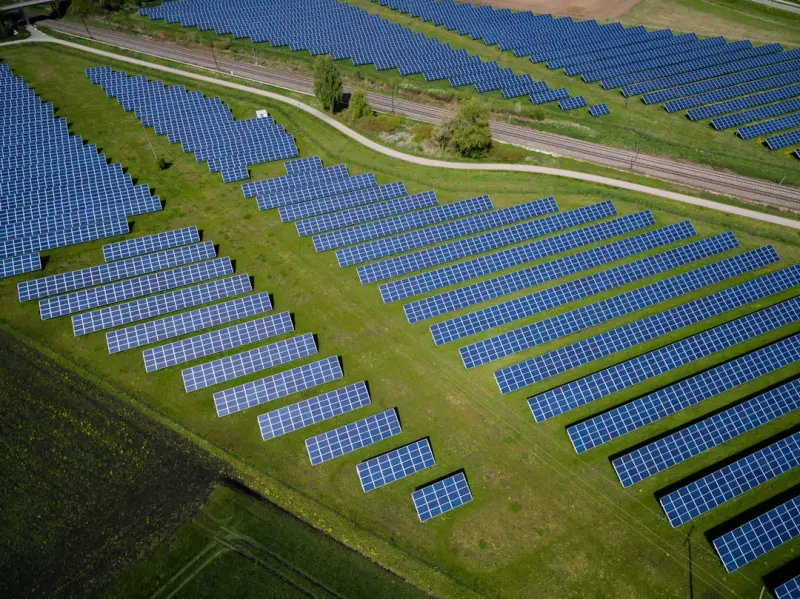
When factories, warehouses and data centers start to view electricity as a strategic commodity rather than a utility bill line item, the conversation shifts from “how do we cut costs?” to “how do we own the power we consume?” Solar microgrids answer that question by bundling generation, storage, and intelligent controls into a localized, self‑governing network. The result is an energy ecosystem that can operate independently of the broader grid, smooth out demand spikes, and provide a clear financial narrative for executives hungry for predictable, bottom‑line impact.
Why Solar Microgrids Matter for Large‑Scale Operations
Traditional utilities were built to serve a one‑directional flow: power from a central plant to a distant consumer. Modern industrial campuses, however, demand a two‑way relationship. They generate massive loads, need real‑time reliability, and must meet increasingly strict sustainability mandates. A solar microgrid creates a pocket of resilience that can:
- Reduce exposure to volatile wholesale electricity prices. By generating and storing its own power, a site can sidestep peak‑price spikes that often occur during hot summer afternoons.
- Enhance operational continuity. In the event of a regional outage, the microgrid can keep critical processes humming, protecting both revenue and brand reputation.
- Accelerate ESG goals. On‑site solar paired with battery storage translates directly into measurable reductions in Scope 2 emissions.
These advantages are not abstract promises; they are quantifiable levers that senior leadership can track on a quarterly basis.
From Grid Dependency to Energy Autonomy
Energy autonomy does not mean abandoning the larger grid entirely. Instead, it involves a hybrid philosophy where the microgrid supplies the baseline load, and the main grid acts as a backup or a source of supplemental power when renewable production dips. This hybrid model is especially powerful for facilities with irregular production schedules—think a plant that ramps up at night or a data center that experiences unpredictable compute spikes.
By leveraging AI‑enhanced solar site planning, engineers can simulate countless scenarios, optimizing panel tilt, orientation, and placement to match the unique roof geometry of each building. The result is a bespoke solar field that maximizes kWh per square foot while preserving valuable real‑estate for other uses.
Designing a Resilient Microgrid Architecture
At the heart of any microgrid lies three core components: generation, storage, and control. Solar panels provide the generation; lithium‑ion or flow batteries deliver storage; and a sophisticated energy management system (EMS) orchestrates the flow. The EMS must be capable of:
- Predicting solar output using weather forecasts and historical performance data.
- Balancing charge and discharge cycles to extend battery life while meeting real‑time load demands.
- Communicating with the main grid for demand response events, allowing the site to sell excess energy back to the utility at premium rates.
When these pieces work in concert, the microgrid behaves like a living organism—adapting to sunlight, load changes, and market signals without human intervention.
The Role of AI in Solar Site Optimization
Artificial intelligence is no longer a buzzword; it’s the analytical engine that makes microgrids viable at scale. Machine‑learning algorithms ingest terabytes of data—from satellite imagery to inverter telemetry—to generate placement maps that would take human planners weeks to produce. The same AI can continuously re‑calibrate the EMS, ensuring that the battery charge state aligns with projected solar generation and anticipated demand peaks.
Integrating AI into the design phase also uncovers hidden opportunities, such as identifying roof sections that can support adaptive building skins equipped with bifacial panels, which capture sunlight from both sides and boost overall yield.
Integrating Storage and Demand Response
Battery technology has reached a tipping point where cost per kilowatt‑hour is comparable to traditional diesel generators, but with far lower emissions and noise. Pairing solar with storage creates a dispatchable resource: the microgrid can release power during a demand response event, earning revenue while helping the broader grid stay balanced.
Demand response participation is increasingly incentivized by utilities, especially in regions prone to heat‑driven peaks. By pre‑charging batteries during low‑cost periods and discharging them when the grid calls for load shedding, a facility can turn a regulatory obligation into a profit center.
Economic Incentives and Return on Investment
Governments worldwide offer a suite of financial mechanisms—investment tax credits, accelerated depreciation schedules, and grant programs—that can shave years off the payback period for solar microgrids. When combined with the operational savings from reduced peak‑demand charges, the internal rate of return (IRR) often exceeds 12 % for well‑engineered projects.
Moreover, the ability to sell excess energy back to the grid, known as net‑metering or feed‑in tariffs, provides an additional revenue stream. This dual‑cash‑flow model—cost avoidance plus energy sales—creates a compelling narrative for CFOs and board members alike.
Case Study: A Manufacturing Hub Embraces Solar Autonomy
Consider a 250,000 sq ft manufacturing campus located in a sun‑rich region. The site installed 3 MW of rooftop solar, complemented by a 6 MWh battery system. Using AI‑driven site planning, the engineers achieved a 25 % increase in energy yield compared to a conventional layout. Within the first 18 months, the microgrid supplied 70 % of the facility’s electricity, slashing utility bills by $1.2 M annually.
When a regional grid outage occurred due to a storm, the microgrid seamlessly transitioned to island mode, keeping production lines operational. The plant avoided an estimated $3 M in lost revenue, underscoring the strategic value of energy resilience beyond mere cost savings.
Future Trends: From Single Sites to Distributed Networks
The next frontier is not isolated microgrids but interconnected clusters that share surplus power across a corporate portfolio. Imagine a logistics company with warehouses in three states, each running its own solar‑battery system. By linking these sites through a virtual power plant (VPP) platform, the company can balance excess generation from a sunny location with demand elsewhere, effectively becoming its own regional utility.
Emerging standards for grid‑edge communication, coupled with blockchain‑based transaction ledgers, will make these peer‑to‑peer energy trades transparent, secure, and auditable. For enterprises willing to invest in the digital infrastructure, the upside is a new revenue stream that transforms idle rooftop space into a strategic asset.
Practical Steps to Get Started
1. Conduct a site audit. Map roof exposure, structural load limits, and existing electrical infrastructure.
2. Engage an AI‑enabled design partner. Use platforms that can generate optimal panel layouts and predict performance.
3. Define the storage strategy. Choose battery chemistry and capacity that align with peak‑load profiles.
4. Secure financing. Leverage tax incentives, green bonds, or third‑party ownership models to reduce upfront capital.
5. Implement a robust EMS. Ensure the system can operate autonomously, respond to grid signals, and provide real‑time analytics to stakeholders.
Conclusion: Solar Microgrids as a Strategic Business Lever
In an era where energy costs are a leading expense for industrial and commercial operations, solar microgrids offer a compelling combination of cost control, resilience, and sustainability. By marrying cutting‑edge AI, advanced storage, and flexible market participation, companies can turn rooftops and parking decks into profitable energy hubs. The journey begins with data, continues through design, and culminates in a live, adaptive network that delivers tangible value every day.

William Roy is a freelance writer originally from Montreal who moved to Ottawa with his wife of 50 years to be closer to their grandkids. Alongside his writing, William has a passion for fishing.
Related Posts
Solar Energy for Everyone: Community Power, Storage, and the Future of Clean Living
Explore how community solar, home battery storage, and agrivoltaics are democratizing clean energy, ... Read More
When AI Meets Solar: The Next Leap for Industrial Energy
AI‑enhanced solar installations turn passive panels into strategic assets, enabling industrial fac... Read More

Solar‑as‑a‑Service: Turning Sunlight into Predictable Revenue
Solar‑as‑a‑service lets building owners lease PV systems, turning sunlight into a reliable rev... Read More
Top Posts

Decoding the Home Inspection Report: A Practical Guide for Buyers and Sellers
A step‑by‑step guide to interpreting home inspection reports, prioritizing repairs, and using the findings for smarter negotiations and long‑term maintena...Read More

The Future of Roofing: Eco‑Smart Solutions for Modern Homes
Explore how innovative roofing materials, smart tech, and sustainable design combine to create eco‑friendly roofs that lower bills, enhance durability, and su...Read More
Responsive Edge Controllers: Redefining Electrical Distribution for Modern Facilities
Traditional panels waste energy and risk equipment failure. Learn how responsive edge controllers provide instant load management, integrate renewables, and tur...Read More

Urban Micro‑Gardens: Maximizing Green Space on Small Balconies
Learn to transform a modest balcony into a vibrant micro‑garden using smart containers, sustainable soil mixes, and clever water strategies for year‑round u...Read More
0 Comments
Post Comment
You will need to Login or Register to comment on this post!