
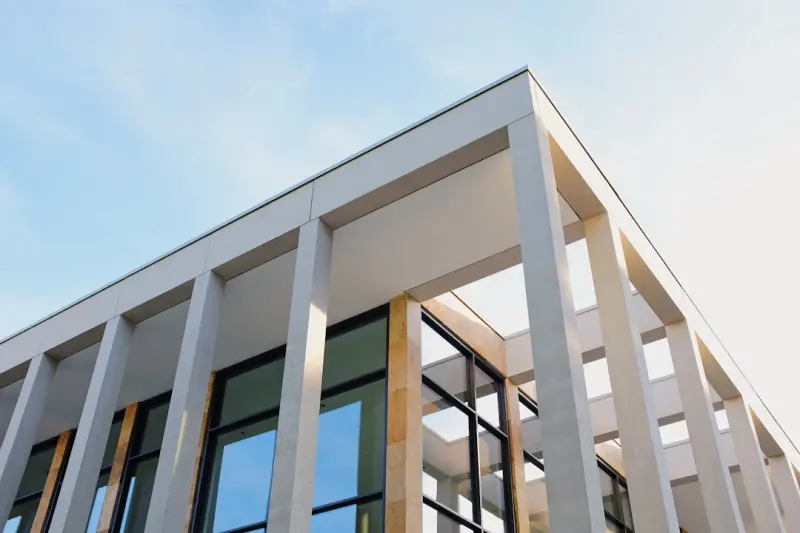
Why Digital Twins Are Becoming the Backbone of Modern Architectural Design
When I first walked onto a construction site fresh out of college, the only “twin” I knew was the mirror I used to check my hard hat. Fast‑forward a few decades, and the term digital twin has migrated from the realms of aerospace and manufacturing into the very fabric of architectural practice. It’s no longer a futuristic buzzword—it’s a daily tool that lets us prototype, test, and refine entire buildings before the first brick is laid.
From Sketches to Simulated Realities
Traditional architectural workflows have always been layered: concept sketches, 2D drawings, 3D models, and finally, physical mock‑ups or prototypes. Each step is an investment of time and resources, and each hand‑off introduces the risk of misinterpretation. A digital twin collapses these layers into a single, living model that mirrors the physical counterpart in real time. It’s a continuous feedback loop where design intent meets performance data.
What makes this shift so powerful is the granularity of data that can be embedded into the model. From structural loads and thermal performance to occupant movement patterns and daylight simulations, the twin becomes a data‑rich sandbox where you can experiment without consequence. And because the model updates automatically as sensors feed information from the built environment, you can even retro‑fit insights into existing structures.
Building a Digital Twin: The Core Pillars
Creating a functional digital twin isn’t a magic trick; it’s a systematic process that rests on three pillars:
- Data Acquisition: High‑resolution laser scans, photogrammetry, IoT sensor streams, and BIM (Building Information Modeling) data form the raw material. The more detailed the capture, the richer the twin.
- Integration Engine: This is the software layer that stitches disparate data sets together, normalizing formats and establishing relationships. Cloud‑based platforms and APIs have made this step more accessible than ever.
- Analytics & Visualization: Here, machine learning, physics‑based simulation, and real‑time rendering converge to turn raw numbers into actionable insights. This is where designers begin to ask “what if” questions with confidence.
Design Decisions Powered by Real‑World Performance
One of the most compelling advantages of a digital twin is the ability to run performance scenarios before a single nail is driven. Want to know how a façade will react to a sudden temperature swing? Feed a thermal model into the twin and watch the heat map evolve in seconds. Curious about how daylight penetrates a multi‑story atrium on a winter solstice? Simulate it with a ray‑tracing engine and adjust glazing or shading accordingly.
These predictive capabilities aren’t just about energy efficiency—they’re about occupant health, resilience, and long‑term operational cost. By quantifying what will happen under a range of conditions, architects can make evidence‑based decisions that translate into measurable value for owners.
Collaboration Reimagined: From Isolated Drafts to Shared Realities
Collaboration has always been the Achilles’ heel of large‑scale projects. Architects, engineers, contractors, and owners often speak different technical languages, leading to costly revisions. The digital twin serves as a universal lingua franca. Because it lives in an interactive 3D environment, every stakeholder can explore the same model, annotate it, and run their own simulations without waiting for a fresh export.
In practice, I’ve seen design teams use the twin to host virtual walk‑throughs with clients in different time zones. A client can “stand” inside a simulated lobby, experience the acoustic envelope, and suggest changes on the spot. The engineer, meanwhile, can overlay structural stress data, and the sustainability consultant can overlay embodied carbon metrics—all within the same session.
For those looking to deepen the collaborative experience, the AR‑enhanced design‑build workflow pushes this a step further, letting on‑site crews overlay the twin onto the real world through tablets or smart glasses. It’s a bridge between virtual intent and physical execution that reduces rework dramatically.
Resilience Planning: Testing the Unthinkable
Climate change has turned resilience from a nice‑to‑have into a mandatory design criterion. A digital twin can model extreme events—floods, windstorms, heatwaves—and predict how a building’s envelope and systems will hold up. By iterating through these scenarios, architects can harden designs with targeted interventions: raised podiums, passive cooling shafts, or adaptive shading devices.
Because the twin updates with real‑time sensor data, it also becomes a post‑occupancy tool for performance monitoring. If a building’s energy consumption spikes unexpectedly, the twin can pinpoint the cause—perhaps a malfunctioning HVAC zone or a shading device that’s not responding to the control algorithm. This continuous monitoring turns a static design into a dynamic, self‑optimizing system.
Material Selection Meets Data Science
Choosing the right material used to be a blend of aesthetics, cost, and code compliance. Today, the digital twin lets us overlay material performance data—thermal conductivity, acoustic absorption, life‑cycle carbon—directly onto the model. By toggling material palettes, you can instantly see how a change impacts energy loads, daylight distribution, and even the building’s carbon footprint.
One of my recent projects leveraged this capability to compare a conventional aluminum curtain wall against a next‑gen window system with integrated photovoltaic cells. The twin revealed a 12% reduction in cooling load and a 7% boost in on‑site renewable generation—numbers that turned the client’s decision in favor of the higher‑upfront cost.
Cost Savings and ROI: The Business Case
Critics often ask, “Is the upfront investment in a digital twin worth it?” The answer lies in the reduction of change orders, the acceleration of approval cycles, and the long‑term operational savings. Studies across the AEC industry have shown that projects employing digital twins see up to a 20% decrease in construction-phase rework and a 15% reduction in lifecycle energy costs.
Moreover, the twin becomes a marketing asset. Developers can showcase a living model to prospective tenants, demonstrating how the building will adapt to their needs over time. This transparency builds trust and can command higher lease rates or sale prices.
Implementation Roadmap: Getting Started Without Overkill
If you’re intrigued but hesitant, here’s a pragmatic roadmap to embed digital twins into your practice:
- Pilot a Small Project: Choose a mid‑scale office or retail build. Capture existing conditions with laser scanning and integrate BIM data.
- Select a Platform: Many SaaS providers now offer plug‑and‑play twin environments that connect to common sensor protocols.
- Define Key Metrics: Focus on three performance indicators—energy use intensity, indoor air quality, and occupant flow.
- Iterate and Validate: Run simulations, compare against real sensor data once the building is occupied, and refine the model.
- Scale Up: Expand the twin’s scope to include structural health monitoring, predictive maintenance, and integration with city‑wide data platforms.
Remember, the goal isn’t to replace the architect’s intuition but to augment it with data‑driven confidence.
The Human Element: Designing for Experience, Not Just Performance
While the digital twin is a powerhouse of numbers, it should never eclipse the human experience at the core of architecture. Use the twin to test how a space feels, not just how it performs. Simulate acoustic reverberation in a lecture hall, visualize sight lines from a café terrace, or model how a crowd moves through a transit hub.
When you blend quantitative insight with qualitative observation, you create environments that are both efficient and emotionally resonant—a harmony that’s been the holy grail of our profession for centuries.
Future Glimpse: The Convergence of Twins, AI, and Generative Design
The next frontier lies at the intersection of digital twins, generative algorithms, and autonomous control systems. Imagine a twin that not only predicts performance but also suggests design alternatives in real time, optimizing for cost, sustainability, and user preference simultaneously. This is no longer speculative fiction; early prototypes are already surfacing in research labs.
As architects, we stand at the cusp of a paradigm shift where the line between design and operation blurs. By embracing digital twins today, we position ourselves to lead that evolution, turning buildings from static monuments into living, learning entities that serve their occupants for decades to come.

Craig Brett is a freelancer with a passion for the outdoors. His love for nature inspires his work, bringing authentic and engaging perspectives to projects related to outdoor activities, adventure, and environmental topics.
Related Posts
AI‑Driven Spatial Planning for Adaptive Workspaces
AI‑driven spatial planning blends sensor data, machine learning, and human insight to create adapt... Read More
Acoustic Architecture: Designing Spaces That Listen
Acoustic architecture goes beyond noise control, shaping how we experience spaces. Discover strategi... Read More

Kinetic Facades: Dynamic Architecture for Climate Adaptation and User Engagement
Kinetic façades turn static building skins into responsive systems that adapt to sunlight, wind, an... Read More
Top Posts

Beyond the Walls: Hidden Insulation Opportunities to Maximize Home Comfort
I’ve uncovered the secret insulation zones most homeowners ignore—floor joists, attic hatches, and even hot water pipes. These simple tweaks can slash energ...Read More
The Rise of Smart, Sustainable Window Treatments
Discover how smart fabrics, automation, and sustainable materials are transforming window treatments into essential tools for comfort, style, and energy efficie...Read More

Decked Out: Crafting the Ultimate Outdoor Living Space for Your Home
Discover how to craft the ultimate outdoor living space with a modern deck. William Roy shares insights on planning, materials, design trends, and maintenance t...Read More
Reimagining Commercial Spaces: From Stale Offices to Agile Innovation Hubs
Discover how a data‑driven, modular approach turns outdated commercial spaces into agile innovation hubs that boost productivity, reduce costs, and align with...Read More
0 Comments
Post Comment
You will need to Login or Register to comment on this post!