
Why Fencing Is No Longer Just a Boundary
When I first walked onto a corporate campus and saw the classic chain‑link fence, my mind went straight to the old adage “keep the outsiders out.” Fast forward a few years, and that same fence can now talk to you, power your sensors, and even help your ESG score. The transformation isn’t magic; it’s the convergence of three forces that have reshaped every other built‑environment element on our list lately: digital intelligence, sustainable materials, and adaptable design. This article dives into how modern fencing is becoming a strategic asset rather than a static line on a map.
From Static Barriers to Smart Perimeters
Traditional fencing served a single purpose: demarcation. Today, a smart electrical panel can monitor energy use, so why shouldn’t a fence do the same for security and environment?
Intelligent fencing embeds low‑power IoT modules—think vibration sensors, LiDAR scanners, and solar‑charged micro‑batteries—directly into posts and rails. These modules feed real‑time data into a building‑management platform, enabling:
- Perimeter intrusion detection with millimeter‑precision, reducing false alarms that plague conventional CCTV.
- Micro‑climate monitoring by measuring wind speed, temperature gradients, and humidity along the boundary, which can inform HVAC strategies inside the building.
- Water runoff analytics that integrate with smart gutter systems to capture, divert, or even harvest rainwater for reuse.
Sustainability Starts at the Edge
ESG (Environmental, Social, Governance) reporting has turned every component of a facility into a data source. A fence made from recycled steel or reclaimed timber already earns points on the environmental front. But the next level is active sustainability.
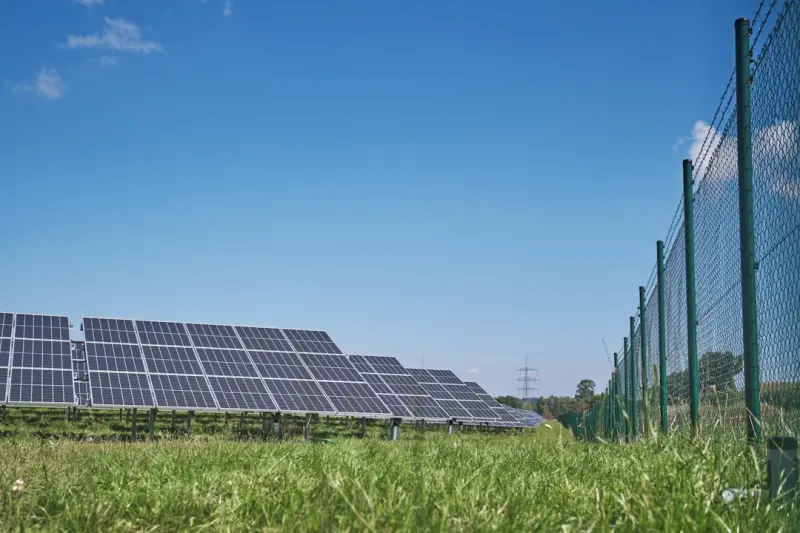
Consider a fence equipped with solar‑transparent panels woven into the slats. These panels generate enough power to run the fence’s own sensors and contribute excess electricity back to the campus micro‑grid. When paired with weather‑proofing 2.0 approaches, the fence becomes a resilient shield that adapts to storms, mitigating wind‑borne debris and protecting the building envelope.
Beyond energy, the fence can act as a living carbon sink. Modular planters integrated into the fence line host native shrubs and vines, turning a simple barrier into a green wall that offsets carbon, improves air quality, and enhances the visual identity of the campus.
Data Fusion: Turning Fence Signals Into Business Intelligence
The most powerful advantage of intelligent fencing is its ability to feed data into existing workplace intelligence platforms. Imagine a dashboard that shows:
- Foot traffic trends along the perimeter—useful for space utilization studies and emergency evacuation planning.
- Temperature differentials that signal heat loss or gain at the building’s edge, feeding directly into radiant floor heating or insulation optimization loops.
- Water flow rates captured by integrated gutters, enabling predictive maintenance and informing water‑reuse initiatives.
This data isn’t siloed; it merges with the broader IoT ecosystem of the site, creating a holistic view of the built environment. Decision‑makers can now ask “How does the outside temperature impact our energy consumption?” and get an answer backed by live fence data.
Modular Design for Agile Campuses
Workforces are increasingly mobile, and campuses must reconfigure quickly. Traditional concrete walls and permanent fences are ill‑suited for such fluidity. Enter modular fencing systems—prefabricated, lock‑step panels that snap together without heavy equipment. These panels:
- Allow rapid re‑zoning of outdoor collaboration zones, pop‑up event spaces, or temporary logistics hubs.
- Can be upgraded on‑the‑fly with additional sensor packages, solar modules, or planter boxes, aligning with evolving sustainability goals.
- Support a plug‑and‑play integration model with existing building‑management software, reducing deployment time from weeks to days.
This flexibility mirrors the modularity seen in circular flooring trends, where materials are designed for reuse and adaptation throughout a building’s lifecycle.
Case Study: A Tech Campus’s Intelligent Fence Rollout
One of our partners, a mid‑size tech campus in the Pacific Northwest, replaced its aging chain‑link perimeter with a solar‑enabled, sensor‑rich fence. Within six months, they reported:
- 30% reduction in false security alerts, thanks to precise vibration and motion detection that distinguished between wildlife and human intrusion.
- 12% decrease in overall energy consumption by leveraging fence‑derived micro‑climate data to fine‑tune HVAC setpoints.
- 15% increase in ESG score due to the fence’s recycled materials, renewable energy generation, and the addition of native plantings that improved site biodiversity.
The campus also integrated the fence’s water‑runoff metrics with its smart gutter network, creating a closed‑loop water management system that reduced potable water use for landscaping by 25%.
Integrating Fencing With Other Intelligent Building Elements
Intelligent fences don’t operate in isolation. The most compelling deployments weave them into the broader tapestry of a smart building:
- Smart Masonry: Just as masonry can become an intelligent asset, fence posts can share structural health data, alerting facilities teams to corrosion or stress before failure occurs.
- Adaptive Window Treatments: By syncing temperature data from fence sensors with window shading controls, interiors maintain optimal daylight while reducing glare and heat gain.
- Power Flow Orchestration: The fence’s solar output can feed into the campus micro‑grid, balancing loads alongside rooftop panels and battery storage, a concept highlighted in the “Hidden Symphony” of power flow.
Future‑Proofing: What’s Next for Intelligent Fencing?
Looking ahead, several trends will push fence technology further:
- Edge‑AI Processing embedded directly in fence posts, allowing real‑time anomaly detection without relying on cloud latency.
- Dynamic Materials such as shape‑memory alloys that can automatically adjust fence tension or height in response to wind or security alerts.
- Biophilic Integration that couples living plant systems with sensor arrays to monitor plant health, creating a feedback loop between environmental data and landscape maintenance.
These innovations will make the fence a true living interface between the built environment and the natural world, echoing the broader shift toward workplaces that are as responsive as they are responsible.
Implementation Checklist for Decision‑Makers
Ready to turn your perimeter into a strategic asset? Follow this concise checklist:
- Define Objectives: Security, sustainability, data collection, or a combination?
- Select Materials: Recycled steel, reclaimed wood, or composite panels with integrated solar film.
- Map Sensor Architecture: Choose vibration, LiDAR, environmental, and water‑flow sensors based on goals.
- Integrate With Existing Platforms: Ensure compatibility with your BMS, ESG reporting tools, and water‑management software.
- Plan for Modularity: Design for future expansion—add planter boxes, solar upgrades, or additional sensor suites as needs evolve.
- Pilot & Iterate: Deploy a short segment first, gather data, refine algorithms, then scale across the campus.
- Measure Impact: Track security incidents, energy savings, water reuse rates, and ESG metrics to quantify ROI.
By treating the fence as a data‑rich, sustainable platform, you unlock a hidden lever for operational excellence and brand differentiation.
Conclusion: The Fence as a Strategic Narrative
In the same way that windows and doors have become storytellers for a brand, modern fencing can narrate a company’s commitment to safety, sustainability, and intelligence. It’s no longer the silent, static line that simply says “keep out.” It’s an active participant in the workplace ecosystem—collecting data, generating clean energy, fostering biodiversity, and adapting to the ever‑changing demands of a dynamic workforce.
When you re‑imagine the fence, you’re not just securing a perimeter; you’re expanding the very definition of what a smart building can be.

William Roy is a freelance writer originally from Montreal who moved to Ottawa with his wife of 50 years to be closer to their grandkids. Alongside his writing, William has a passion for fishing.
Related Posts

Sustainable Fencing: A Green Perspective from Veteran Contractor Paul Gray
Paul Gray shares his expert take on eco‑friendly fencing, covering green materials, smart design, ... Read More

Beyond Boundaries: How Modern Fencing Redefines Function and Form
Modern fencing transcends mere boundaries, integrating smart security, eco‑friendly materials, and... Read More
Smart Fences: Turning Perimeters Into Living, Learning, and Securing Platforms
Explore the evolution of fencing from a static barrier to a smart, living system that integrates IoT... Read More
Top Posts

Waterproofing as a Competitive Edge: Protecting Assets and Boosting Bottom Lines
Waterproofing is reframed as a strategic asset that mitigates risk, extends asset life, and improves tenant satisfaction, delivering measurable financial return...Read More

A Human‑Centric Renovation Checklist for the Hybrid Workplace
Discover a fresh renovation checklist that balances employee wellbeing, sustainability, and business goals, guiding you through every phase from experience audi...Read More
Solar‑Powered Microgrids: A New Frontier for Commercial Real Estate
Discover the practical steps, financial incentives, and real‑world results of integrating solar energy into microgrids for commercial real estate, and learn h...Read More

Smart Snow Removal: Budget‑Friendly Strategies for a Stress‑Free Winter
Learn how to budget for snow removal, choose the right tools, and turn a chilly chore into a community‑building, eco‑friendly experience....Read More
0 Comments
Post Comment
You will need to Login or Register to comment on this post!